The Mau Forest has split a government, fractured political friendships and redrawn Rift Valley loyalties. Now, as the 2027 General Election approaches, its unsettled land question is back to test those in power.
Kanu chairman Gideon Moi has warned that Kenya risks carrying another unresolved historical injustice into the polls, with thousands of families displaced from the Maasai Mau still in limbo.
Receiving a delegation from Ololung’a, Narok South, at his Kabarak home, Mr Moi questioned whether the government could credibly seek a fresh mandate without settling their plight. Should the administration fail to resolve it before the election, he asked, “will this matter ever be settled?”
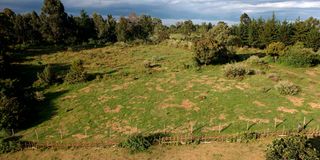
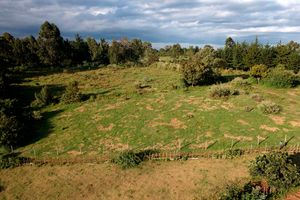
An aerial view of part of the Mau Forest that has been destroyed by human activity. Photo/FILE
His intervention reopens an uncomfortable chapter: the 2008-2009 evictions that exposed deep rifts in the Grand Coalition Government led by the late President Mwai Kibaki and the late Raila Odinga, then Prime Minister. At its heart lay a painful choice between protecting a vital water tower and accommodating families who said they had acquired land through government-sanctioned allocations and transactions.
The trouble predated the coalition, as successive administrations presided over forest excisions and allocations whose legality and beneficiaries were later contested. In 2004, the Ndung’u Commission report flagged questionable Mau allocations and recommended action against irregular titles. Evictions followed between 2004 and 2006, but the fallout remained unresolved.
In July 2008, Mr Odinga launched an effort to restore the forest. A task force was formed to recommend how to halt degradation, relocate forest dwellers, restore damaged areas and mobilise resources. Its 2009 report exposed the settlements’ complexity, including the position of the Ogiek, whose historical ties to the forest could not be reduced to the claims of more recent occupants.
The conservation case was compelling: the Mau is a major catchment sustaining rivers and livelihoods far beyond the Rift Valley, and encroachment, logging and cultivation threatened ecosystems feeding lakes, farming and power generation. Yet families’ claims of having bought plots in good faith made eviction politically explosive.
The late John Michuki, then Environment Minister, insisted the forest had to be cleared. Rift Valley politicians, among them then Agriculture Minister William Ruto, now President, opposed moving families without compensation or alternative land. In July 2009, 18 MPs led by Dr Ruto, Franklin Bett and Hellen Sambili challenged Mr Michuki’s position. A meeting between Mr Odinga and 22 Rift Valley MPs reportedly explored compensated relocation, with a proposed Sh38 billion funding requirement.
The late former Prime Minister Raila Odinga during a tree-planting exercise in Kiptunga, Mau Forest in Molo, January 16, 2010.
Photo credit: File | Nation Media Group
Mr Odinga denied that forced evictions were taking place, describing some departures as voluntary, but anger persisted. The government struggled to agree on genuine claimant numbers, the status of title deeds, compensation eligibility and which ministry should provide money and land. Politicians condemned irregular allocations while defending constituents whose claims arose from the same contested system.
Dr Ruto cast himself as the families’ defender, accusing the Prime Minister of spearheading evictions without ensuring resettlement. Mr Odinga’s allies, including then Lands Minister James Orengo, argued that restoration had to proceed, with genuine landowners and displaced households handled through an orderly process.
In December 2009, Dr Ruto announced that the government would spend Sh1 billion on alternative land, saying President Kibaki had approved the allocation. He said 4,000 acres had been identified and another 3,000 were being sought. Expectations rose, but acquiring land and verifying beneficiaries proved difficult.
By 2012, former President Uhuru Kenyatta and Dr Ruto were building the partnership that became the Jubilee Alliance, uniting influential Kikuyu and Kalenjin voting blocs and changing the arithmetic of the 2013 presidential race.
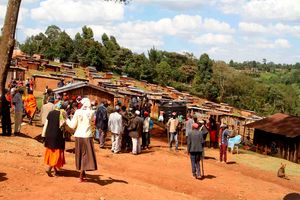
Mau Forest evictees at one of the internally displaced persons' camp at Saptet on January 10, 2022.
Photo credit: File | Nation Media Group
In their campaign, Dr Ruto and regional leaders invoked the evictions to recall tensions under the Kibaki-Odinga coalition. The message was potent: Mr Odinga had been Prime Minister during the restoration drive, and families who expected protection and resettlement felt abandoned. That perception helped erode the Rift Valley goodwill he had enjoyed after the disputed 2007 election, becoming one of his biggest vulnerabilities in 2013.
Mr Kenyatta’s position was complicated too: as Finance Minister, he controlled the Treasury when compensation and resettlement money was needed. Mr Odinga and Mr Orengo blamed his ministry for delayed funds, yet Mr Kenyatta later campaigned alongside Dr Ruto against Mr Odinga.
Resettlement then tested the new President, turning a campaign grievance into a governing obligation. Jubilee’s manifesto had pledged to resettle forest evictees and people displaced by the 2007-2008 post-election violence within 100 days. More than 20,000 settlers had been evicted in the first phase of South West Mau restoration, but no funds had been secured to compensate them or buy alternative land. Finding acceptable land, verifying beneficiaries and resolving ownership claims remained difficult. The government later paid Sh400,000 per household head to selected registered internally displaced persons earmarked for resettlement where suitable land was hard to find. It settled only some cases; successive administrations inherited the rest, including Ogiek historical rights.
In 2022, Mr Odinga told South Rift leaders the evictions had been politicised and accused Dr Ruto, then Deputy President, of being part of the problem. He promised to address the families’ plight if elected.
Maasai Mau families still seek clarity on eligibility, compensation and resettlement. In Kuresoi, residents have asked the government to lift caveats on parcels outside the gazetted forest boundary, saying the restrictions curtail their property rights. Assurances need legal and administrative follow-through.
President William Ruto during a tree-planting exercise in Mau Forest on October 27, 2025.
Photo credit: Boniface Mwangi | Nation Media Group
Ang’ata Barikoi adds another layer. Residents say only 1,500 of about 8,500 disputed acres went to local people, and question the fate of the remaining 7,000. Allegations of irregular acquisition and land grabbing have fuelled protests and conflict. A credible settlement requires a transparent account of the allocation, beneficiaries and the community’s lawful rights.
The Cheluget farm dispute offers a different model. The roughly 5,800-acre property, allocated in 1974 to former Nyanza Provincial Commissioner Isaiah Kiplangat Cheluget, was litigated after squatters occupied portions. Under a government acquisition arrangement, the family handed over the title and withdrew eviction cases. Authorities announced that individual titles would be processed for resident families. Delivering them is now the test.
Mr Moi wants the government to resolve grievances that have survived several presidencies and repeatedly resurfaced during campaigns. The administration, he argues, must clarify beneficiary criteria, disclose compensation progress, address caveats, complete titling and account for disputed parcels.
For Mr Odinga, Mau symbolised the damaging gap between national responsibility and regional expectations. For Mr Kenyatta and Dr Ruto, it was both campaign opportunity and governing obligation. For affected families, locals say, political transitions mean little without secure land, compensation or a lasting place to rebuild.
As 2027 beckons, will Mau finally be settled, or again become a campaign weapon?