A senior politician called me, "Why did you skip the inauguration of UDA's second Deputy President?" he demanded. I do not recall my reply. But I knew the caller, and I knew something neither of us was prepared to say aloud.
Beneath the speeches and celebrations, we both knew there was an oncoming political tsunami of great proportion. And my skipping was intended to avoid that tsunami. A hunter who chases an antelope without first reading the direction of the wind returns home pursued by lions.
There is an old joke among historians: every generation believes it is too intelligent to repeat the mistakes of the previous one. History laughs, takes notes and waits. The greatest political disasters are rarely planned. They are usually the children of miscalculation.
In 1914, Europe's leaders thought they were managing a regional crisis after the assassination of Archduke Franz Ferdinand of Austria. They sleepwalked into the First World War. Napoleon Bonaparte marched into Russia expecting another glorious campaign; he returned with an army defeated more by winter than by the Russians.
Adolf Hitler repeated exactly the same mistake years later, convinced that this time Russia would behave differently. It did not. The Soviet invasion of Afghanistan was supposed to last months. It contributed to the collapse of the Soviet Union. Britain's 2016 Brexit referendum was called partly to settle divisions within one party. Instead, it divided an entire nation and ended the political careers of leaders who thought they were playing safe.
History's favourite weapon is unintended consequences. Kenya is no exception. Years from now, students of politics may identify the impeachment of the man from Wamunyoro as one of those decisions whose consequences few fully priced in.
Removing one politician may have accidentally persuaded many in the Mt Kenya region that an entire political bloc had been placed under siege. Politics is peculiar that way. People rarely mobilise because of spreadsheets; they mobilise because of stories. Once a community begins telling itself that "they are coming for us," facts become unpaid interns. Emotion takes over as chief executive.
An African proverb says that when you throw a stone into a beehive, do not stand around asking why the bees are angry.
The impeachment may also have produced another unintended consequence. It offered sections of ODM that were uncomfortable with cooperation with the government an attractive political opportunity. Every coalition leaves behind disappointed dreamers and restless, ambitious people. If the government occupies the centre, someone else inevitably rents the opposition.
The purpose of impeachment is to reduce political influence. Yet it may have increased the market value of the very politician it sought to diminish.
The Bible is full of such irony. Pharaoh ordered Hebrew baby boys killed. The decree produced Moses. Saul spent years chasing David through caves. He ended up advertising David as the only man worth fearing. Joseph's brothers sold him into slavery to erase him from the family picture. They accidentally sent him to the palace.
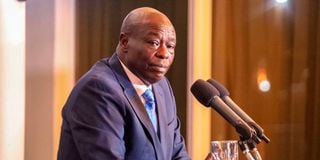
Rigathi Gachagua , the man from Wamunyoro, no longer carries the weight of government decisions, yet he enjoys the freedom to criticise them. But it has certainly made him more interesting to politicians looking for a fresh vehicle to power.
In 1966, Jaramogi Oginga Odinga's departure from government did not end his influence. It gave the opposition its defining symbol. In 2005, Raila Odinga's dismissal from the Cabinet helped transform him into the face of the Orange movement. In 2010, William Ruto wore his removal from the Cabinet like a political medal, converting dismissal into an anti-establishment brand that served him remarkably well.
Perhaps our politicians should stop treating dismissal as political burial. Kenyan history suggests it is often political baptism.
Power has a dangerous habit of producing intellectual certainty. Leaders begin believing that because they possess numbers, they also possess foresight. The two are cousins, not twins.
The Roman statesman Cicero warned that no one is more vulnerable to error than the person who thinks he cannot be wrong. African elders say it more colourfully: the man who is carried on many shoulders imagines he has grown taller.
Good leadership therefore requires more than parliamentary majorities. It demands historical memory, emotional discipline and the courage to ask one uncomfortable question before every major decision: "What if we are wrong?"
Read the book Team of Rivals on the most famous late US President, Abraham Lincoln, and understand why.
They should study comparable moments in history before making irreversible political moves. They should test not only the legal consequences but also the emotional ones. Above all, they should remember that politics is not chemistry. Human beings do not always react according to formula.
The Book of Proverbs advises that "plans fail for lack of counsel, but with many advisers they succeed." Not advisers who merely applaud, but advisers who occasionally spoil the celebration by asking hard questions.
It rewards leaders who think two elections ahead and punishes those who think only two headlines ahead.