Commercial banks sharply increased lending to agriculture in the year to April 2026 as falling interest rates revived private sector borrowing, signalling renewed confidence in a sector long viewed as risky despite its central role in Kenya’s economy.
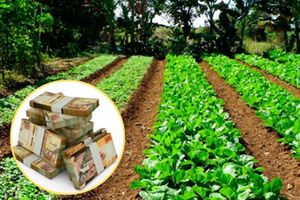
Central Bank of Kenya (CBK) data shows outstanding loans to agriculture rose by 23.5 per cent to Sh190.2 billion in April 2026 from Sh154 billion a year earlier.
The Sh36.2 billion increase made agriculture one of the largest contributors to the recovery in bank lending.
The growth came as overall domestic credit rebounded after last year’s slowdown. Net domestic credit rose by 6.3 per cent, or Sh386.3 billion, to Sh6.48 trillion in April from Sh6.09 trillion a year earlier. The lending recovery has coincided with a steady decline in borrowing costs. The banking sector’s weighted average lending rate eased to 14.64 per cent in April from 15.65 per cent a year earlier and a peak of 17.22 per cent in November 2024.
Lower interest rates have encouraged banks to expand credit to businesses and households after nearly two years of high borrowing costs curbed investment and weakened demand for loans.
Agriculture accounted for nearly a tenth of the increase in banking sector credit, while recording one of the fastest growth rates among productive sectors. The expansion also accelerated from the previous year, when agricultural lending grew 12.2 per cent, suggesting banks are becoming more willing to finance the sector.
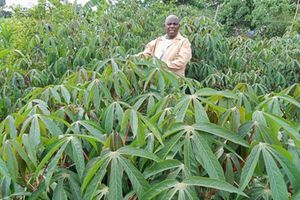
The trend reflects a broader shift in lending strategies, with agriculture increasingly viewed as a long-term commercial opportunity rather than a high-risk sector limited to seasonal production financing. Equity Group is among lenders betting on the sector’s growth potential. The bank plans to increase agriculture’s share of its loan portfolio to 30 per cent by 2030, up from the current 10 per cent.
The Central Bank of Kenya.
Photo credit: File
“Our economy is largely driven by agriculture, and a lot of jobs that are going to be created will come across agricultural value chains,” Equity Group chief strategy officer Brent Malahay said in March.
Mr Malahay said the lender’s strategy goes beyond primary farming to finance businesses across agricultural value chains, including suppliers of farm inputs, transporters, processors, exporters and manufacturers.
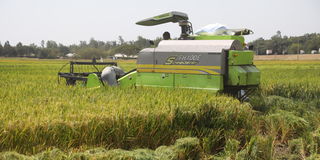
Rather than focusing mainly on seasonal production loans, the bank is increasing financing for mechanisation, agro-processing, value addition and export-oriented enterprises that require longer-term investment. “As we help connect and build the value chains into agro-processing and value addition, at least in the agricultural loan book, you will see the tenure of the loans increase and, therefore, the loan book building up,” he said.
The bank is also integrating financing with insurance, technology and farmer capacity-building through the Equity Foundation to strengthen value chains and reduce lending risks.
Mr Malahay said the lender is supporting investments in mechanisation, processing and exports to help agricultural businesses capture more value from farm produce. He cited leather and livestock among priority sectors, saying Equity is working with Italian partners to expand leather processing and position Kenya as a regional manufacturing hub. The model is also being extended to tea, coffee, cereals and aquaculture.
The strategy mirrors a growing industry view that financing entire agricultural value chains lowers risk by creating reliable markets for farmers while diversifying borrowers’ income streams.
The stronger credit growth comes as official data shows agricultural activity continued expanding in the first quarter, albeit at a slower pace than a year earlier.
According to the Kenya National Bureau of Statistics (KNBS), agriculture, forestry and fishing grew 4.9 per cent in the first quarter of 2026, compared with 5.3 per cent in the corresponding period last year.
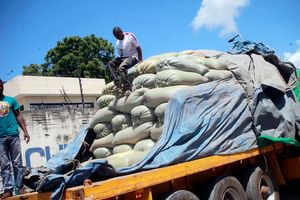
Tea production rose 3.1 per cent to 141,100 tonnes, sugarcane deliveries increased 6.2 per cent to 2.51 million tonnes, while milk deliveries to processors climbed to 249.7 million litres from 244.4 million litres. Agricultural exports also improved, with cut flower shipments increasing 4.3 per cent and vegetable exports edging higher.
However, the KNBS said growth was moderated by weaker coffee and fruit exports. Coffee export volumes declined 6.2 per cent, while fruit exports also fell during the review period.