Kenya’s coffee export earnings from the United States more than doubled in the first quarter of the year, signalling stronger demand from American buyers after the renewal of the African Growth and Opportunity Act (Agoa).
New data from the Agriculture and Food Authority (AFA) shows export earnings rose 101.2 percent to $40.8 million (Sh5.27 billion) between January and March from $19.01 million (Sh2.46 billion) a year earlier.
The jump was driven by higher export volumes and stronger penetration into the lucrative US specialty coffee market, reinforcing America’s position as Kenya’s single largest destination for the commodity.
The US absorbed 43.2 percent of Kenya’s total coffee exports during the three months, widening its lead over all other international buyers.
“The United States was Kenya’s leading coffee export destination by volume, accounting for 43.2 percent at 5,324.98 metric tonnes of the total exported. This reflects an increased penetration of the USA speciality coffee market,” AFA said.
Coffee shipments to the US climbed to 5,324.98 tonnes during the quarter, up from 2,645.98 tonnes in the corresponding period last year.
Germany ranked second after accounting for 13.8 percent of Kenya’s export volumes, followed by Japan at 6.1 percent, the United Kingdom (5.95 percent) and China (5.12 percent).
The sharp increase in shipments to Washington coincided with the renewal of Kenya’s preferential access to the US market under Agoa in February, preserving duty-free access for thousands of Kenyan products.
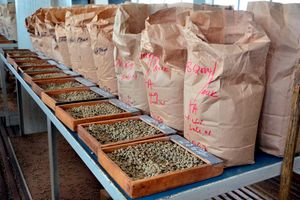
Coffee beans on display for auction at the Nairobi Coffee Exchange.
Photo credit: File | Nation Media Group
The extension removed uncertainty that had clouded exporters after concerns the trade arrangement could lapse without a replacement framework.
Although Kenyan coffee has traditionally entered the United States under favourable tariff arrangements, the renewed certainty helped sustain buyer confidence and long-term supply contracts.
Coffee overtook apparel as Kenya’s leading export to the American market last year following a surge in specialty coffee demand and record international prices.
The crop’s exports have increasingly benefited from changing consumer preferences in developed markets where buyers are paying premiums for traceable, high-quality Arabica beans.
Kenya produces some of the world’s most sought-after Arabica coffee, prized for its bright acidity, distinctive flavour profile and consistent quality.
Most of the country’s exports are sold through the Nairobi Coffee Exchange, where international buyers compete for premium grades supplied by cooperatives and estate farmers.
The United States remains one of the world’s largest consumers of specialty coffee, making it an attractive destination for Kenyan exporters targeting premium market segments.
American buyers have also deepened direct relationships with Kenyan cooperatives and coffee estates, reducing reliance on intermediary traders in some supply chains.
The growing appetite for Kenyan coffee comes despite increased competition from major producers including Brazil, Colombia, Ethiopia and Honduras.
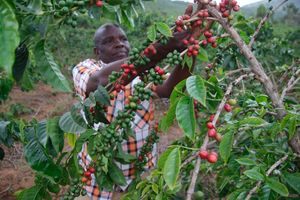
Coffee remains one of Kenya's leading export crops.
Photo credit: Nation Media Group
Global coffee markets have experienced heightened volatility over the past two years as adverse weather disrupted production in several producing countries.
The supply squeeze has pushed international coffee prices to historic highs, boosting export earnings for producing countries despite fluctuating shipment volumes.
Kenyan farmers have also benefited from domestic reforms aimed at improving prices and reducing payment delays within the coffee marketing system.
The government has, for instance, introduced policy changes targeting faster payments to farmers while streamlining coffee trading and cooperative governance.
Authorities have also sought to increase coffee production after years of declining acreage caused by urbanisation, ageing trees and changing land use.
The government is targeting higher production through distribution of improved seedlings, rehabilitation of ageing plantations, as well as expanded extension services.
Erratic rainfall patterns and rising temperatures, however, continue threatening yields across several coffee-growing regions.
The latest export performance is expected to support Kenya’s foreign exchange earnings at a time when agricultural exports remain a key source of hard currency.
Agriculture contributes more than one-fifth of Kenya’s gross domestic product and employs millions of people directly and indirectly.
Coffee remains one of the country’s leading export crops alongside tea, horticulture and fresh produce.