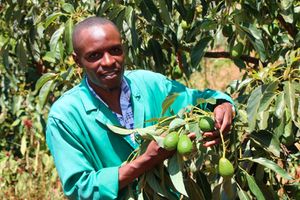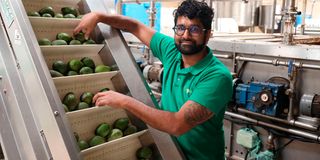
Mr Miraj Shah, the co-founder of Crofts Limited, checks ripe Hass avocados on a conveyor belt system during oil extraction process at the company’s plant in Thika, Kiambu County, on February 25, 2026.

In the avocado-growing belts, harvest season signals peak activity as Hass avocado is collected for export markets and processing facilities.
For years, the bulk of this produce has been destined for overseas supermarkets as fresh exports; its value largely determined by size, skin texture and the vagaries of global demand. Alongside the fresh export trade, processing has gained ground, with a number of firms investing in oil extraction to capture greater value from the crop.
Crofts Limited in Thika, founded by Miraj Shah and Mitul Shah, produces avocado oil for domestic and international markets. Commercial production started in 2015 after the installation of European low-temperature extraction equipment, a process that preserves both flavour and nutritional properties.
“Entering the avocado oil sector meant focusing on quality, as the oil competes globally and relying on price alone does not guarantee market access,” Miraj says.
Before pressing their first litres, the duo spent nearly two years analysing avocado supply across Kenya to understand factors affecting oil yield and flavour. Oil quality begins in the orchard, where rainfall patterns, soil health, and harvesting time influence the final product. This understanding shaped a sourcing model that works directly with farmers and manages the ripening process.
Hass, the main cultivar exported from Kenya, varies in oil content depending on maturity and orchard management, with immature fruit producing less oil and uneven flavour. By monitoring orchard practices and setting quality benchmarks, Crofts ensures the fruit reaches the required maturity for extraction, addressing the common challenge of inconsistency in oil production.
On the global market, where avocado oil competes with olive, sunflower, and rapeseed oils, repeatability of taste and clarity is essential. Competition for top-grade fruit intensifies during peak export periods, with Kenya’s pressed oil facing rivals from Mexico, Peru, and parts of Europe, where access depends on quality, traceability, and regulatory compliance.
Domestic authorities oversee Kenya’s horticulture sector, setting standards for hygiene, documentation, and traceability. Compliance with these requirements is essential for maintaining a presence in international edible oils markets. “Export buyers often request certifications such as hazard analysis and critical control points or other quality management systems,” he says.
Meeting these standards demands investment in modern equipment and structured sourcing systems, which can be challenging for smaller operators. The company is also exposed to currency fluctuations, as equipment imports and packaging materials are priced in foreign currencies.
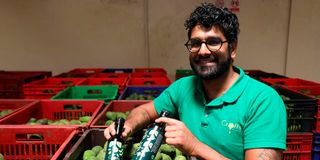
Mr Miraj Shah, the co-founder of Crofts Limited, displays bottles of Crofts Extra Virgin Avocado Oil, produced from ripe avocados after oil extraction, at the company’s plant in Thika, Kiambu County, on February 25, 2026.
Despite these challenges, the oil has experienced steady growth in Europe and North America over the past decade, driven by consumer interest in high-smoke-point cooking oils and plant-based diets. Entry into these markets requires adherence to stringent food safety standards, traceability, and labelling requirements.
At the same time, Kenya’s avocado acreage has expanded, with new exporters and oil producers entering the market at capacities that outpace planting growth. While regulations exist to govern harvesting and quality standards, enforcement remains weak, raising concerns about Kenya’s continued access to European markets.
Miraj explains that companies targeting these markets must continuously monitor evolving regulations on contaminants and labelling, as compliance affects production schedules and logistics planning.
“Bulk shipments can provide more predictable volumes, though financial returns vary,” he notes.
While fresh exports generate foreign exchange, they are exposed to risks such as cosmetic grading, shipping delays, and phytosanitary regulations.
Processing allows mature, disease-free fruit that may not meet export standards to be utilised, helping reduce post-harvest losses and add value.
Crofts produces extra virgin oil from hand-sorted, ripe fruit using low-temperature pressing to preserve both flavour and nutritional composition.
Overripe or damaged fruit is processed into crude oil, which can be refined into a shelf-stable, neutral product suitable for cooking or directed to cosmetic and industrial applications.
“This tiered production structure allows us to utilise a broader spectrum of harvested fruit. It also diversifies revenue sources, cushioning against fluctuations in retail demand,” Miraj notes.
Avocado oil production follows the agricultural calendar, with the main season running from April to October, though climate variability can shift timing. Crofts schedules output around these harvest periods, and pressing must occur at volumes sufficient to cover equipment, labour, and energy costs.
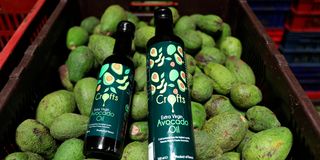
Bottles of Crofts Extra Virgin Avocado Oil, produced from ripe avocados at Crofts Limited plant in Thika, Kiambu County, on February 25, 2026.
Despite significant extraction capacity, limited fruit supply prevents full utilisation, a challenge common across the horticultural sector. The company does not store oil beyond the production window, which limits long-term warehousing and requires careful forecasting to meet client orders.
“Seasonality also affects cash flow, making careful planning essential during months of low pressing activity. Inventory financing or forward contracts with buyers can help mitigate this,” he explains.
Consistent avocado supply depends on effective orchard management, with yields influenced by rainfall, tree health, soil nutrition, and harvest timing.
Climate change adds further uncertainty, as irregular weather patterns affect flowering and fruit set. To maintain a steady flow, processors build strong relationships with growers, offering above farm-gate prices under agreements tied to export demand.
Contracted suppliers follow cultivation guidelines, avoid pesticides and synthetic fertilisers, and receive advisory support to improve productivity and fruit quality, ensuring supply remains as consistent as possible during peak periods. For smallholders, long-term off-take agreements can reduce exposure to spot-market volatility, while processors rely on stable supplier networks to limit procurement uncertainty during peak seasons.
Weak regulation and enforcement further affect both the volume and quality of avocados. Farmers often harvest immature fruit due to high demand and the risk of theft at farm level, a practice that reduces oil yields and affects market perception. “Extraction yields from Kenyan fruit are around 50 per cent lower than those in Mexico and other Latin American producers,” he says.
The facility employs around 100 permanent and seasonal staff and processes more than 10 million kilograms of avocados annually. Miraj says maintaining consistent quality and supply is a continual challenge, as it directly affects production schedules and the ability to meet international standards. For processors, scaling operations depends on a stable fruit supply, reliable infrastructure, and access to affordable capital, with electricity costs and logistics influencing competitiveness.
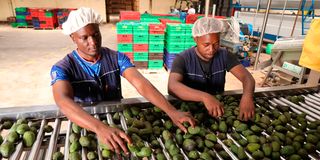
Company staff sort out ripe Hass avocados on a conveyor belt during oil extraction at Crofts Limited plant in Thika, Kiambu County, on February 25, 2026. Bonface Bogita | Nation Media Group
“Even with a large supplier network, the amount of fruit available for pressing can fall short during peak times, requiring careful planning to maintain steady production,” he adds.
The company supplies avocado oil in both retail and bulk formats. Retail bottles, sold at Sh950, are primarily used for cooking, while bulk shipments are exported or supplied to food manufacturers and cosmetic producers. Refined oil is neutral in taste and heat-stable, whereas extra virgin oil requires more controlled extraction to retain its natural flavour characteristics.
He notes that global edible oil markets are influenced by harvest results in key producing nations. Although avocado oil remains a niche product compared with palm or soybean oil, it is not shielded from wider commodity price fluctuations. Overall, avocado availability in Kenya remains insufficient to meet oil demand, and efforts are needed to increase production for export and processing to maintain access to international markets.
It helps reduce post-harvest losses and, when operations maintain a stable supply, efficient processing, and compliance with international standards, offers more predictable returns for both farmers and processors. In 2018, Crofts received two stars at the Great Taste Awards in London, with additional recognitions in 2022 and 2025. Such accolades are often referenced by international buyers when sourcing speciality oils.
Follow our WhatsApp channel for breaking news updates and more stories like this.