The government’s reform agenda aimed at turning its agencies into commercial enterprises is taking shape, with National Treasury Cabinet Secretary John Mbadi confirming that the process of recruiting independent board members of the government agencies is in progress.
The changes, including how board members and CEOs of government agencies are appointed, follow the enactment of the Government-Owned Enterprises (GOEs) Act in 2025.
This as the National Assembly Committee on Budget and Appropriations gave CS Mbadi until October 2026 to complete the mass dissolution, privatization and merger of the underperforming state agencies.
The law provides for the dissolution of certain state corporations and their reincorporation as limited liability companies under the Companies Act, thereby creating a window for commercial mergers and privatization.
Under the new framework, commercial state entities are expected to transition into profit-oriented public limited companies, with the National Treasury serving as the principal shareholder on behalf of the Government.
Fragmented control by various line ministries has been eliminated, with the National Treasury acting as the central "shareholder-in-chief," managing GOEs as a commercial investment portfolio on behalf of the government.
National Treasury Cabinet Secretary John Mbadi, whose Ministry is strictly and actively enforcing corporate guidelines, told Nation that independent board of directors’ members in the GOEs will be critical in driving change.
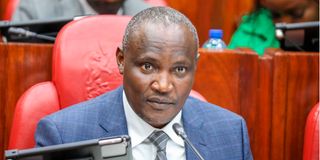
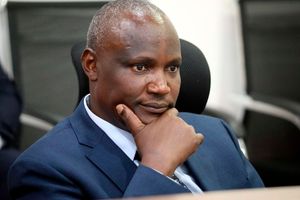
National Treasury and Economic Planning Cabinet Secretary John Mbadi.
Photo credit: File | Nation Media Group
“The shortlisting of the board members of these GOEs is ongoing and we expect it to conclude in the coming days,” said CS Mbadi in a clear departure from the past.
The CS noted that the National Treasury search and selection panel, meant to clear out political appointees, is currently vetting the applicants.
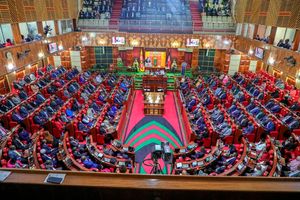
In a report to the House, BAC chaired by Alego Usonga MP Samuel Atandi recommended that the underperforming government agencies should either merge with similar entities or be wound up entirely to improve service delivery and resource management.
“That the CS National Treasury and Economic Planning expedite the rationalization, merger and dissolution of non-viable or duplicative State-Owned Enterprises by end of October 2026 to enhance efficiency and ensure prudent utilization of public resources,” the BAC report, as adopted by the House, reads.
The advertisement for vacancies for the independent directors in 39 parastatals, which closed on May 29, 2026, signalled a major departure from the traditional process of appointing directors to state corporations.
The implementation of the GOE Act is driving a massive governance reset, transitioning traditional parastatals into commercially focused public limited companies under the Companies Act.
Previously, Cabinet Secretaries appointed some chairpersons and members of the boards without publicly advertising the positions, while chairpersons of some lucrative entities were also appointed directly by the President without a contest.
The new law ensures that the board members are recruited through a competitive process that includes advertisement for the positions, long-listing, shortlisting, interviews and appointment.
Once fully constituted, the boards have the exclusive mandate of appointing their respective CEOs competitively.
The CEOs and the independent board directors have a term capped at three years, renewable only once and “strictly contingent on hitting performance targets.”
Section 12 (j) of GOE states that one is ineligible for appointment to the board if the individual has been affiliated with a political party in the immediately preceding five years.
“Affiliated with means having an official connection to, in the case of a political party, to a governing body of a political party or has identified with a political party for purposes of vying for a political office,” the law states.
This means that political rejects will no longer get rewards of sitting on the GOE boards and that the appointment of CEOs will be a preserve of the boards and not the President and the respective Cabinet Secretaries.
According to the law, a GOE shall be managed by a board of directors.
The board shall consist of a chairperson who shall be an independent director, six persons who shall be independent directors and one person who shall be a public officer in the National Treasury nominated by the Cabinet Secretary.
The board also includes one person who shall be a public officer designated in writing by the relevant Cabinet Secretary for the relevant Ministry and the chief executive officer who shall be an ex officio member of the board.
“The board of directors shall elect the chairperson from among the independent directors,” the law states.
The GOEs to undergo board changes are Kenya Electricity Transmission Company (KETRACO), Geothermal Development Company (GDC) and the Kenya Power and Lighting Company, Kenya Electricity Generating Company (KenGen).
The others are National Oil Corporation of Kenya (NOCK), Kenya Railways Corporation (KRC), Kenya Ports Authority (KPA), Agricultural Development Corporation (ADC) and Agricultural Finance Corporation (AFC).
There is also Agro-Chemical and Food Company, the Commodities Fund, Bomas of Kenya, Kenya Broadcasting Corporation (KBC) and the Kenya Development Corporation (KDC).
To facilitate a seamless restructuring process, a government moratorium remains in effect, freezing staff recruitment and the automatic renewal of contracts for the legacy CEOs.
The implementation of the GOE Act means that to exist, a GOE must prove it is fully self-financing and self-sustaining.
According to the law, any non-commercial "national duties" or subsidized services must be categorized as Public Service Obligations (PSOs), which are independently costed and reimbursed by the Cabinet so they don't bleed the company's core finances.
The GOE Act has since cleared the legal path for massive privatization deals, with the latest highest-profile asset being Kenya Pipeline Company (KPC), where the government completed a 65 percent stake divestiture through an Initial Public Offering (IPO) on the Nairobi Securities Exchange (NSE) to raise over Sh100 billion.
Some state-owned enterprises have been lined up for potential partial privatization, listings, or restructuring.
Key commercial entities actively being prepared for these market transitions include the NOCK, Kenyatta International Convention Centre (KICC), New Kenya Cooperative Creameries (New KCC) and Kenya Seed Company Limited, among others.
Loss-making statutory firms like the National Cereals and Produce Board (NCPB) and the Postal Corporation of Kenya (Posta) are being legally reconstituted into public limited companies to force self-sustainability.
The agencies earmarked for dissolution include Nuclear Power and Energy Agency (NuPEA), Kenya Tsetse Fly and Trypanosomiasis Eradication Council, Kenya Fish Marketing Authority, Centre for Mathematics, Science and Technology Education in Africa (CEMASTEA) and the President’s Award, Kenya.
The structural dissolution of Kerio Valley (KVDA), Lake Basin Development Authority (LBDA), Tana and Athi Rivers Development Authority (TARDA) and Ewaso Ng'iro South Development Authority (ENSDA) risks putting their respective CEOs’ jobs on the line.