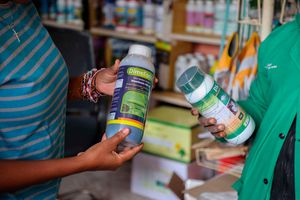
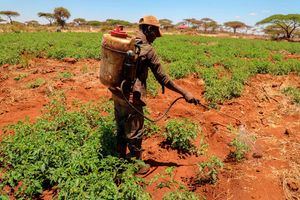
Farmers constantly battle pests, diseases and weeds that threaten crop harvests, food security and livelihoods. Supporting them in this fight is a robust system of science, regulation and product stewardship that ensures pest control products are properly evaluated, responsibly managed and safely used. 'Seeds of Gold’ speaks to Joel Mutai, Chief Executive Officer of aak-GROW, on how the industry is promoting safe pesticide use while safeguarding public health and the environment
Who are the key stakeholders in the pest control sector?
Our association is a membership organisation bringing together importers, formulators and manufacturers of pest control products.
It also includes affiliate members, particularly those in the veterinary sector.
Together, we work to ensure that products reaching farmers meet the required standards of quality, safety and effectiveness.
The association champions science-based regulation, responsible industry practices and product stewardship through advocacy and collaboration with regulators and other stakeholders.
On matters public health proper disposal of pesticide containers is critical. What initiatives are in place to address this?
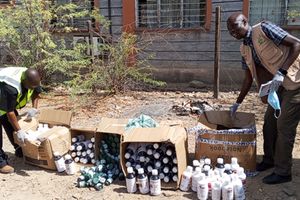
Managing empty pesticide containers is one of our key priorities in promoting environmental sustainability.
For several years, the industry voluntarily operated programmes to collect and safely dispose of used pesticide containers.
However, the introduction of Kenya's Extended Producer Responsibility (EPR) Regulations in May 2024 created a legal framework that places responsibility for waste management on producers and importers.
Under these regulations, importers are responsible for managing the waste generated by their products throughout their lifecycle.
This principle applies not only to pesticide containers but also to products such as plastic bottles, tyres and other imported goods.
However, pesticide containers require specialized handling and cannot be mixed with ordinary waste because of the potential risks to human health and the environment.
Farmers are also being trained to safely dispose of containers by triple-rinsing them immediately after use, puncturing them to prevent reuse and delivering them to designated collection centres.
What other regulations have been put in place to ensure compliance within the pest control products industry?
To strengthen management of pesticide container waste, the industry now operates under the Agrochemicals Producer Responsibility Organization of Kenya (ABROC), established under the EPR Regulations.
Kenya also adheres to international agreements governing chemical safety, including the Stockholm Convention, which restricts or bans hazardous chemicals, and the Rotterdam Convention, which regulates international trade in certain hazardous chemicals through prior informed consent procedures.
Implementation of the EPR Regulations is ongoing. ABROC is expected to establish collection centres across the country and intensify farmer awareness campaigns on safe disposal of empty pesticide containers.
Industry players have continued supporting voluntary collection programmes during the transition to avoid service gaps, with existing collection centres being integrated into the ABROC system to meet standards set by the National Environment Management Authority (NEMA).
One of the major challenges remains the cost of operating the producer responsibility system, including waste collection, transportation and disposal through licensed incinerators.
Stakeholders are therefore engaging NEMA and waste management service providers to agree on sustainable disposal costs that protect both the environment and the viability of the agricultural sector.
A recent study has found that 77.8% of fresh produce samples from markets like Muthurwa, Githurai, Kangemi and Nakuru contained detectable pesticide residues, with one-third exceeding safety limits, What does this mean to food safety?
Modern laboratories can detect extremely small traces of pesticides. The key issue is whether those residues exceed the Maximum Residue Limits (MRLs), which are internationally recognized safety thresholds established by regulators.
According to the industry, the report highlighted detectable residues without adequately distinguishing between simple detection and residues that exceed the applicable safety limits.
The report referenced European Union residue standards, while Kenya primarily applies Codex Alimentarius MRLs, which are internationally recognized food safety standards.
Based on the industry's interpretation, most of the produce tested complied with the Codex limits.
Consumers should therefore understand that the presence of detectable residues alone does not necessarily indicate a food safety risk.
What matters is whether residue levels exceed the legally established Maximum Residue Levels (MRLs.).
The industry, working closely with government agencies and other partners, has introduced several programmes to improve farmers' knowledge and promote responsible pesticide use.
These include identifying knowledge gaps through joint studies with the Ministry of Health and other stakeholders.
Training county agricultural extension officers through the Pest Control Products Board (PCPB); equipping lead farmers and service providers through intensive training programmes delivered in partnership with CropLife Kenya.
Using vernacular radio stations and other media to disseminate safety messages; engaging farmers during Agricultural Society of Kenya (ASK) shows; and producing simple educational materials that reinforce safe pesticide handling and application.
These efforts are intended to improve compliance with safe pesticide practices, reduce misuse and strengthen food safety.
Before any pesticide is approved for use, it undergoes rigorous efficacy trials to confirm that it performs as claimed when used according to label instructions.
Where products appear to fail, the cause is often incorrect use rather than poor product quality. Common reasons include using expired products, applying lower-than-recommended doses, using products on crops for which they are not registered, or poor spraying techniques that fail to provide adequate coverage.
Farmers are therefore encouraged to carefully follow label instructions regarding dosage, timing, target crops and application methods to achieve the intended results.
Other factors include improper Application that involves sing the wrong dosage, choosing the wrong product for the specific pest, or using poorly calibrated spray equipment stops the chemical from reaching the target.
Environmental Factors for instance rain can wash away the spray too soon, high heat can break down the active ingredients or burn leaves, and strong sunlight can degrade the chemical before it works.