The State has lined up independent environmental and social monitoring audits of the exploration activities on Turkana oil blocks, expanding checks on the field development plan(FDP) submitted by Gulf Energy ahead of commercial production later this year.
“These audits will serve as a critical tool to verify compliance, assess the effectiveness of management measures, and provide a foundation for continuous improvement and informed regulatory oversight,” the Department for Petroleum said in a disclosure.
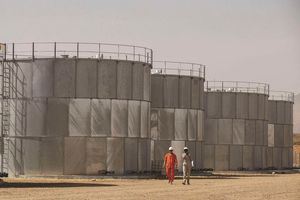
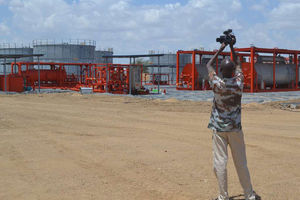
Tullow Oil engineers work at the oil rig at Ngamia One Well in Turkana County in 2012.
Gulf Energy expects to start commercial production of the Turkana oil Block T6 and Block T7 by December 2026.
An estimated 20,000 barrels per day (bpd) of crude oil will be produced in the first phase (2026-2032) before it is scaled up to 50,000 bpd from 2032.
The government is currently recruiting an independent contractor to conduct audits on the environmental and social impact reports on the exploration.
“Post–ESIA (Environmental and Social Impact Assessment) monitoring is essential to ensure that the commitments, mitigation measures, and management plans outlined in the approved project documents are effectively implemented,” the State Department said.
“This process is crucial for safeguarding local communities and the environment, fostering accountability, and maintaining the social license to operate,” it added.
The planned environment and social impact audits add to a scheduled audit by the Energy and Petroleum Regulatory Authority (Epra), which is aimed at locking in the commercial gains from the long-delayed project.
An oil rig at Ngamia 1 where Tullow Oil Company is exploring oil, 25km from Lokichar in Turkana County.
The regulator revealed in February that it was recruiting a consultancy firm to provide an independent analysis of the contractor’s submissions on development work programmes and budgets against approved FDP commitments.
Epra said that the consultancy will also verify the contractor’s actual expenses by comparing proposed major expenditures against global and regional market rates to ensure cost fairness.
“Identifying potential overcharges or unnecessary costs before they are fully incurred and advising Epra on the justification required to formally disallow or reduce the claimed amount during the cost recovery process,” Epra said in a brief on the consultancy.
The Energy ministry and the Cabinet recently approved Gulf’s FDP for the Turkana oilfields. The plan now awaits a decision from Parliament.
The FDP shows that 600,000 bpd of crude oil will be exported every month in phase one. This will jump to 1.5 million bpd in phase two.