Hello

Your subscription is almost coming to an end. Don’t miss out on the great content on Nation.Africa

Ready to continue your informative journey with us?

Hello

Your premium access has ended, but the best of Nation.Africa is still within reach. Renew now to unlock exclusive stories and in-depth features.

Reclaim your full access. Click below to renew.

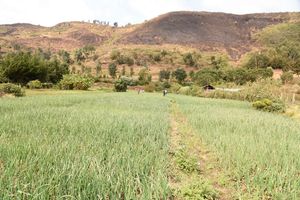
Caption for the landscape image:

Kenya turns to bioeconomy as climate change reshapes agriculture

Scroll down to read the article

Kenyahas launched the National Bioeconomy Strategy 2026–2036, a 10-year framework seeking to use biological resources, science, technology and innovation to create new industries.

For decades, Kenya’s agricultural economy has largely revolved around producing food, livestock and raw materials, with much of the value created further down the supply chain.

But as climate change puts increasing pressure on farming through droughts, floods, rising temperatures and declining soil health, Kenya is looking to biological resources as a new source of economic growth.
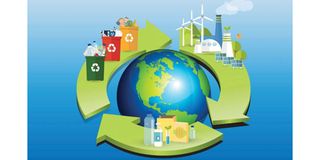
The country has launched the National Bioeconomy Strategy 2026–2036, a 10-year framework seeking to use biological resources, science, technology and innovation to create new industries while supporting food systems and environmental sustainability.

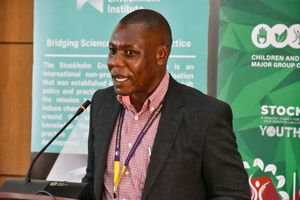
Prof Rewe Thomas, Coordinator of the National Bioeconomy Education and Policy Framework, said the strategy comes at a time when Kenya needs to rethink how it produces food and uses its natural resources.

“Bioeconomy is a combination of two major worlds: biology and economics,” Prof Thomas, who is also a lecturer at Pwani University, said during the launch of the strategy in Kiambu on Tuesday, August 26.

He said biological resources could provide alternatives to fossil fuels and synthetic products in sectors ranging from energy and agriculture to medicine, textiles and manufacturing.

For Kenya, one opportunity lies in the large quantities of biomass generated by agriculture. Crop residues, animal waste and other organic materials are often discarded, burned or left to decompose despite their potential economic value.

A bioeconomy approach could turn some of these materials into fertilisers, energy, industrial products and other goods, creating additional income from agricultural production.

“The issue is no longer whether we have the resources to build a bioeconomy, but whether we can transform those resources into greater prosperity for our people,” Prime Cabinet Secretary Musalia Mudavadi said during the launch.

The strategy seeks to move agriculture beyond its traditional role as a source of food and feed, towards a more diversified economy in which biological resources support energy, manufacturing, textiles and other industries.

Climate change is also central to the argument for a bioeconomy. Agriculture is highly vulnerable to climate shocks, while dependence on fossil fuel-based inputs and some farming practices contribute to greenhouse gas emissions and environmental degradation.

Prof Thomas said greater use of organic matter and biofertilisers could help restore soil health and improve the efficiency of conventional fertilisers.

“If the health of the soil is restored, even some of these fertilisers we are making that are NPK-based can actually form a constellation which can be easily taken up if the soil is healthy,” he said.

The strategy also envisages greater use of renewable energy in agriculture and food production, including biofuels.

“We are hoping that agriculture and the food system will be powered by renewable energy in the future,” Prof Thomas said.

Kenya expects the emerging bioeconomy to be worth KSh500 billion by 2036.

But the government acknowledges that achieving this will require more than launching a policy document.

Mudavadi said the success of the strategy would depend on its implementation, investment and the ability to translate research into commercially viable products.

“The launch of the framework marks an important beginning. A strategy, however well-conceived, acquires meaning only when it is translated into action,” he said.

The government plans to increase investment in research and development while creating conditions to attract private capital into bio-based industries.

British High Commissioner to Kenya Matt Baugh said commercialisation remains one of the biggest challenges.

“The binding constraint that we flagged is basically getting research to an investable proposition, the commercialisation process,” he said.

The UK has supported the mapping of Kenya’s bioscience and bioeconomy sectors to identify opportunities and gaps.

Baugh said stronger links were needed between universities, government, investors, incubators and industry so that research could be turned into businesses and jobs.

The strategy is built around seven pillars, including policy and institutional structures, bio-based resources, innovation and technology, capacity building, and partnerships.

It was developed through a multi-stakeholder process involving government agencies, universities, research institutions, private-sector players and development partners.

Follow ourWhatsApp channel for breaking news updates and more stories like this.