The government has received about 800 orders from farmers seeking to acquire water buffaloes for milk production as Kenya grapples with a milk shortage linked to drought and the high cost of animal feed, prompting renewed efforts to diversify the country’s dairy sector.
Principal Secretary for State Department of Livestock Development Jonathan Mueke says the government has completed veterinary certification requirements for importing the animals from India and is now working on commercial arrangements, including purchase prices and transportation costs.
The initiative first drew the country’s attention during the inaugural Agriculture and Food Systems Transformation Summit 2026, held from October 7 to 9 at the Jamhuri Agricultural Society of Kenya (ASK) Showgrounds in Nairobi, where President William Ruto directed Mr Mueke to develop a plan for introducing buffaloes into the country’s dairy industry.
Dr Ruto acknowledged the milk shortage, attributing the challenges facing dairy farmers to recurrent drought and the high cost of animal feed. The Head of State said Kenya needed to address the underlying constraints affecting livestock production while exploring alternative ways of strengthening milk supply.
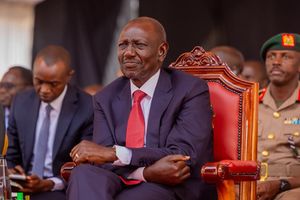
President William Ruto . If the government tells us the cash cow is dying, then why allow politicians to milk it on its deathbed?
Photo credit: Pool I Nation Media Group
The President regretted that the country continued to rely heavily on imported protein ingredients used in animal-feed manufacturing, including soya and sunflower products, exposing farmers to high production costs.
Mr Mueke, in an exclusive interview, stated that the proposal to introduce water buffaloes was not new, noting that the government began engaging farmers on the idea about one and a half years ago and had since established a partnership with India, which has extensive experience in keeping the animals for dairy production.
“We have gotten a partnership with India, where a lot of these buffaloes come from. We have finished the requirements in terms of veterinary certification to ensure that we can import them into our country. We are now working on the commercial aspect, including how much they cost and how much it will cost to bring them into Kenya,” PS Mueke revealed.
He added that the government had already received approximately 800 orders from farmers interested in acquiring the animals, signalling demand for an alternative dairy enterprise.
“There are about 203 million water buffaloes around the world. The butterfat (the fatty portion of milk ) from a water buffalo is almost three times that of a normal cow,” he shared.
The higher butterfat content makes buffalo milk suitable for processing high-value dairy products such as cheese, yoghurt, butter and ghee. Kenya imports some of these products, allowing local processors to expand production and reduce reliance on foreign supplies.
Mueke said embracing water buffaloes could help farmers diversify their income while supplying processors with milk suited to specialised dairy products. The government is particularly interested in the Murrah breed, which is prized for milk production, as it finalises plans to import the animals from India.
A spot check of various online listings in India indicates that a Murrah buffalo typically costs between Indian rupees (INR) 75,000 and INR 300,000 – approximately Sh102, 572 to Sh410, 289, depending on factors such as milk yield, age, number of lactations and health status.
The PS for State Department of Livestock Development said the public debate surrounding the President’s proposal had partly arisen from a lack of information about the animals.
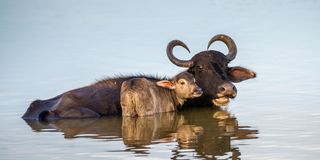
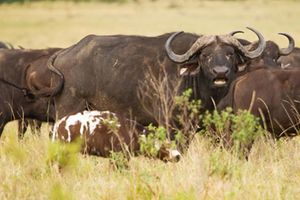
“The animals we are talking about are domesticated water buffaloes, which farmers can keep for milk production. We are not talking about the wild African buffaloes that many people associate with the name,” he explained.
Water buffaloes are domesticated livestock kept in several countries for milk and meat. Their production systems, particularly in India, offer a model Kenya can study as it seeks to diversify its livestock sector. Plans are underway for a Kenyan delegation comprising farmers, experts, policymakers and other stakeholders to visit India in November this year to benchmark the country’s water buffalo production systems and learn from its experience in dairy farming.
Dr Jonathan M. Mueke (left), the Principal Secretary, State Department for Livestock Development and other guests visit a stand during the third edition of the Kenya Meat Expo at KICC, Nairobi, on June 12, 2024. The event is organised annually by the Nation Media Group.
Photo credit: Wilfred Nyangaresi| Nation Media Group
Mr Mueke told Nation that the government had studied buffalo production through its veterinary services and visited India to understand how the animals are domesticated and managed commercially. Egypt, which has an estimated five million water buffaloes, also provides an example of the species’ presence in Africa.
The animals are considered hardy and capable of adapting to challenging production conditions. Their feeding characteristics and resilience could offer opportunities for farmers, although their productivity and commercial viability in Kenya will depend on suitable management systems, water availability, feed costs and access to markets.
Apart from milk, buffaloes offer opportunities in the meat and leather industries. Their meat is relatively lean, while their large hides can supply leather manufacturers producing furniture, carpets and other leather goods.
However, the proposed diversification comes against the backdrop of the wider feed crisis that Dr Ruto identified as a major constraint affecting dairy farmers and pastoralists.
“The high cost and inadequate supply of animal feed remain a major challenge for our livestock farmers. We must find ways of bringing down the cost of production and ensuring that farmers have access to sufficient feed,” Dr Ruto said during the Agriculture summit.
The President said Kenya continues to import significant quantities of protein ingredients for feed manufacturing, including soya and sunflower products, making locally manufactured feed expensive. Head of State, therefore, called for further interventions to make feed more affordable. Dr Ruto said the government had removed import duty on yellow maize and animal-feed concentrates as a short-term measure, urging the ministry to ensure manufacturers passed the resulting savings on to farmers. Association of Kenya Feed Manufacturers (AKEFEMA) has been urging the government to remove import duties and value-added tax (VAT) on raw materials used in animal-feed production, warning that high input costs have pushed some manufacturers to close operations, disrupting feed supply and adversely affecting the livestock industry.
Ruto also called for increased domestic production of protein crops, including soya and sunflower, to reduce dependence on imported feed ingredients.
“We cannot continue relying on imports for everything we need to produce animal feed. We must increase our own production of soya, sunflower and other protein crops to reduce the cost of feed and support our farmers,” he stated.
The President identified irrigation projects and the development of agricultural land in Bura and Galana as opportunities to increase the production of food crops and animal feed. He said Kenya needed to move away from excessive dependence on rain-fed agriculture, which cannot reliably supply enough food for people and livestock during recurrent droughts.
While water buffaloes could expand the range of milk available to processors and consumers, their commercial success will also depend on affordable feed, reliable water supplies, suitable animal-management systems and a viable market for their products.
And for farmers who have already placed orders, the immediate question is when the animals will be available and at what cost. PS Mueke said the government was still finalising the commercial arrangements with India, including the purchase price and importation logistics.