For most young men in Kenya, winning over a girl is only half the battle. The other half is convincing her family that you are worthy of their daughter’s hand in marriage. The bride price is known by many names, but it is always taken seriously and remains one of the most enduring customs across Kenyan communities.
And the ‘payment’ itself has evolved from being solely in the form of livestock to now including a mixture of cash, goats, cattle and goodwill. We spoke to elders from four communities — the Luo, Luhya, Kalenjin and Kikuyu — to find out exactly how much a bride costs, and why nobody gets away with paying nothing.
Luos demand cows and "acceptance money
In Luo culture, the journey to marriage begins long before any cows change hands. According to Reuben Ochoo, a Luo elder from Migori County, it is the groom who makes the first move — and he had better not show up empty-handed.
“A man who is serious about marrying a girl will not hesitate to go to her home,” he says. That first visit is a group affair, with the groom bringing along brothers or close friends for support. This introductory visit involves what is known as ‘acceptance money’, which is handed to the bride’s mother in an envelope as the visitors are leaving.
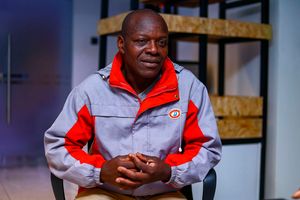
Reuben Ochoo is a Luo elder. He says that paying dowry is very important and earns a married woman a lot of respect from both homes.
Photo credit: Pool
“They can be a group of five men, and they will carry Sh200,000 in acceptance money on the day they go to visit the girl’s home,” Mr Ochoo explains. If the groom’s friends are feeling particularly generous, that figure can increase to as much as Sh1 million.
“It is the nature of friendship and ceremony,” he says.
Only once the bride’s parents have given their blessing does the planning of the bride price begin, this time centred on cattle. Here, Mr Ochoo says, the numbers aren’t fixed; they vary depending on the girl’s wealth and education. “Currently, parents are educating their daughters up to PhD level,” he notes. “A man marrying a well-educated, working woman will definitely pay a higher bride price.”
So, how many cows are we talking about?
“Some people may want to pay for 15 cows, but due to financial constraints, they can only manage five or three,” says Mr Ochoo. On the other hand, men with means might part with ten cows and Sh300,000 in acceptance money to honour the bride and signal their own standing.
However, modern pressures such as shrinking grazing land, rising insecurity and a growing population have led many Luo families to accept cash instead of cattle, even though tradition insists that at least a few live cows must be handed over.
Even grooms living abroad aren’t exempt. “If the groom intended to bring 30 or 50 cows, he would carry the equivalent amount of money. He will also send some money to buy a few cows for the ceremony,” explains Mr Ochoo.
The locally purchased cows are then released to ‘meet’ the groom at the gate, walking ahead of him so that it appears, at least symbolically, as though he has arrived with the entire herd.
In Luo culture, cohabitation and even having children isn’t recognised as marriage unless the bride price has been paid. “In such a case, when the couple’s daughters reach marriageable age and wish to marry, their bride price will not be paid because their mother was never officially married,” warns Mr Ochoo.
If the marriage is dissolved for whatever reason, the groom typically reclaims his cows, minus one. A woman who remarries after a divorce is often expected to fetch a higher bride price the second time around, to make up for the animals reclaimed from her previous marriage.
Ultimately, Mr Ochoo says, it isn’t about money at all. “Paying a bride price in Luo land is very important. It earns a married woman a lot of respect from both her birth family and her in-laws.”
Luhya’s bureaucratic negotiations
Unlike the Luo, where the couple largely set the terms themselves, the Luhya bride price is negotiated in a formal meeting before any cows are delivered. John Lumala, an elder, explains that tradition even dictates how many people should accompany each animal.
“When the cows are being taken, there is a person with an envelope containing the agreed sum,” says Mr Lumala. “When the groom arrives with the cows, he stands outside the compound while the bride’s family inspects the cows and confirms the amount in the envelope.”
The local assistant chief must be notified in advance with a letter confirming the source and destination of the cattle to avoid disputes over stolen livestock.
Mr Lumala says that the bride price rate starts at three cows. “In Luhya culture, the least a man can pay for a bride price is three cows, while the amount in the envelope for the bride’s father depends on the groom’s financial situation.”
As well as the cattle, tradition also calls for a female goat and a blanket for the bride’s mother, plus a cash envelope for her father containing anywhere from Sh10,000 to Sh100,000, depending on the groom’s wealth. Interestingly, the groom isn’t left to shoulder the cost alone. Luhya custom obliges the groom’s father to give him a cow to add to the bride price.
“This shows that the bride now belongs to the groom’s family,” says Mr Lumala. “Even if the man is poor, he will still give his son a cow. In our culture, an old Luhya man who does not help his son pay the bride price is viewed as an elder who does not value his children.”
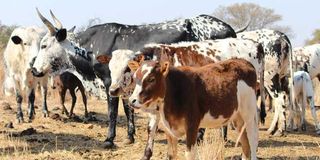
The cattle taken to the bride's family by a groom as a form of bride wealth.
Photo credit: File
If a man dies without paying the bride price to the woman he has been living with, his family must still pay something before she can attend his funeral. Mr Lumala calls this ritual “opening the way and digging the grave”.
“Even at this stage, the negotiation is conducted by the elders before the widow can bury her husband,” he says. “If that doesn’t happen, the elders will take the widow away from the funeral.”
According to Mr Lumala, the cows paid after a man’s death never reach the bride’s family. They are sold, and the elders pocket the proceeds.
Kalenjin’s resistance to money
For the Kalenjin, the concept of a ‘bride price’ is deliberately kept away from anything resembling a price tag. “The bride price in Kalenjin culture is not money,” insists elder Alex Mursi.
“You can’t put a price on a human being, so you can’t say that you are buying. We give the bride price to the bride’s parents as a sign of respect.”
The ceremony itself is a substantial affair, with the groom arriving with at least 20 relatives, friends, and neighbours for an introductory meeting between the two families.
The livestock is presented in a strict, almost ceremonial order. “We have not changed our bride price; we give four cows plus a goat,” explains Mr Mursi.
“The first cow must be big, with its calf, even if it is still being milked, because we consider milk a blessing. Next comes a bull, followed by another calf, then a young cow. Finally, the groom’s mother presents an ewe to the bride’s mother, sealing the bond between the two families.”
The ritual concludes with the application of cow’s milk oil, prepared by the village women, which both families rub onto each other as a physical symbol that the two households are now united.
What makes Kalenjin custom stand out is its flexibility. Even a man with only two cows won’t be turned away. “We cannot deny him a girl because of cows,” says Mr Mursi. “We give them time to come back and pay the bride price when they are more successful later in life. The most important thing is respect.”
However, should the marriage break down, the cows go back to the husband.
Traditionally, the Kikuyu bride price was determined entirely by the relationship between the two families.
“In our culture, a groom can offer whatever he can afford, as long as the bride’s parents have given their blessing,’ says Kikuyu elder Elijah Mwega.
“Even a groom with nothing to his name can be accepted, so long as he is willing and patient. As we say, ‘there is no poor person as long as they have five fingers.’”
Once the family has approved the match, the groom presents a she-goat and a he-goat to seal the engagement, which signals that the bride is now off limits to other suitors. From there, negotiations begin in earnest and the bride’s family sets its terms.
“The bride’s family will say that, in order to release their daughter, the groom’s family must give 100 goats, a container of honey, a suit for the bride’s father, and so on,” says Mr Mwega.
If the groom falls short, all isn’t lost. Negotiation is built into the system.
“The groom mentions the number of goats and money he has. Then his father gives him some support. But the bride’s family has the right to refuse or agree,” Mr Mwega explains.
“We normally say that marriage has no end, and that is where the negotiation comes in.”
The benchmark remains 100 goats, which is sometimes topped up with extras such as a water tank or clothing for the in-laws. However, a shortfall rarely prevents the marriage from going ahead.
Nevertheless, an unpaid bride price can haunt a marriage long after the wedding day.
“Sometimes a groom pays part of the bride price. If the wife dies early, her family may claim that the groom did not pay enough and therefore does not have the right to bury her,” Mr Mwega warns.
This is why Kikuyu families push hard to see the debt cleared, with everyone present to witness the final payment over a shared plate of roasted goat meat.
According to Dr Kenneth Ombongi, Dean of the Faculty of Arts at the University of Nairobi, the bride price is a cultural covenant through which marriage acquires social legitimacy.
“In Gusii community, for example, a man does not simply marry a woman; he publicly enters into an agreement with her family and establishes a recognised claim to the marriage. The bride price therefore seals a union that would otherwise remain incomplete from a social perspective. It binds affection to obligation, individuals to families and marriage to community, and it is precisely in this community that the enduring power of marriage lies,” says Dr Ombongi.
He adds that different communities have different rates because they are a product of history, ecology, economy and kinship, rather than being a universal price tag on a woman.
“Different rates are not necessarily evidence of different “values” of women; they reflect different histories, economies, and systems of kinship. The African bride wealth system was therefore less a price list than a negotiated social covenant.”
The bride price signifies more than just respect, acceptance or recognition; it is a cultural language through which a community declares that a marriage has been properly constituted.
He adds that the criteria used to negotiate the bride price have evolved from customary notions of social and physical attributes to the modern world, where a woman’s education, employment, and economic status determine her bride price.
“Even in traditional settings, the bride price could reflect intra-community judgements and family bargaining power. Qualities such as beauty, height, physical stature, and distinctive features, including dimples, a pronounced gap between the front teeth, or a well-developed figure, could become grounds for negotiating a higher bride price,” observes Dr Ombongi
“In many communities, a woman whose bride price has been paid in full is considered to have entered into a fully recognised marriage, complete with the accompanying respect and social standing.”
“Among the Gusii, for example, a woman whose bride price has not been paid may be derogatorily described as ‘ritinge’, meaning her union is considered incomplete or not properly secured according to tradition. This term carries more than just disrespect; it suggests uncertainty and impermanence, as though the relationship has not yet crossed the cultural threshold into a fully constituted marriage,” Dr Ombongi says.
He says that whether the bride price has been commercialised is not a simple yes or no answer, as the practice has increasingly acquired commercial features under postcolonial modernity — the transformation of African social institutions through urbanisation, wage employment, education, monetisation, capitalism, and changing ideas of status.
“Cattle can now be translated into cash, while education, employment, and social position may also be part of the negotiations. But in cultural essence, no. This is less the death of tradition than its adaptation. The medium has changed, but the social purpose has remained remarkably resilient. What was once expressed primarily through cattle and other customary forms can now be expressed through money, but the underlying act of recognising, legitimising, and sealing a marriage remains.”
“This resilience helps to explain why bride wealth has refused to disappear, despite the powerful influence of Judeo-Christian marriage ideals and colonial modernity. Tradition has not simply resisted modernity; it has learned to speak its language without surrendering its cultural identity. The cow may become cash, but the covenant remains,” says Dr Ombongi.