Governors seeking a second term are turning to their counties’ 2026/27 budgets to deliver high-visibility projects and fulfil key campaign pledges, as they position themselves for re-election in the August 2027 General Election.
The spending plans approved by county assemblies at the start of the new financial year place a strong emphasis on health, education, roads, water and agriculture, sectors whose impact is most visible to voters at the grassroots.
For governors seeking a second term, the timing is critical.
The financial year runs until June 2027, barely two months before the elections, giving them a final window to complete flagship projects and demonstrate what they have delivered during their first term.
The strategy, however, comes against a backdrop of persistent cash flow challenges facing devolved governments. On August 3, the High Court struck out a seven-year-old case by the Council of Governors seeking to compel the National Treasury to release counties’ equitable share by the 15th of every month.
Justice Roselyne Aburili ruled that the Council had not exhausted the statutory mechanisms for resolving disputes between the national and county governments before moving to court. The case had been filed in December 2019 after delays in county disbursements disrupted operations and stalled development projects.
Despite these challenges, an analysis by Nation shows that governors are putting substantial resources into projects that can provide visible evidence of delivery before they return to the voters.
Health facilities are being upgraded, medical supplies purchased, ECDE centres expanded, and bursaries increased while roads, water projects and agricultural programmes are receiving significant allocations.
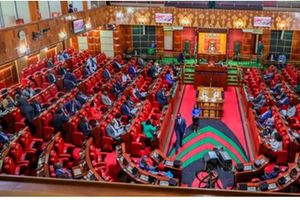
Members of County Assemblies are also using the final full financial year before the elections to push for ward-based projects with grassroots development and bursaries likely to feature prominently in the political contest.
The spending spree has, however, raised concerns over the potential use of public resources to influence voters.
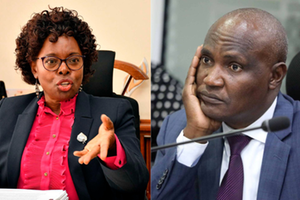
Controller of Budget Margaret Nyakang’o has warned governors against misusing bursaries and development funds for political purposes as the country enters the electioneering period.
“Expenditure in counties will be under sharp scrutiny since it is an election period. I know some governors may be tempted to misuse bursaries as they seek re-election. Let funds meant for development serve that purpose and those meant to fund the education of needy learners do exactly that,” Ms Nyakang’o warned.
Governance expert David Ngugi said governors and MCAs were using the final budget cycle before the elections to consolidate their legacies and demonstrate their performance to voters.
“County bosses have prioritised funding for highly visible projects like roads and health facilities as well as Early Childhood Development Education centres. Completion of such projects will prove to the voters that they have delivered on their manifestos,” Mr Ngugi said.
In Kiambu, Governor Kimani Wamatangi is overseeing a Sh25.1 billion budget with roads, healthcare, agriculture, education and water among the key priorities.
The roads sector has received the largest development allocation of Sh4.5 billion, while Sh750 million has been set aside for equipping and operationalising new hospitals. Agriculture will receive Sh816 million, while education has been allocated Sh667 million for ECDE expansion and youth empowerment programmes.
“The 2026/2027 budget reflects his administration's commitment to delivering transformative, people-centred development through strategic investments in infrastructure, healthcare, education, agriculture, trade, and water services, with the goal of improving the quality of life for all residents of Kiambu County,” Governor Wamatangi said.
Muranga County Governor Irungu Kang'ata.
Photo credit: Wilfred Nyangaresi | Nation Media Group
In Murang’a, the county has approved a Sh12.5 billion budget whose priorities include the Smart City Programme targeting Murang’a, Kenol, Maragua and other major towns.
Governor Irungu Kang’ata said the programme seeks to make the towns cleaner, safer and more attractive to investors while the county will also prioritise Kang’ataCare and subsidised health insurance.
“The goal is to make Murang’a towns clean, safe and attractive for business so they can generate their own revenue and jobs. The other priority is Kangatacare, county-subsidised health insurance program, the county’s certified maize seed and fertilizer subsidy programme and Inua Masomo Programme, county’s flagship education support program,” Governor Kanga’ata explained yesterday.
In Kisii, Governor Simba Arati’s Sh21.9 billion budget places water, health and education among the biggest priorities. The budget comprises Sh14.03 billion for recurrent expenditure and Sh7.97 billion for development, financed through the equitable share, own-source revenue and conditional grants.
Water and sanitation has received Sh2.56 billion, health Sh1.37 billion and education Sh678.24 million.
“We have made tremendous progress in improving key infrastructure and services to the people of Kisii. Change is evident and that is the true mark of devolution for us,” Mr Arati told Nation yesterday.
In Trans Nzoia, Governor George Natembeya has prioritised completion of the Kenyatta Stadium, provision of seed maize to poor farmers and affordable capital for young entrepreneurs through the Nawiri Fund.
He also listed the conversion of volunteer ECDE teachers to contracts, water projects, reticulation and roads among his priorities as his administration races to complete projects before the 2027 elections.
“As I continue with broad consultations with my people on the way we will approach 2027 General Election, I remain focused on implementing my 11.03 budget for the 2026/27 fiscal year. Racing against time as we remain angled for the Wantam liberation, my people remain my true North in the most relevant political contest we will participate in. Conversion of ECDC teachers working on volunteer basis to contracts then PnP, Water projects and reticulation and roads are my top priority in the race against time for the 2026/27 Election year service,” said Governor Natembeya
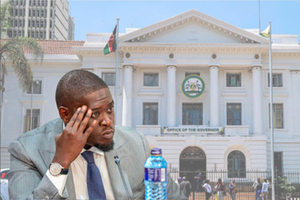
In Nairobi, MCAs approved Governor Johnson Sakaja’s Sh49.27 billion budget after a month-long standoff.
The spending plan seeks to consolidate achievements over the past three years while funding infrastructure, healthcare, education, environmental management and revenue reforms. Development spending has risen to Sh14.91 billion, about 30 per cent of the budget, from Sh13.4 billion in the previous financial year.
Roads, bridges, drainage and street lighting remain among the county’s major priorities.
"In the 2026/2027 financial year, we will increase investment across key sectors as the county shifts from institutional reforms to accelerating project completion and service delivery," revealed Governor Sakaja.
Finance Executive Ibrahim Auma said the county expects to finance the budget through Sh23.47 billion from the equitable share and grants, Sh20.86 billion from own-source revenue, Sh3.2 billion from the Health Facilities Improvement Fund (HFIF) and liquor licensing, and Sh1.7 billion in projected cash balances.
Nairobi County Governor Johnson Sakaja during a past media briefing at City Hall.
Photo credit: Francis Nderitu | Nation Media Group
Meru county boss Isaac Mutuma M'Ethingia said health will take up a huge portion of the county’s Sh14b budget.
In Homa Bay, Governor Gladys Wanga has placed health, infrastructure and agriculture at the centre of the county’s final budget cycle before the end of her first term.
"As we approach the final stages of our 2022-2027 term, we are building on the momentum from the past four years and accelerating the delivery of our commitments and the 2026/2027 budget will help accelerate priority projects in health, infrastructure and agriculture," said Homabay Governor Gladys Wanga while chairing the 49th meeting of the County Executive Committee, the first for the fiscal year 2026/27.
In Machakos, however, Governor Wavinya Ndeti is facing a budget impasse that threatens to delay implementation of the county’s spending plans.
The dispute centres on Finance Executive Catherine Mutanu Raphael, whose dismissal, impeachment by the County Assembly and subsequent reinstatement by the High Court have deepened tensions between the executive and the assembly. The assembly has so far approved withdrawal of only 50 per cent of the proposed budget.
Ms Ndeti has called for dialogue to resolve the impasse, saying she wants to implement key projects before the 2027 elections.
“I want to tell the MCAs that this is the time to stand up and be counted. As your leader, i have decided i will convene a dialogue so that we address this matter because Machakos is bigger than all of us.I am keen to implement key projects before we go into elections next year," said Governor Ndeti.
In Mombasa, the county assembly has approved a Sh17.8 billion budget, with Governor Abdulswamad Nassir defending the size of the county workforce amid repeated Senate scrutiny of the wage bill.
In Nakuru, Governor Susan Kihika, who is seeking re-election, is presiding over a Sh21.49 billion budget for 2026/27, with health, education, agriculture and other flagship projects receiving significant resources.
In Kakamega, Governor Fernandes Barasa has unveiled a Sh16.76 billion budget, with health and roads taking a significant share of development spending. The county has allocated Sh11.58 billion to recurrent expenditure and Sh5.18 billion to development.
Additional reporting by Joseph Wangui, Mwangi Muiruri, Simon Ciuri, Winnie Atieno and Benson Matheka