The ongoing political battle between governors and MCAs has resulted in several failed impeachment attempts and threatens to turn county assemblies into theatres of 'impeachments to nowhere'.
The battle for control of the billions of shillings managed by governors and succession politics have always been at the heart of many of these plots.
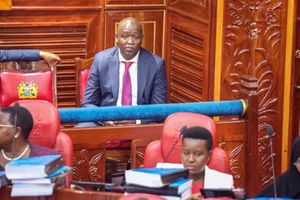
The Senate's latest verdict on Governor Mutai — who also escaped the MCAs' noose on a technicality last October — has exposed the rushed nature of some ouster motions, with some suggesting that the process is being used for political witch hunts.
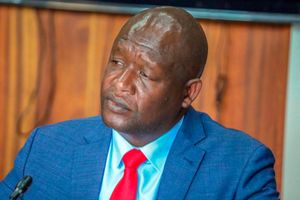
In July, Isiolo Governor Abdi Guyo also narrowly avoided removal from office on a technicality, as the MCAs were unable to prove that a meeting at the heart of the motion had indeed taken place. This led to a Senate ruling that the impeachment process is as important as the outcome.
Isiolo Governor Abdi Guyo.
Photo credit: File | Nation Media Group
Apart from the two cases mentioned, several other governors have also been saved by the courts due to the chaotic nature of the impeachment motions advanced by the county assemblies.
Since the advent of county governments in 2013, the Senate has handled at least 20 impeachment proceedings.
In eight of the 20 cases, the Senate has found the charges against a state officer to have been substantiated and confirmed the impeachment.
Since the advent of county governments in 2013, the Senate has handled at least 20 impeachment proceedings.
Photo credit: Pool
However, most of these cases were against Mr Martin Wambora, the former Embu governor, who became a “poster boy” for impeachment survival during his 10-year tenure in the Mt Kenya East county.
Council of Governors (CoG) Chair and Governor of Embu County Martin Wambora during a past media briefing.
Photo credit: Francis Nderitu | Nation Media Group
Mr Wambora faced a record four impeachment attempts, but he challenged each one in court and won, even after the Senate upheld resolutions by the Embu County Assembly.
The two-time governor quickly earned the nickname “the governor with nine lives”, but Governor Mutai is quickly becoming known by the same name.
On nine occasions, the Senate has found the charges to be unsubstantiated and has not confirmed impeachment against state officers.
In the other three cases, the impeachment motions were terminated due to failure to meet the impeachment threshold and other legal grounds.
Interestingly, since 2022, the Senate has handled at least five impeachment motions against three governors, with only one succeeding.
The other two impeachment motions were against deputy governors in Siaya and Kisii, with only the latter succeeding.
Another deputy governor to face the Senate was Bernard Kiala (Machakos), who escaped impeachment in 2020 after senators rejected a special committee's report.
Between 2013 and 2020, MCAs attempted to remove five governors from office. However, the Senate upheld only that of Mr Wambora, but this was also thrown out by the court.
Former governors Mwangi wa Iria (Murang'a), Paul Chepkwony (Kericho) and Granton Samboja (Taita Taveta), as well as the late Nderitu Gachagua (Nyeri), all survived plots to remove them from office.
Former Murang’a Governor Mwangi Wa Iria.
Photo credit: File | Nation Media Group
However, his lawyer, Ng’ang’a Mbugua, argued that the process was unconstitutional and premature.
He told an 11-member Senate committee that the county assembly had violated all the impeachment provisions by not giving the governor an opportunity to be heard when moving the motion.
He claimed that the MCAs had ill intentions, arguing that the governor had become a target after refusing to sign an unconstitutional bill into law that would have given each ward representative control of 20 million Kenyan shillings in development funds.
In September 2016, the late Gachagua was ousted by MCAs in Nyeri, but he survived impeachment when senators rejected all charges brought against him on the grounds that they did not meet the threshold for impeachment.
Former Nyeri governor Nderitu Gachagua.
Photo credit: Jeff Angote | Nation Media Group
Fast forward to 2019 and Mr Samboja was impeached by MCAs but survived in the Senate. A report by the Senate committee, chaired by Njeru Ndwiga (Embu), found that the allegations against the governor did not meet the threshold for impeachment.
Last week, Senate Majority Leader Aaron Cheruiyot's assertions of "traps being set up for the governor" appeared to reveal the possibility of underhand dealings and political interests fuelling some of the impeachments.
The Kericho senator, who was frustrated by the premature termination of the trial, revealed that he had contacted the MCAs during the vote in the assembly to keep track of the proceedings.
A visibly emotional Cheruiyot expressed his frustration that the Senate was about to terminate the trial without establishing whether there was systematic corruption in the Kericho County Government.
“I want to tell the people of Kericho that they will get justice by any means necessary. It may come from this House, or it may come from other agencies charged with ensuring that public funds that have been stolen are recovered,” said Mr Cheruiyot.
'If you escape the Senate today, we want to tell you that you will not escape the next trap that the people of Kericho have laid for you,' he added.
Final day - Impeachment hearing of Kericho Governor Eric Mutai
The two cases are seen as tools of governance and accountability, and continue to demonstrate how county assemblies have weaponised impeachment motions as tools for witch-hunting.
Consequently, MCAs have turned into lynch mobs, with some governors finding themselves in trouble because of their differences with ward representatives who dance to the governors' political rivals' whims.
Kirinyaga Senator James Murango said that, for the Senate to confirm the impeachment of a governor, the process and evidence must be beyond reasonable doubt.
He challenged the MCAs to take the impeachment process more seriously, as the law insists that the threshold is met.
“When you impeach a governor, you are condemning them to political oblivion, so the reasons must be irrefutable, and the process is one of the most important things,” said Mr Murango.
Nairobi Senator Edwin Sifuna said that there are genuine problems in counties, and that it would be unfair to label the efforts of MCAs to hold governors accountable as witch hunts wholesale.
However, he added that the Senate is insisting that the process of removing a governor must be carried out strictly in accordance with the law.
“MCAs are handing over a poisoned chalice to the Senate, expecting them to process it. They need to get it right from the outset,” said Homa Bay Senator Moses Kajwang’.
Kakamega Senator Boni Khalwale agreed with his colleagues, saying that some impeachment attempts had failed due to procedural errors.
Kakamega Senator Boni Khalwale.
Photo credit: Dennis Onsongo | Nation Media Group
He explained that, going forward, there is an urgent need for the Senate to develop a manual to guide MCAs.
'They tend to focus more on the reasons for impeachment, giving less weight to the process. It is therefore very difficult for senators to condemn a governor when the process borders on illegality, and they will be unable to succeed in the Senate. The case of Kericho is an example of this,” says Mr Khalwale.
However, Narok Senator Ledama Olekina said that the Senate should disregard technicalities to enable senators to consider the substance of such motions.
'MCAs are doing their job and they should be supported. We must disregard the technicalities and trust our institutions, as set out in Article 159(2) of the Constitution.”