Hundreds of pastoralists in Kajiado County are caught between a rock and a hard place as they battle a worsening pasture shortage while bracing for heavy El Niño rains expected between October and December.
The herders who have been forced to move their livestock to neighbouring counties in search of pasture now fear that the anticipated deluge could bring floods, livestock diseases and destruction of grazing land, compounding the effects of the ongoing dry spell.
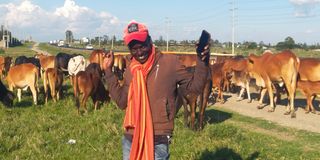
Raphael Taishi is relocating his herd of cattle from Kajiado to Machakos in search of pasture in November 2025.
Photo credit: File| Nation Media Group
Currently, the pastoral community in Kajiado is grappling with a shortage of pasture as drought begins to bite, particularly in parts of Kajiado Central, East, South and West sub-counties.
Herders say most areas received minimal rainfall during the April-May rainy season, leaving grazing grounds barren after only a few months.
James Kilesian, 54, from Kajiado West Sub-County is among hundreds of pastoralists who have moved their livestock to neighbouring Mavoko Sub-County in Machakos in search of pasture.
He owns 112 cows after three years of rigorous restocking following the devastating 2020/2022 drought, which killed at least one million livestock and left about 350 families facing starvation in Kajiado County, according to National Drought Management Authority (NDMA) data.
Apart from Kajiado County, the authority has cautioned that several sub-counties and specific vulnerable pockets may transition back into the “Alert” phase due to the onset of the seasonal dry period and early cessation of rainfall.
Dozens of herders are also said to have relocated to Makueni and Taita-Taveta counties in search of greener pastures in a frantic effort to avert livestock deaths from hunger.
“The pasture has diminished in most rangelands. We have no option but to move our animals to neighbouring counties for pasture. Some individuals with big tracts of rangelands allow us to graze for a fee. It’s a vicious circle for pastoralists in Kajiado every year,” said Kilesian.
However, the fear of drought is now intertwined with anxiety over El Niño rains among pastoralists who depend on livestock as their main source of livelihood in the largely semi-arid county.
The effects of the 1997-98 El Niño 29 years ago remain fresh, especially among elderly herders. The torrents brought landslides and floods that marooned and cut off villages, destroyed infrastructure and crops, while livestock waterborne diseases took a toll on animals, leaving locals even more vulnerable.
Kajiado West, South and North sub-counties bore the brunt of the El Niño torrents.
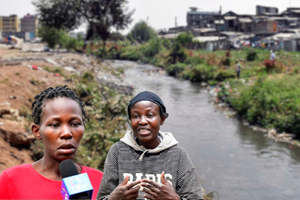
Kiserian town in Kajiado county. its among Kajiado satelites towns that expiriences flash floods during the rainy seasons.
Photo credit: Stanley Ngotho| Nation Media Group
Ezekiel Ntiyiene, 57, a farmer and butcher at Oloika in Kajiado West sub-County told the Nation that he was a 28-year-old budding livestock farmer during the 1997/98 El Niño rains.
He witnessed mass deaths of small livestock, including goats and sheep, as flooding took a toll on his ancestral Mile 46 village, like most low-lying areas of Kajiado County. Currently, he owns at least 100 cows and more than 150 goats and sheep after recovering from the devastating 2020-2022 drought.
“By thewn the heavy rains killed goats and sheep in masses. We (herders) fear a replica of the same that might be worse, considering most farmers have few animals due to a series of drought seasons since the 2020 dire drought. We are waiting for the El Niño rains with bated breath,” said Ntiyiene, adding that butchers have already increased the price of mutton and beef to Sh900 per kilogram as drought looms.
Stephen Nkabash, 60, from Kajiado Central Sub-County told the Nation he fears a repeat of the destruction caused by the heavy rains of 1997, which were characterised by mass livestock deaths.
Over the years, livestock have been a source of livelihood for many families and a source of pride for Maasai men. Nkabash said that with such rains, grazing fields would not last long, fearing that the dangerous Ipomea plant would spread rapidly across grazing fields, diminishing the grass.
Ipomea, a green leafy plant, is said to currently occupy more than two million acres in the vast county, translating to 35 per cent of the total grazing land.
Oliame Leteti, the Maasai term for Ipomea, is not eaten by domestic or wild animals because of its awful smell. The plant has also affected honey production in the region, with local honey considered poisonous, causing what was once a lucrative venture to plummet.
“Two years ago, we had a similar prediction that ended up being a false alarm. However, with the onset of the expected heavy rains, pasture will flourish before it rots because of excessive rains.
With no water harvesting mechanisms, our shallow water pans (Sirange in Maa dialect) will be silted, leaving us with no water storage,” said Nkabash, adding that there is a likelihood that fodder will be minimal for their animals.
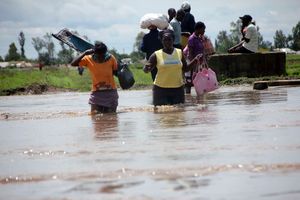
Floods maroon businesses in Athi River on April 24, 2024, after River Athi burst its banks.
Photo credit: File| Nation Media Group
Most herders who spoke to the Nation also fear outbreaks of Bluetongue (BT), an infectious but non-contagious, vector-borne viral disease, pneumonia, fall armyworm disease and Newcastle disease, which affects wild and domestic ruminants such as sheep, goats and cattle during the rainy season.
Prior to the rains, an outbreak of foot-and-mouth disease has been reported in Kajiado North sub-County, killing dozens of animals.
“We fear an outbreak of Bluetongue disease that killed livestock in masses during the 1997 El Niño rains. We are reaching out to the government to consider animal vaccination to avert deaths,” he added.
Also feared are skin and hoof diseases in cattle and small livestock, which are common during the rainy season. Rains commonly affect weak animals recovering from the effects of drought. According to herders, the animals suffer from lumpy skin disease, which develops into wounds over time.
In Kitengela, Kajiado East Sub-County, another farmer, Jackson Sinkeet, expressed fears that the heavy rains could result in the mass deaths of kids and lambs, considering most animals are expected to give birth between October and November.
“We usually time our animals to breed between October and November so that before the April rains, the young ones will be strong enough to survive the rains. Most goats and sheep will be giving birth during the El Niño rains in case it pours. They might not survive,” said Sinkeet, terming the expected rains “blessings in disguise”.
Herders further fear a downturn in livestock trade between October and December, saying heavy rains could cause seasonal rivers, most of which have no permanent bridges, to burst their banks and cut off villages from livestock markets.
They also fear disruption of livestock movement from neighbouring Tanzania, where animals cross difficult terrain to reach the Ilbisil and Shompole livestock markets.
Kajiado County boasts four major livestock markets: Ilbisil, Shompole, Kimana and Emali, with a combined annual turnover of Sh3.2 billion.
Flooded parts of Kitengela town, Kajiado East sub-County on August 29, 2026.
Photo credit: Stanley Ngotho| Nation Media Group
Fear of the El Niño torrents is also evident within the agricultural belt of Kajiado County, particularly Loitokitok.
Rael Njoki, 51, from Loitokitok in Kajiado South Sub-County said a repeat of the negative effects of the 1997-98 El Niño is expected if the rains become heavy.
The horticultural farmer who grows sunflower among other crops said poor drainage systems, especially within the Loitokitok agricultural belt, could worsen the effects of the rains.
“It might be worse this year. Some parts of the agricultural belt experience flash floods from neighbouring Tanzania. Our agricultural lands might be marooned like previously, destroying horticulture,” said Njoki.
In March 2026, at least 130 orphans from Namanga Islamic Orphanage were rescued from raging floods that marooned the facility.
The destructive deluge followed heavy rains on the Tanzanian side with floodwaters flowing into the border town as the neighbouring country’s drainage system channels water towards the Kenyan side.
In December 2021, during the rains, a massive mudslide occurred in Imbirikani-Eselenkei Ward, Kajiado South Sub-County, killing 520 animals worth Sh1.2 million.
The livestock, most of them goats, sheep and calves, were buried alive in the mud as their owners watched helplessly after heavy rains pounded the Chyulu Hills near the Kajiado-Taita-Taveta border.
Human settlements within riparian lands could be courting disaster during the rains. Riparian land encroachment, especially in satellite towns such as Ngong, Kiserian, Ong’ata Rongai and Kitengela, has blocked waterways along seasonal rivers.
In the last six years, during normal rainy seasons, at least 20 people have reportedly been washed away by flash floods in the vast county. Most of the deaths were reported in Kajiado North and South sub-counties.
“So far, we (residents) have not witnessed devolved unit El Niño rains preparedness, especially in towns. The county might be caught flat-footed after destruction like previous heavy-season rains,” said Joel Mutua, a Kitengela resident.
However, Kajiado County Executive Committee Member for Agriculture, Livestock and Veterinary Services Francis Sakuda said his department had put in place a raft of mitigation measures including plans to develop earth pans to collect rainwater and mass vaccination of goats and sheep against Peste des Petits Ruminants (PPR).
“In collaboration with partners, we dig strategic earth pans to collect rainwater and ensure all goats and sheep have been vaccinated against PPR,” said Sakuda without revealing how much had been allocated.