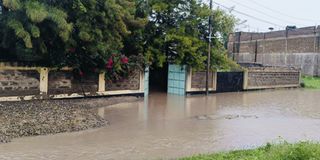
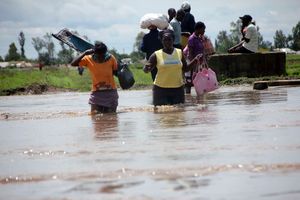
Every time it rains hard, Joel Kagondu's neighbourhood floods. The 50-year-old father of three lives in Kanyiriri informal settlement in Kwale, Nkaimurumya Ward, Kajiado County, and says he has heard the same promise of proper drainage since devolution began in 2013.
Now El Niño is forecast, and he is not expecting anything to change before it arrives.
"We are aware El Niño is coming but we have no option," he said. "God will take care of us, considering the leaders have always forsaken us after ascending to power. We expected the county government to have hit the ground in preparedness."
The Kenya Meteorological Services Authority's October-November-December 2026 seasonal forecast warns that intensifying El Niño conditions will bring heavy, above-average rainfall across all 47 counties, with rain possible from September.
In Kajiado's satellite towns of Ngong, Kiserian, Ong'ata Rongai and Kitengela, the concern is less the rain itself than what it will meet on the ground.
Towns that outgrew their infrastructure
Kajiado North, the county's economic hub and home to 306,596 people according to the 2019 census, has flooded before, with deaths and destroyed property. Residents, local leaders and environmentalists point to the same set of causes.
Drainage is the first. Ngong, Kiserian and Ong'ata Rongai have grown quickly without sewer lines, and buildings have pushed onto road reserves. Homes also sit on riparian land, blocking the seasonal rivers and stormwater channels meant to carry runoff away.
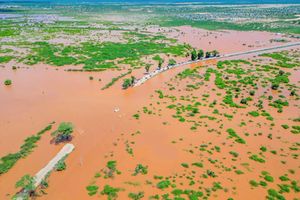
Flash floods in Isinya, Kajiado County, on March 15, 2018. PHOTO | TONY KARUMBA | AFP
Environmentalist John Kakui, founder of Kisaka Foundation Kenya, says the towns' origins are part of the problem.
"Poor planning of the towns that initially began as shopping centres is another major risk," he said. "Plastic and single-use bags then choke the trenches and natural waterways that do exist."
Bare ground makes it worse. Kakui says the towns have too little tree cover, so rain hits the soil directly, erodes it, and the silt blocks culverts downstream.
"A good tree cover slows the raindrops, reducing soil erosion that is a catalyst of flooding," he said.
Concrete has the opposite effect. Pavements stop water from soaking in and produce large volumes of fast-moving surface runoff.
Kakui ranks Kiserian and Ong'ata Rongai as higher risk than Ngong and Kitengela because of their topography, with Athi River township also exposed.
In Ong'ata Rongai, the areas most prone to flooding include Ole Kasasi, Gataka, Kwale, and several spots and bridges along Magadi Road that are regularly cut off.
Mary Muthoni of Gataka lived through the 1997 El Niño and says the low-lying land in much of Kajiado North leaves it exposed, along with the disease that follows prolonged flooding. She is considering moving to her rural home in Murang'a if the rains are as heavy as forecast.
In Kiserian, families near Kiserian Dam fear the water will rise and spill. John Wambua of Mailoni Village says the dam has broken its banks in past rainy seasons and forced families out. He wants the authorities to dig a wider outlet before the rains.
Kiserian town in Kajiado county. its among Kajiado satelites towns that expiriences flash floods during the rainy seasons.
Photo credit: Stanley Ngotho| Nation Media Group
"In case the water levels rise and the dam breaks its banks, our homes will be marooned forcing us to relocate. It has happened to us in the past. We expect the relevant authorities to dig an enhanced outlet to let out more water during the rains," Said Wambua.
In Ngong's Bulbul Gicagi, 72-year-old Damaris Ngugi, who lives with her grandchildren in a two-room semi-permanent house, says most residents are poor and can only wait and hope.
In Kitengela, residents of Noonkpoir, New Valley, Balozi Road and Tropicana Road estates along the Ilkeek-lemedung'i River, known as New Valley River, are taking a wait-and-see approach. The town has seen what can happen. In May 2024, flash floods killed two people and displaced at least 300 families along several seasonal rivers.
Flooded homes are seen here in Kitengela after a seasonal river bursts it banks on May 1, 2024.
Photo credit: Stanley Ngotho | Nation Media Group
Little sign of preparation
Nkaimurumya MCA Maina Mutiga calls the coming El Niño "a disaster in waiting" and says no funds have been set aside for El Niño emergencies. "There is no county preparedness. In case it rains, it will be pathetic, slowing down and endangering lives," he said.
Former Kajiado Senator Peter Mositet called the rains a time bomb and urged both the national and county governments to act. He said the county should draw on its emergency fund for interventions before and after the rains, sensitise residents, unclog drainage and advise farmers on what to plant.
County Environment Chief Officer James Ngugi said the county knows the rains are coming and will work with the national government on drainage in urban centres. He urged residents in flood-prone areas, rural and urban, to move to safer ground. He did not say what the county itself will do, or what it has budgeted.
On Tuesday, Maa elders in Kajiado traditionally made their own forecast, reading the intestines of a slaughtered goat. The result predicted heavy rain in all five sub-counties: Kajiado North, East, West, South and Central, matching the Kenya Met forecast.