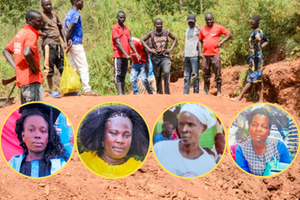
Conrad Ashioya Isese, a construction worker, left his house at Imabwa Village in Ikolomani, Kakamega County, for a job near Isulu market. It would be his last day alive.
He was accompanied by Edgar Wekesa, and together they were working at a construction site when Ashioya was asked to go and fetch a tape measure.
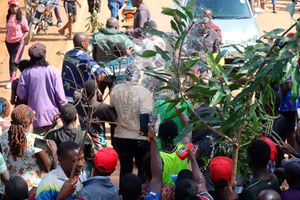
More than 10 minutes later, there were gunshots and one of the bullets apparently caught Ashioya as he fled from the police, who were confronting a group protesting against a move by the government to issue a licence for a foreign firm to mine gold in the area.
“I tried calling his phone a couple of times, only to be answered by a mortuary attendant at Kakamega Referral Hospital telling me that Ashioya’s body had been brought to the facility,” said Mr Wekesa.
Mr Ashioya was among four people killed on Thursday when police clashed with protesters, including gold miners.
Residents were demonstrating against a move by the National Environment Management Authority (Nema) and Shanta Company to hold a public participation forum at Emusali Primary School on the relocation of 800 households following the discovery of gold deposits worth over Sh600 billion.
About 48 kilometres away, at the Jaramogi Oginga Odinga Teaching and Referral Hospital, three people are nursing gunshot injuries sustained at Isulu, among them 19-year-old Erick Msheti of Bushianga.
The bullet hit his pelvic area, while Victor Alvin Lodeki was shot in the back, with the bullet exiting through his left shoulder. Joseph Mulama was hit by two bullets on the forearm and another through his fingers.
According to Mr Msheti, an artisanal miner, they went to the public participation forum but, when their views were not being considered, the meeting turned rowdy, leading to a confrontation between them and the police. That is when he was shot from behind.
Even amid the pain, he remained steadfast that he and other villagers would never leave their homes or allow a foreign firm to mine gold.
“This is our livelihood, and we are satisfied with the little we get every day, but it sustains us for long. We won’t let this go for short-term satisfaction through compensation,” said Mr Msheti.
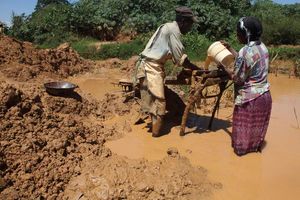
He told the Daily Nation that he takes home between Sh12,000 and Sh20,000 every day, through a venture he is determined to protect at all costs.
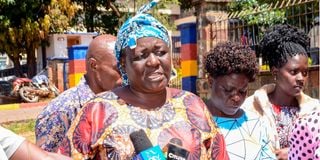
Consolata Musavi Lubanga addresses journalists on December 5, 2025 at Kakamega Police Station, where her husband had been detained after unrest in Isulu, Ikolomani, over Shanta Gold Company’s bid to acquire village land for mining gold.
Photo credit: Alex Odhiambo | Nation Media Group
The scuffle saw four people killed, more than 30 injured, and 63 arrested.
The raid carried out by police in the early hours of Thursday night saw even elderly people and minors arrested and spending the night in police cells.
On Friday morning, hundreds of mothers and wives flocked to the Kakamega Police Station to secure the release of their sons and spouses.
“We are wondering why the police kicked our doors in the middle of the night to pick even people who were not part of the protests. We have come here with birth certificates to show that those they took are children who had nothing to do with the protests,” said Severina Muhandachi from Isulu.
According to them, more than 100 people were arrested that night.
Western Regional Police Commander Issa Mohamoud said the angry youth disrupted the meeting while armed with crude weapons including pangas, metal rods and wooden batons.
The regional police boss termed the incident a well-planned and bankrolled attack financed by politicians.
“Most of these politicians are the loudest in the county. We have arrested two MCAs who were dishing out money on behalf of a chief financier, who we will establish in due course,” said Mr Mohamoud.
Four people were killed and many officers injured; 21 officers were injured, with two still admitted to hospitals in Kakamega.
“They attacked the inspector in charge of the police post and wanted to take his pistol, but they failed, only managing to steal the magazine with 15 rounds of ammunition.
“The aim of attacking police and the station was to get to the armoury and steal firearms, but they were repulsed,” said Mr Mohamoud, the regional police boss.
Journalists were also hurt in the melee. Schools were also vandalised, with perpetrators destroying property estimated at Sh2 million.
The police boss claimed that one of those killed has an ongoing murder case involving the killing of a security guard attached to Shanta Gold mines.
“If you do not agree with the public participation forums, you have other avenues available, like sending a petition or stopping the operations in court—not through violence,” said Mr Mohamoud.
“We have arrested the person who hit a female police officer on the head, and we are coming for more who were involved in Friday's criminal acts. We have the real culprits after they were identified by the police and members of the public,” he added.
He stated that they will be camping at Isulu to arrest others who have gone into hiding, saying the area is slowly sliding into a den of goons and illicit alcohol.
A team of detectives from Nairobi is also investigating the root cause of the violence and seeking to arrest its planners and executors.
Last year, at least one person was killed, several others injured, and property destroyed as two groups battled over mining sites in Ikolomani, Kakamega County, over a three-month period.
The wrangles that erupted in June 2024 have been ongoing, with artisanal miners from the Isulu-Bushiangala sites accusing Shanta Gold Mining Company of engaging in mining when it was licensed only to conduct exploration.
The entry of Shanta Gold Limited has caused tension within Isulu, Musali, Shikangani, Makata and Lunelele areas, where local miners seeking to control the mining sites oppose its activities.
Large-scale commercial mining in the area by British companies effectively ended in 1953, when political agitation for independence peaked.
The term "Ikolomani" itself is a local corruption of the English phrase "gold mine," reflecting the region’s long history of gold prospecting.
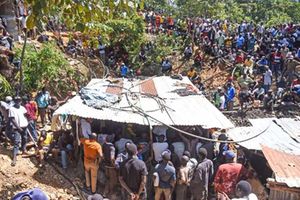
While artisanal mining has continued intermittently, recent conflicts and fatalities have largely stemmed from mine shaft collapses.
Despite the venture not producing its expected potential, locals remain determined to pursue it for the little they get, as opposed to allowing a professional firm with modern equipment to take over and displace them from the gold-rich region.
In November, the Bushiangala–Isulu and Musoli communities submitted a memorandum to NEMA objecting to the project, arguing that it was not viable and its benefits would primarily favour the private investor.
In their letter, they stated that a community survey conducted across 18 villages revealed that 94 per cent of affected households had never seen the Environmental Impact Assessment (EIA) report, with many residents asked to sign documents they did not understand.
They further urged NEMA to ensure that the EIA report is translated into Swahili and local dialects to enhance public understanding and meaningful participation.
Land ownership, resource sharing and the arrival of modern mining companies like Shanta Gold are the main factors that have led to conflicts and clashes with authorities and landowners in the 2020s.
The gold mine has been linked to increased school dropouts in the region, with very young boys quitting school to make quick money at the mines.
The collapse of mine shafts is attributed to poor safety precautions and illegal, unorganised mining operations, which frequently result in death.
Government data shows that in the five years to 2022, Kenya lost 60 people in mining sites while 59 were injured.
Alex Biketi an advocates of the Isulu gold mine victims addresses journalists at Kakamega Police Station on December 5, 2025.
Photo credit: Alex Odhiambo | Nation Media Group
According to data derived from the Auditor General’s performance audit report on monitoring artisanal mining operations by the Ministry of Petroleum and Mining, the worst county during that period was Kakamega, which lost 27 people. It was followed by Kisumu and Migori, each with 15 deaths.
According to a tabulation based on media reports done by the Nation on deaths in gold mines between 2015 and 2025, at least 89 people have died over that period while 65 sustained injuries.
Human rights activist Faruk Machanje said the government should stop using force and instead engage the people through proper channels.
“The government must appeal to the people and agree on the best way to move forward on this matter. Shanta should close its offices at Isulu until this matter is sorted because we cannot live with people who are causing deaths and injuries,” said Mr Machanje.
Deputy Governor Ayub Savula asked Nema to suspend any public participation on gold mining in Isulu until the situation is brought under control.