The High Court has ruled that it has jurisdiction to hear a petition challenging the Water Resources Regulations, 2025, which increased domestic water charges by over 300 per cent from Sh0.50 to Sh2.50 per cubic metre.
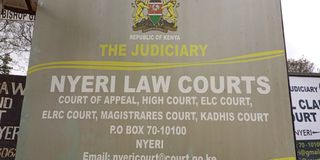
Nyeri High Court Judge Magare Kizito on Wednesday, November 18, dismissed a preliminary objection by the Water Resources Authority (WRA), which argued that the dispute should first be heard by the Water Tribunal.
WRA had argued that the petitioners, three officials of Kieni Water Project, should exhaust alternative dispute resolution mechanisms provided under the Water Act, 2016, before moving to court.
However, Justice Kizito found that the petition raises substantial constitutional questions, including the right to clean and safe water, public participation and the validity of laws and regulations, which fall within the High Court's jurisdiction.
The petitioners are challenging the Water (Resources) Regulations, 2025, published under Legal Notice No. 58 of 2025, as well as provisions of the Water Act, 2016.
They have sued the Cabinet Secretary for Water, Sanitation and Irrigation, the Attorney-General, WRA and the Water Services Regulatory Board, accusing them of introducing the new charges without adequate public participation.
They argue that the regulations violate their constitutional rights to clean and safe water and fair administrative action, as well as other statutory provisions governing access to water.
The petitioners further accuse WRA officers of illegally vandalising the Kamiruri water intake on December 5, 2025, in an incident involving police officers.
In determining the objection, the court considered three issues: whether the objection qualified as a proper preliminary objection, whether the petitioners were required to first approach the Water Tribunal and whether the dispute fell within the jurisdiction of the Environment and Land Court (ELC).
While finding that the preliminary objection was properly before it, the court rejected WRA's argument that the petitioners should have first pursued the dispute before the Water Tribunal.
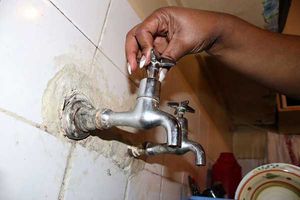
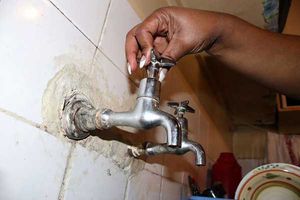
Water gushing from a tap.
Photo credit: File | Nation Media Group
Justice Kizito observed that although courts are required to promote alternative dispute resolution mechanisms, the doctrine of exhaustion is not absolute, particularly where a dispute raises substantial constitutional questions.
He said the Water Tribunal did not have jurisdiction to determine the central issues raised in the petition, which include the constitutionality and validity of the regulations and whether they were enacted in compliance with public participation requirements.
The judge noted that the tribunal could handle some aspects of the wider dispute, such as water arrears and permits, but lacked the mandate to declare an Act of Parliament invalid or grant the principal reliefs sought by the petitioners.
"Its main prayers are declarations of invalidity and this is the language and substance of a constitutional petition," he ruled.
Justice Kizito said the Constitution empowers the High Court to determine whether any law is inconsistent with or in contravention of the Constitution.
On whether the matter belonged before the ELC, the court found that the petition primarily raised constitutional questions concerning the right to water, public participation and the validity of legislation and regulations.
The judge also dismissed WRA's argument that the petitioners should have invoked the inter-governmental dispute resolution mechanism, noting that the case involved private citizens and not a dispute between the national and county governments.
According to the petition, the Cabinet Secretary brought the Water (Resources) Regulations, 2025, into force on April 15, 2025, through Legal Notice No. 58 of 2025.
The regulations introduced new water charges for domestic, community and small-scale water providers across the country.
The petitioners argue that there was no adequate and meaningful public participation before the regulations were introduced, claiming that no stakeholder forums were held, invitations issued or draft regulations circulated to members of the public.
They further argue that implementation of the new charges has triggered threats of cancellation of water permits, raising concerns among community water providers.