A survivor’s credible testimony can be sufficient to secure a conviction in a sexual offence case, even in the absence of fresh physical injuries or conclusive medical evidence, a court in Rongo, Migori County, has affirmed.
Rongo Principal Magistrate Chrispine Orwo made the determination while sentencing an offender to 15 years in prison for defiling his 17-year-old niece during the December school holidays.
In a detailed judgment, Mr Orwo cited previous Court of Appeal decisions to clarify that the law does not require penetration to be established exclusively through medical evidence.
Quoting the case of Mark Oiruri Mose v Republic 2013 eKLR (Criminal Appeal No. 295 of 2012), the magistrate said a court can rely on the complainant’s testimony, provided it is credible and believed.
In the case, the Court of Appeal at Kisumu held that medical evidence is not the only means of proving penetration. Even where a medical report, such as a P3 form, is absent, inconclusive or lack of findings such as spermatozoa or a broken hymen, penetration can still be established.
The magistrate also cited Mohammed v Republic, which similarly held that the absence of injuries or spermatozoa does not, in itself, disprove penetration.
Under Section 2 of the Sexual Offences Act, penetration is defined as the partial or complete insertion of the genital organs of one person into those of another.
In Mark Oiruri Mose v Republic, the Court of Appeal further clarified that penetration need not be deep, as even slight or surface insertion meets the legal threshold.
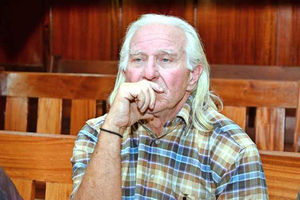
According to Rongo Principal Magistrate Chrispine Orwo, the law does not require penetration to be established exclusively through medical evidence.
Photo credit: Pool
Mr Orwo also referred to the landmark Court of Appeal decision in Kassim Ali v Republic 2006 eKLR (Criminal Appeal No. 84 of 2005, Mombasa), which held that proof of penetration is a question of fact to be determined from the totality of the evidence, rather than medical findings alone.
The court observed that the absence of medical evidence supporting an allegation of rape is not decisive, as the offence can be established through the victim’s oral testimony or circumstantial evidence.
“Penetration need not be proved through medical evidence alone. The court can be satisfied by the complainant’s own testimony if believed by the court,” the magistrate ruled.
The man was convicted of defilement contrary to Section 8(1), as read with Section 8(4), of the Sexual Offences Act No. 3 of 2006. He had also faced an alternative charge of committing an indecent act with a child contrary to Section 11(1) of the same Act.
The court heard that the minor, born on March 10, 2008, had been staying at her uncle’s homestead in Rongo Sub-County for about a month during the school holidays.
On the morning of December 7, 2025, at around 7am, the girl woke up to find her uncle beside her. She testified that he forcibly removed her skirt, restrained her and defiled her.
She immediately reported the ordeal and was examined by a clinical officer (PW4) two days later, on December 9.
Although the medical examination revealed no fresh injuries, it documented old scars, a ruptured hymen and a whitish discharge indicating an infection. The clinician concluded that she had been defiled.
In his defence, the convict denied the charges, claiming that about 80 casual labourers were working at a gold mine within his homestead that morning.
However, the magistrate dismissed the defence as a “mere denial”, noting that he had failed to call any of the alleged workers to testify. He also did not challenge the evidence placing the girl at his home.
During mitigation, the convict pleaded for a non-custodial sentence, saying he was a first offender and a family man whose incarceration had disrupted his family.
Mr Orwo rejected the plea, citing the statutory minimum sentence prescribed under the Sexual Offences Act for the offence. He sentenced the offender to 15 years in prison, backdated to January 5, 2026, to account for the time he had spent in remand. He also granted him 14 days to appeal.