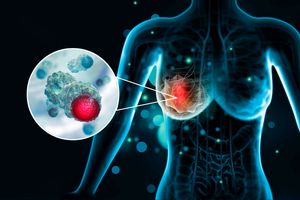
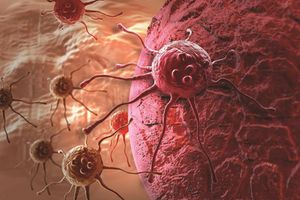
Lillian Paskalia Awino, 15, died two months ago while receiving treatment for stage three rhabdomyosarcoma, a type of soft-tissue cancer discovered after she developed persistent stomach pain.
Her death has left her parents, Charles and Irene Obonyo, devastated. Lillian was their first-born child and had just joined Langa Langa High School as a Grade 10 student.
At their home, photographs of the teenager remain on display, reminders of a daughter whose illness progressed rapidly. Her parents say the cancer diagnosis turned their lives upside down, exposing the difficulties families face when a child develops cancer.
Lillian had complained of a persistent stomach ache shortly before the beginning of the second term. Her parents initially thought it was an ordinary stomach problem and gave her Flagyl. When the pain persisted, they took her to Nakuru County Teaching and Referral Hospital, where an ultrasound revealed a nine-centimetre pelvic growth.
The following two months were marked by severe pain, repeated tests and treatment. Lillian became incapacitated, while her parents, who work as casuals in the Nakuru Department of Health, struggled to work regularly and meet the costs of her care.
The family also encountered gaps in insurance coverage. The Social Health Authority covered her hospital bed, but did not pay for all the tests and medicines she needed. Lillian required three dialysis sessions a week, but only two were covered, leaving the family to pay Sh10,500 for the third. A replacement catheter after the first was contaminated cost another Sh15,000.
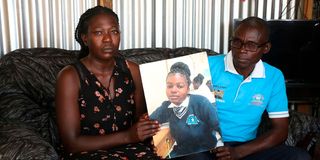
Irene Okoth, mother of the late 11-year-old Lillian Paskalia, is overcome with emotion as she recalls her daughter’s death during an interview at her home in Baruti, Nakuru County, on September 11, 2026.
Photo credit: Boniface Mwangi | Nation Media Group
The experience highlights wider challenges facing children with cancer in Kenya, where late diagnosis, limited specialist care and financial constraints continue to affect treatment.
Dr Dulcie Wanda, the lead oncologist at Nakuru County Teaching and Referral Hospital, said rhabdomyosarcoma is common among children and develops from primitive skeletal tissues. In Lillian’s case, the pelvic mass compressed her urethra, making it difficult for her to pass urine and affecting her kidneys. A blood clot later led to her admission to the high dependency unit.
Doctors say many sarcomas begin as painless lumps or swelling, meaning families may not immediately recognise them as signs of cancer. Bone sarcomas, in particular, are often diagnosed at advanced stages because patients seek care late.
Rhabdomyosarcoma can be cured when detected early. Treatment usually involves chemotherapy, while surgery may be required depending on the size and location of the tumour. Radiotherapy may also be used when a mass remains after chemotherapy or in cases of bleeding.
Nakuru has provided cancer treatment to patients from the South Rift since 2018 through its Regional Cancer Centre. However, the hospital does not have a dedicated paediatric oncology wing.
Dr Wanda said the facility has sought guidance from Kenyatta National Hospital and hopes collaboration will enable it to co-manage children receiving chemotherapy. She said radiotherapy patients would require facilities capable of providing sedation.
The World Health Organisation estimates that about 400,000 children aged 0 to 19 develop cancer annually. In developed countries, about eight in 10 children diagnosed with cancer are cured, while survival in low and middle-income countries such as Kenya is estimated at between 10 and 30 per cent.
Kenya also faces a shortage of paediatric cancer specialists. There are only about 15 paediatric oncologists serving a population of nearly 60 million people.
Phoebe Ongadi, executive director of the Kenya Network of Cancer Organisations, said the absence of reliable data and adequate diagnostic facilities contributes to childhood cancer deaths. She said Kenya lacks specific data showing how many children are diagnosed early or late and where treatment gaps are greatest.
Treatment abandonment is another challenge. Ongadi said about 34 per cent of children leave treatment, partly because caregivers lose income while caring for sick children. Such interruptions reduce the chances of survival.
Kenya records an estimated 3,000 to 5,000 childhood cancer cases annually, against more than 40,000 cancer cases across all age groups. The National Cancer Control Strategy 2023–2027 targets a 60 per cent childhood cancer survival rate by 2030 through a national childhood cancer programme.
Lillian’s parents hope her death will spark greater attention to childhood cancer, early diagnosis and access to treatment.
Charles Obonyo and his wife, Irene Okoth, parents of the late Lillian Paskalia, at her gravesite at their home in Baruti, Nakuru County, on September 11, 2026. Lillian died of rhabdomyosarcoma, a cancer of the pelvis and cervix.
Photo credit: Boniface Mwangi | Nation Media Group
Charles, who has lived with HIV for 36 years, says his own experience with cancer made him particularly alert to the dangers of the disease. He survived oesophageal cancer diagnosed in 2005 after treatment at Kijabe Mission Hospital and later survived a recurrence that was found in his colon in 2014.
When the family could not afford the Sh250,000 needed for surgery, former Nakuru governor Kinuthia Mbugua helped them meet the cost. Charles later recovered and has continued to undergo annual cancer checks.
In 2019, when Kenya rolled out the human papillomavirus vaccine, Charles ensured Lillian received it as part of efforts to reduce her risk of cervical cancer.
The family’s experience has also underscored the importance of paying attention to symptoms that may initially appear ordinary.
Dr Wanda urged parents to seek medical attention when children develop persistent or unexplained symptoms and to follow referral procedures where specialist care is required.
For Charles and Irene, however, the medical explanations cannot ease the pain of losing their daughter.
“It still hasn’t settled in that we lost Lillian in a span of two months,” Charles says. “We are all affected, even her younger siblings.”
“My hope is that someday the government will declare cancer a national disaster and that will make cancer treatment free in this country,” he says.