The number of people facing high levels of acute food insecurity in Kenya’s arid and semi-arid lands (ASAL) has risen by 55 per cent to 2.7 million, a new food security assessment shows.
The latest Integrated Food Security Phase Classification (IPC) analysis estimates that 2.7 million people across the 23 ASAL counties are currently in a crisis stage (IPC Phase 3) or above and require urgent food and livelihood assistance.
Of this population, about 348,000 people are in IPC Phase 4 (emergency), with the largest concentrations recorded in Mandera, Turkana, Wajir, Garissa, Marsabit and Tana River. No population was classified in Phase 5, or catastrophe stage.
The current figure represents a 55 per cent increase from the approximately 1.8 million people classified in Phase 3 or above in July 2025.
The report, published on September 14, says the deterioration reflects the cumulative effects of poor rainfall distribution, below-average livelihood recovery, persistent household vulnerabilities and insufficient humanitarian food security assistance.
Eight counties, which are Baringo, Garissa, Mandera, Marsabit, Samburu, Tana River, Turkana and Wajir are classified in Phase 3, while the remaining 15 ASAL counties are in Phase 2 (stressed).
The report says food insecurity has worsened despite some improvement in rainfall and rangeland conditions in parts of the ASAL.
“Although Humanitarian Food Security Assistance levels have increased slightly in some hotspots compared with the same period last year, it remains limited across most affected counties,” the report says.
The food insecurity situation is accompanied by a high burden of acute malnutrition among children and women. The IPC analysis estimates that 883,300 children aged six to 59 months are acutely malnourished and required treatment between April 2026 and March 2027.
Peter Kamuti picks maize grains at the Taveta airstrip field. The 80 year old relies on the spilled maize to fend off hunger.
Photo credit: Lucy Mkanyika | Nation Media Group
The caseload comprises 224,300 children with severe acute malnutrition (SAM) and 659,000 with moderate acute malnutrition (MAM). A further 116,800 pregnant and breastfeeding women are acutely malnourished and require treatment.
The report says the combined caseload of children aged six to 59 months represents a 19 per cent increase, or about 140,000 children, compared with the April 2025–March 2026 estimate.
“Critical acute malnutrition continues,” the report states, highlighting the severity of the nutrition situation alongside persistent high levels of acute food insecurity.
Between April and July 2026, 14 areas were classified as critical (Phase 4). They include areas in Baringo, Garissa, Isiolo, Mandera, Tana River, Wajir, Marsabit, Samburu and Turkana, as well as Dadaab refugee settlement.
Five regions including West Pokot, Saku, Moyale, Kakuma and Kalobeyei were classified in Phase 3 (serious). Overall, 19 of the 30 areas analysed were in either Phase 3 or Phase 4.
The assessment says acute malnutrition worsened compared with the 2025 long-rains assessment, with Tana River and Wajir moving from Phase 3 to Phase 4. The IPC identifies poor rainfall distribution as one of the factors contributing to the deterioration.
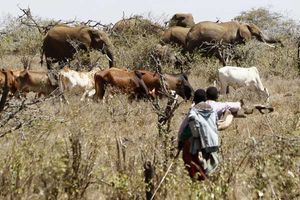
Although many parts of the country received near-average or enhanced rainfall, the report says early rainfall was followed by prolonged dry spells, poor distribution in May and localised early cessation.
Garissa, Mandera, Isiolo, Wajir and parts of Tana River were particularly affected, with pasture regeneration, water availability and crop performance remaining below expectations.
Rain-fed crop production in parts of Samburu, Baringo, West Pokot, Wajir and Mandera also experienced moderate to significant failure or below-average yields during the March–May 2026 long-rains season.
The report attributes the poor performance to early cessation of rainfall, prolonged dry spells, poor temporal distribution and below-average rainfall during critical crop-growth stages.
High food and non-food prices have also put pressure on household budgets. The assessment says food prices had already surged in 2025 and had not returned to pre-shock levels, while elevated fuel prices increased the cost of transport, land preparation, irrigation and agricultural inputs.
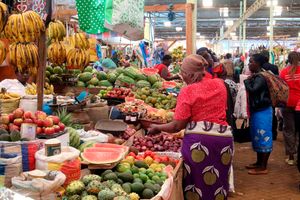
At least 2.7 million Kenyans are facing high levels of acute food insecurity and require urgent food and livelihood assistance.
Photo credit: File | Nation Media Group
The report also documents the coping strategies households are using as food insecurity worsens. In six of the 23 population groups assessed, more than 20 per cent of households were employing crisis-level or worse consumption coping strategies.
Marsabit, Turkana and Meru recorded the highest proportions, with more than 30 per cent of households applying severe coping strategies, including adults restricting their own food intake so children could eat.
In Wajir, Turkana, Marsabit and Mandera, at least 40 per cent of households experienced moderate hunger, according to the assessment. The report says food gaps are also contributing directly to child malnutrition.
“Large food gaps contribute to inadequate nutrient intake leading to breakdown of the body stores, weight loss and acute malnutrition,” the assessment says.
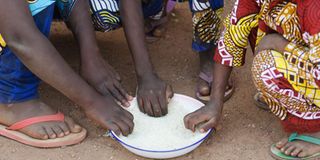
At least 348,000 people are in emergency of food crisis, with the largest concentrations recorded in Mandera, Turkana, Wajir, Garissa, Marsabit and Tana River.
Photo credit: Shutterstock
It adds that severe child food poverty was highest in Turkana, Garissa and Samburu, where large proportions of children were unable to access a minimally diverse diet.
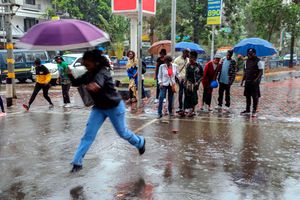
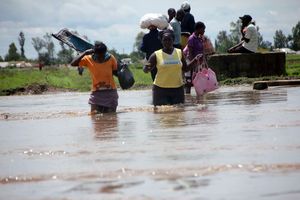
The food security situation could face further pressure from the forecast El Niño rains. The IPC projects enhanced rainfall between October and December 2026 but warns that excessive rains could trigger flash floods, particularly in low-lying areas of the coastal, northern and eastern regions.
The rains are expected to improve pasture and water availability in pastoral areas but could also cause flooding, crop damage, destruction of infrastructure and disruption of transport, markets and humanitarian operations.
For the November 2026–January 2027 period, the report projects the number of food-insecure people in the ASAL counties will fall to about 2.1 million, provided the expected enhanced rainfall is realised.
However, Turkana, Garissa, Wajir, Mandera and Tana River are projected to remain in Phase 3. Lamu is expected to deteriorate from Phase 2 to Phase 3 because flooding could affect the main supply routes into the county.
The report says the expected rains could have both positive and negative effects, with improved water and pasture on one hand, but increased risks of flooding, disease outbreaks and disruption of food markets and humanitarian operations on the other.
Overall, the IPC says the current food insecurity situation requires urgent food and livelihood assistance, while the acute malnutrition caseload requires urgent treatment. The IPC is a globally used system for classifying the severity of food insecurity and acute malnutrition.