To many people, Nyandarua County is arguably the land of "milk and honey."
From the lush green potato farms of Kinangop South to the maize plantations in Ol Kalou and the dairy farms of Ol Joro Orok, the county is revered as a food basket in the country.
With at least 80 percent of its total land acreage agriculturally productive, Nyandarua has long been one of the leading producers of potatoes, milk, carrots, maize and other farm products.
However, the county is currently experiencing a decline in food security.
Some parts of the region that were once recognised as top producers are now heavily reliant on government food relief.
The most affected areas are in Kinangop and Kipipiri constituencies, where food production has drastically reduced due to the vagaries of weather.
For instance, more than two years after heavy rains devastated crops in Kinangop and Kipipiri, farmers in the two constituencies are still recovering.
In 2023, heavy rains, frosts and hailstorms caused massive crop destruction in these areas. Weather patterns have changed irreversibly, and constituencies formerly classified as breadbaskets are now dependent on government food aid.
Nyandarua Woman Representative Faith Gitau, whose office coordinates food relief distribution in the affected areas, admits that growing food insecurity has become a major concern.
“The trend started around 2023 when there was massive crop destruction due to unpredictable weather patterns. For example, Kinangop and Kipipiri experienced hailstorms and frost between the end of March and early April 2023, a period when we normally expect favorable conditions for Irish potatoes and the maturity of vegetables like snow peas. We did not expect this reliance on food donations to continue for so long,” explained Ms Gitau.
She revealed that the growing demand for assistance has forced her office to distribute food weekly, focusing mainly on the two constituencies.
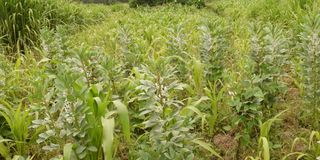
A bumper harvest is expected in Ndaragwa, a traditionally dry area that relies on food relief. The maize crop was also planted in March. Photos taken on July 6, 2025.
Photo credit: Wailkwa Maina | Nation
Interestingly, while Kinangop and Kipipiri are grappling with adverse weather, traditionally drier areas like Ndaragwa have seen improved fortunes and food security over the past two years.
“Initially, we focused food distribution mainly in Ndaragwa but we have scaled it back by over 50 percent due to improved food security there. Meanwhile, I have long lists of food relief requests from areas once considered food baskets,” said Ms Gitau.
“Climate change is real. Relevant arms of government and other players must take deliberate steps to ensure sustainable food security.”
Farmers in the drier areas who have followed the advice of agronomists and environmental experts have recorded better harvests and sufficient food supplies over the last two years.
“The secret for most Ndaragwa farmers is adherence to advice from agricultural officers. Weather and climate change are affecting food production differently across regions. For farmers in dry areas, the best time to plant is before the rains begin,” explained Leshao Pondo Ward Agricultural Officer Anthony Wangai.
“Maize and beans that are already planted by the time the rains arrive have a higher chance of surviving harsh weather spells. They will have established strong roots, making them more resilient to drought. With the current weather patterns, even a difference of one week can determine a crop’s success,” he added.
“The county is very keen on ensuring farmers purchase the right seeds for their specific region,” he said.
In contrast to Kinangop, Kipipiri and parts of Ol Kalou and Ol Joro Orok, where maize takes up to nine months to mature, in Ndaragwa, maize matures in an average of five months.
“Farmers who follow agronomists’ advice to plant before the onset of rains have green maize ready for consumption by the end of July and harvest it between early August and September,” said Ms Wangechi Kanja, a farmer from Ndaragwa.
“In the last two years, I have planted maize and beans between mid and late March. The rains usually begin around late March or early April. By the end of July, my maize is mature and I have already harvested my beans by the end of June,” she added.
In Kinangop, most farmers typically plant in January so that green maize matures by late September and is harvested between October and early November.
“This year, the rains didn’t come in January so we planted in March like other parts of the country. Frost has already damaged our maize. The 2023 hailstorms and last year’s heavy rains—both occurring in unexpected months—caused massive crop damage and frustrated many farmers,” said Emma Rose Wambugu.
“Potatoes and vegetables generally do well in Kinangop, since we have three planting seasons per year. But we rotate them with maize to control diseases and pests. The unpredictable weather is hurting food security and makes it hard to plan what to plant and when,” she explained.
Environmental expert Dr Joshua Kabiri suggests that the solution to Kinangop’s dilemma lies in agroforestry.
“With climate change bringing unpredictable and extreme weather, agroforestry is the solution in both dry and cold areas. Trees can reduce the impact of frost and hailstorms, regulate temperature fluctuations, and prevent frost formation. In cases of excessive rainfall, trees help by absorbing and storing water, then releasing it during dry spells,” said Dr Kabiri.
He added that agroforestry is a win-win strategy since trees can also be commercialised at maturity.
In dry regions, agroforestry helps reduce the impact of crop-damaging winds.
“The best trees to plant are indigenous varieties, which enrich soil fertility and help in pest and disease control. Planting different types of indigenous trees alongside fruit trees like avocados—suitable for different ecological zones—is recommended. Certain trees repel or attract pests and insects that typically spread crop diseases,” he explained.
He cited examples such as Dombeya torrida (locally known as Mukeu) and Warburgia ugandensis, which have medicinal uses for both humans and livestock. These trees also serve as animal fodder, thrive in nearly all ecological zones and are resistant to pests and diseases.