Steve, an app-based driver in Nairobi for the past 18 months, reflects on the toll his job has taken: “I barely have time to sleep and spend with my family. Sometimes I’m so tired that I disconnect with life.”
His experience showcases the daily reality for tens of thousands of ride-hailing drivers in Nairobi.
Since Uber entered Nairobi in 2015, the ride-hailing market has experienced continuous growth, with international ride-hailing companies like Uber and Bolt competing with local platforms such as Little Cab, Faras and Yego for passengers and drivers.
Today, the ride-hailing industry has become an integral part of Nairobi’s transport sector. App-based drivers are all over, offering convenience for a growing number of customers.
While the industry has created new income opportunities, drivers often face challenges due to fierce competition, both between platforms and drivers.
Drivers say they are forced to work long hours—often across multiple platforms—to maximise earnings.
On top of that, they are working with fluctuating fares, high commissions and strict rating systems, which often create uncertainties for the drivers.
Almost every driver we spoke to mentioned the long working hours required to meet their daily targets.
For many, these targets are not random; they reflect the amount of money needed to pay off car loans.
“I work 10-12 hours every day, including Sunday. If I don’t work, how will I manage to pay back the loan?” said James Oyaro, who bought his car on a loan last year.
“Some apps try to bring in competition and end up hurting the driver. They lower the prices and don’t even listen to the drivers. They value the rider more than the driver,” said Steve, who preferred not to give his full name.
On top of that, the two-way rating system, which allows riders and drivers to rate each other, often causes stress.
“A customer can report something you haven’t done. The apps just blame you without consulting. They just hear one side of the story,” said Eric Nyamweya, who has been working as an app-based driver for 8 years.
As part of this fear, there is always the possibility of being temporarily blocked or even deactivated by an app.
“I’m always scared of being deactivated. I won’t be able to pay my car loan if I get blocked. That means we must be very cautious with the customers, even when they’re rude,” said Robert Kitukulo, who started driving in 2022.
That is one of the reasons why drivers are forced to be active on several platforms at the same time.
Given the challenges, the Nation asked drivers which apps they preferred and why. As it turns out, the way apps treat their drivers varies significantly.
Steve uses Uber, Bolt, Little Cab and Yego—all at once. Like most drivers, he is not happy with the international apps, which he says pay low fare. He, however, acknowledges Uber remains dominant.
“If Uber can improve its fares, it can be the best app. Everyone refers to ‘Uber’; no one says I’m in a Little Cab,” said Eric Nyamweya, who has been an app-based driver since 2017.
Comesa says it has reviewed Uber's operations and found anomalies that go against the regional regime on consumer protection.
Photo credit: Shutterstock
While drivers were somewhat optimistic about Uber’s performance, almost all commented negatively on Bolt’s operations.
James Oyaro, who has been on the road for a year now, is one of them. Eric Nyamweya shares the same view.
“If a Bolt customer doesn’t pay, you cannot report it anywhere,” he said.
“When a Bolt customer requests a ride and they cancel the ride because you’re stuck in traffic, your rating will go down, and there’s no way to control it,” Stephen Ngugi explained.
In a written response to our questions, Bolt’s general manager of rides (Kenya), Dimmy Kanyankole, stated that drivers can claim compensation for unpaid trips, repeat-offender clients are blocked and that thousands of driver support tickets are processed each month through automated and manual channels.
“Bolt established a Driver Engagement Centre in Westlands, Nairobi, which offers a physical hub for drivers to report issues, access support, attend training, and build community. Drivers can also raise concerns via in-app features, social media, and to our 24/7 customer support,” he added.
Bolt added: “The Driver Score considers only irregular driver behaviour, with thresholds designed to exclude factors beyond a driver’s control. While some clients may act poorly, driver reports feed into client behaviour metrics, and repeat offenders are blocked from the platform.”
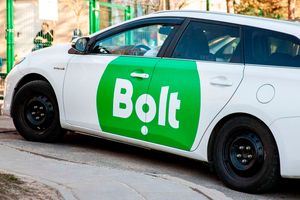
Bolt ride-hailing firm says drivers can claim compensation for unpaid trips, and repeat-offender clients are blocked.
Photo credit: File
Most drivers were more positive about Little Cab, which was founded in Kenya. Others find an alternative in Yego, a local platform that has been operational since October 2022.
“When it comes to its performance, it is 24/7 customer care, and it performs better than the other apps because none of the other apps have that,” Steve said.
In an interview with the Nation , Yego director Alok Srivastava explained how the company calculates its fares: “We treat our drivers as customers. Our fares have been decided after discussing with the drivers.
Though many drivers appreciated the app for its considerate approach, they also added that they cannot survive with just Yego.
“Yego hasn’t done as much marketing, so they don’t have many customers,” said Dennis Gitonga, who has been in the business for the past two years.
When asked about a way forward, most drivers agreed: “The solution is in better fares. If the rest of the apps align themselves to Little Cab and Yego, I wouldn’t even need to have three or four apps; I wouldn’t need to overwork,” Steve said.
In recent years, the challenges have led drivers to organise multiple protests and strikes.
“The government should support us and start regulating these apps. If they give out a licence, they’re supposed to tell that app to give reasonable prices,” Oyaro said.