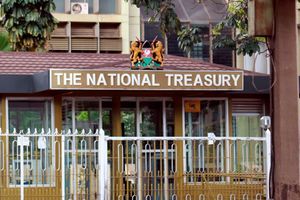
A storm is brewing over the push by the National Treasury and the Central Bank of Kenya to have control over county governments' bank accounts. The proposal has sparked a heated debate. The Council of Governors, the opposition and other leaders are against the move.
The Treasury is seeking to extend the Treasury Single Account, operated by national government to all 47 county governments. Under a proposal before Parliament, the National Treasury is pushing for amendments to the Public Finance Management (PFM) Act, to consolidate county governments' funds into a Treasury Single Account held at the Central Bank of Kenya. The move is intended to centralise funds and improve oversight of public resources.
In the amendments, county governments will be required to obtain prior written approval from the National Treasury before opening or closing bank accounts. The reforms will require counties to shift from multiple commercial bank accounts to a centralised system, similar to a national government model already operating through the Central Bank of Kenya.
The Central Bank of Kenya (CBK) headquarters in Nairobi.
Photo credit: File | Nation Media Group
The Treasury Single Account, which is already being implemented by the national government, is a unified structure of government bank accounts that enables the consolidation and optimum utilisation of resources.
Under the framework, government ministries, departments and agencies transact through linked accounts under a consolidated Treasury structure, rather than maintaining fragmented stand-alone bank accounts.
However, the proposal to extend the same practice to counties has raised constitutional and administrative questions, with critics arguing that the move would undermine devolution.
Critics have also raised concerns about whether the proposed changes could introduce another layer of national government oversight into counties’ financial management.
In an exclusive interview yesterday, the Council of Governors chairperson Muthomi Njuki said that governors are opposed to the proposal to implement the Treasury Single Account for county governments.
Tharaka Nithi Governor and the new Council of Governors Chairperson, Muthomi Njuki, in Nairobi Hotel on October 12, 2026.
Photo credit: Dennis Onsongo| Nation Media Group
"We strongly oppose the proposal. It is against the letter and spirit of the Constitution that recognises counties as distinct governments with autonomy and not an appendage of the national government. The move will increase bureaucratic layers of clearing funding to counties in addition to already tedious clearances by the Controller of Budget and that would mean less absorption of development funds, more pending bills and less delivery by devolved units," Mr Njuki said.
Wiper Patriotic Front leader Kalonzo Musyoka has warned that the changes would undermine devolution and reverse the gains made under the 2010 Constitution.
"What is the logic of allowing the National Treasury to control county funds, when it struggles to release the constitutionally guaranteed equitable share on schedule. A Treasury that has failed for four years to release the 15 per cent equitable share on schedule cannot be trusted to hold a county's entire revenue and determine, week-by-week, what a governor may spend,” he stated.
On Tuesday, senators raised concerns over the proposal that they said could give Treasury greater control over county governments' bank accounts.
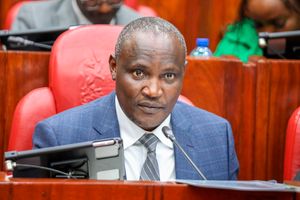
Members of the Senate Standing Committee on Finance and Budget put CBK Governor Kamau Thugge to task over the proposed changes.
The senators said that giving the national government greater influence over county governments’ finances would compromise the distinct and interdependent status of the two levels of government.
However, defending the proposed amendments, Dr Thugge said centralising county deposits at the CBK would improve the government’s ability to monitor public funds, reduce unnecessary borrowing and address the proliferation of bank accounts held by county administrations.
Central Bank of Kenya (CBK) Governor Kamau Thugge.
Photo credit: Dennis Onsongo | Nation Media Group
“We fully support the amendments by ensuring county deposits are held at the Central Bank rather than across multiple commercial banks, the National Treasury gains better visibility and avoids incurring unnecessary interest payments when idle resources are already available,” Dr Thugge, who was involved in drafting the original PFM Act, told the committee.
The CBK governor said that the government could avoid paying interest on loans when idle funds are sitting in commercial bank accounts. He further recommended limiting county governments to a single commercial bank imprest account, with their primary operational and project accounts maintained at the Central Bank.
However, Kakamega Senator Boni Khalwale challenged the proposal, questioning whether requiring counties to seek approval from the National Treasury before opening or closing bank accounts would interfere with the constitutional independence of the two levels of government.
“Management of public funds is a critical role of any government,” Dr Khalwale said. “If the national government will now be involved in authorising bank accounts at the county level, does it not affect the constitutional provision that the two governments are independent?”
Senate Standing Committee on Finance and Budget Vice Chairperson Tabitha Mutinda questioned whether the additional approval requirement could slow down operations and affect services at the county level.
She cited existing delays in fund requisitions involving the Office of the Controller of Budget, and warned that requiring county officials to seek further approvals in Nairobi could complicate access to resources.
Ms Mutinda raised concern about semi-autonomous county institutions, including municipalities, water companies and public hospitals that manage Facility Improvement Funds.