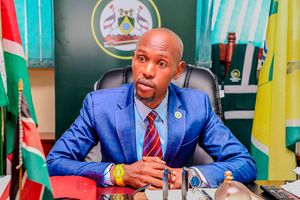
Each morning, Duncan Mrima walks into the Malindi Sub-County Funeral Home and into a scene that has become familiar over the past three years; hundreds of bodies on his right, waiting in cold storage. Their presence, he says, is an ever-present reminder of the Shakahola tragedy that shook the nation three years ago.
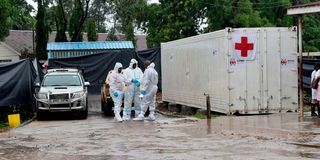
Outside the funeral home, a 40-foot refrigerated container holds 443 bodies and 45 body parts recovered from the forest, their identities still unresolved as families continue to search for loved ones.
Many Kenyans may have moved on from the tragedy, but for Mr Mrima, Shakahola is still present every day.
Each time he sees the bodies, he is reminded not only of the souls inside the cold rooms, but of the families still waiting for answers and the lives cut short after followers were led into the forest by Pastor Paul Mackenzie. For him, the passage of time has not erased the weight of what happened.
“It is difficult to forget especially since you walk inside here every day,” he told Daily Nation on Monday.
Malindi District Hospital morgue attendants receive 11 bodies exhumed from Shakahola graves in Kilifi county on April 27, 2023.
Photo credit: File | Nation
The weight of Shakahola also extends beyond the funeral home. He says working among the bodies has sometimes made him feel as though he is being associated with a tragedy he had no part in, a painful misunderstanding that follows him back into the community.
“There are a few people who know that I work there and therefore there is an element of stigma, especially from the local community. People associate you with Shakahola yet you have nothing to do with it. You are there to take care of the bodies that are brought in,” he says.
He, however, acknowledges that the situation has improved over the past few years.
“We had challenges before, but the bodies are now embalmed so it is not as bad as it used to be those days,” he said.
The tragedy has also seeped into the lives of residents living and doing business around the mortuary, where the presence of the bodies has become part of the neighbourhood’s daily reality.
For some traders, the funeral home has not only changed the character of the area but also driven away customers, with the smell from the facility making some people reluctant to linger or do business nearby.
“There is a smell that comes from the facility and people often avoid it. As a result, there are fewer customers who come to eat here. It was booming a few years ago but it is now dull,” Ms Kadzo Chiluma, who runs an eatery outside the facility, said.
She said business activity in the area had declined, particularly because of the presence of the bodies.
On Monday, as members of the Senate Health Committee toured the facility, the Shakahola tragedy was still impossible to escape.
Malindi Sub-County hospital mortuary pictured on September 2, 2025 in Kilifi County.
Photo credit: File | Nation
A faint stench lingers around the temporary morgue, where the remains have been preserved for the past three years. This serves as a constant reminder of the burden that the county has carried ever since the bodies were brought there.
“We are alarmed and it is concerning that the bodies are still here, but there is hope that this will be cleared now and the facility will return to run its activities in a normal way,” Senator Mariam Sheikh said during the visit.
For the county, however, the 443 remains have become both a human and logistical burden. Kilifi Health executive Peter Mwarogo said preserving the bodies had initially cost the county heavily, with refrigeration, embalming and other requirements placing additional pressure on its resources.
“At first, we were incurring very huge costs, especially when we were storing the bodies. It was an expensive affair and this really impacted our operations as a county,” he said.
After three years of waiting, the Shakahola chapter at the Malindi funeral home now appears to be moving towards an end.
The county’s decision to begin the process of interring the 443 remains means the bodies that have remained in cold storage, and the families who have spent years searching for them, are approaching a final point in this part of the tragedy.
For those who have lived alongside the remains, however, the burial may mark the end of their stay at the mortuary, but not necessarily the end of the questions left behind by Shakahola.
“It is a sigh of relief and we are very happy. It will help us have a better working environment,” Mr Mrima said.
Members of the public wait outside the Malindi Sub-County Hospital Mortuary for the release of 34 Shakahola bodies whose relatives were positively identified through the DNA analysis, in this photo taken on March 20, 2024.
Photo credit: File | Nation
If the notice expires without the bodies being claimed, the county plans to seek a court order allowing it to inter the remains at land it has identified near Shakahola Forest.
Mr Mwarogo also said the Directorate of Criminal Investigations had completed its investigations and given the county the go-ahead to proceed with the interment. Only 14 of the 443 remains have so far been identified by relatives through DNA matching.
“Some people were able to trace their relatives, but they refused to come and take the body because of the stigma that is associated with this whole process,” he said.
But the planned interment is not intended to close the chapter on the Shakahola victims or the search for their identities.
The county says the remains will not be placed in a mass grave, but interred in a manner that preserves the possibility of identification and exhumation should new evidence emerge, or families come forward in future.
“We are not just burying the bodies and we cannot use a mass grave. They will be buried in such a way that, just in case anything comes up, they can be exhumed,” Mr Mwarogo said.
The senators have warned that a Gazette notice alone may not be enough to reach families still searching for their relatives. Elgeyo Marakwet Senator William Kisang urged the county to take the message to television, newspapers and social media before the deadline.
“Who reads the Gazette notice? We should have put it in the media, on TV and everywhere because I know there are people who are still tracing their bodies,” Mr Kisang said.
“Nobody goes to the Gazette notice or even newspaper. People nowadays use social media,” he added.
The 443 remains include complete bodies as well as body parts recovered during the exhumation of the mass graves. The county government said some of the remains had been badly damaged by the conditions in which they were found.
“Some are full bodies and others are body parts because by the time the exhumation was being done, some had been eaten by wild animals,” he said.
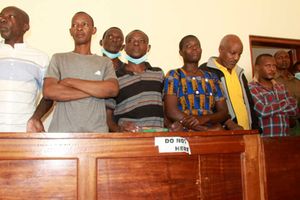
This month, the High Court is expected to deliver its judgment in the murder trial involving Pastor Paul Mackenzie and 30 co-accused over the deaths of 191 children.
The trial, which began in 2024, has seen the prosecution call more than 120 witnesses and present hundreds of exhibits, while the defence has argued that the evidence does not establish the individual criminal responsibility of the accused.
The judgment will come as the wider Shakahola investigations continue through separate proceedings. In April, a Shanzu court found Pastor Mackenzie and 95 co-accused had a case to answer in a separate case involving allegations of organised crime and radicalisation linked to the deaths of more than 450 followers.