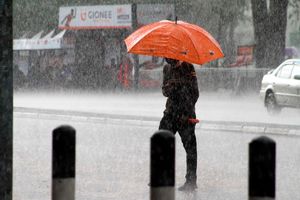
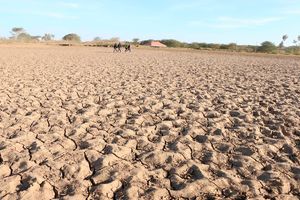
For Ms Zipporah Imuse, rain should mean relief. Instead, she is preparing for another disaster.
The elderly resident of Lopiding village in Turkana West Constituency has barely recovered from a prolonged drought that forced many herders to migrate to neighbouring Uganda and South Sudan in search of pasture and water.
She now fears that the rains she desperately needs could bring flash floods that sweep away what little she has left.
Her husband, like many men in the village, migrated to neighbouring Uganda in search of pasture and water, leaving her with a handful of young goats and sheep.
“My husband, just like many men in the village, had migrated to neighbouring Uganda for pasture and water, leaving me with a handful of young goats and sheep that I fear will be swept by flash floods from the anticipated heavy rains because our village is prone to flooding,” she says.
Ms Imuse depends on limited relief food and, at times, the goodwill of neighbours to survive.
Her fear is rooted in experience. Turkana County has previously experienced the devastating consequences of the disturbing cycle between drought and floods.
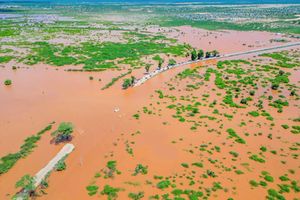
One of the abandoned houses at Lokangai village in Turkana West Constituency on September 12, 2026 that was destroyed by flash floods last year. Lokangai is among villages in Turkana that are prone to both drought and floods.
Photo credit: Sammy Lutta | Nation Media Group
In May last year, heavy rains came after a prolonged drought. They began at midnight and, in less than an hour, floodwaters flowing from the Mogilla ranges swept away goats, sheep and chickens.
The flood assessment recorded deaths, massive displacement, livestock losses and extensive damage to roads, health facilities, early childhood centres, irrigation schemes and water infrastructure.
The floods cut off roads leading to the village, preventing a planned relief food distribution and potentially delaying emergency assistance from authorities in Lokichoggio.
For families already struggling to rebuild after drought, the prospect of another shock is frightening.
Across Turkana, residents of drought-prone villages including Lokitela, Lokangae and Nasinyono are still in need of relief food. Yet the same communities are also exposed to flash floods when seasonal rivers swell.
Roads leading to some of these settlements become seasonal rivers during the rainy season, disrupting transport and access to essential services.
The flooding can affect communities in Kepongoria, Nanam, Lopur, Kakuma, Letea, Lokangai and Lapur, where some seasonal river crossings have no bridges, and the routes can be the only reliable links during the dry season.
Turkana's own climate risk assessment notes that the county is highly vulnerable to climate variability, with drought and flooding among the hazards affecting communities and livelihoods. The county Government has also acknowledged that increasingly frequent extreme events are leaving communities with less time to recover between shocks.
Turkana is expecting normal to above-normal rainfall during the October-December season, with some parts of the county forecast to receive significant downpours. County authorities have intensified preparations for possible flash and riverine flooding.
County Director Francis Muinda says flash floods are expected in wards with seasonal or permanent rivers that could burst their banks.
The areas identified include Lokichoggio, Nanam, Lopur, Kakuma and Letea in Turkana West; Lapur in Turkana North; Kang'atotha, Township, Kanamkemer and Kerio Delta in Turkana Central; Katilu, Kaputir and Lobokat in Turkana South; and Kapedo/Napeitom and Lokori/Kachodin in Turkana East.
“We have issued advisory to the pastoralists to move to higher grounds to avoid massive losses of livestock that can be swept away as well as prepare for outbreak of livestock diseases during and after the rains,” Mr Muinda says.
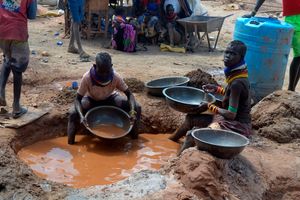
A more than 80 meters wide Tarach seasonal river on September 12, 2026 that has several scoop holes relied on by locals and a section of refugees at Kakuma Refugee Camp for water. Floods worsen access to clean water from the river, cut off movement across settlements and submerges nearby homesteads.
Photo credit: Sammy Lutta | Nation Media Group
Pastoralists have also been advised to construct strong animal shelters to protect weak and young livestock from cold during the rains.
“Farmers should also construct and rehabilitate rain water harvesting structures like trapezoidal bunds to minimise the speed of surface run-off,” he says.
Agriculture stakeholders have also urged farmers to take advantage of the rains and adopt water-efficient technologies, including micro and macro drip irrigation, particularly in parts of Turkana East, South and Central.
The county Government and the National Drought Management Authority have separately been working on an El Niño contingency plan to strengthen preparedness, coordination and response ahead of the rains.
But for many residents, preparedness is more than moving people and livestock out of harm's way. They want the county and national governments to address the deeper problem: why communities that suffer from chronic water shortages are unable to capture and store the enormous volumes of water that arrive during the rains.
At Urum village, Mr John Esekon is among more than 30,000 pastoralists from Turkana County who frequently cross into northern Uganda in search of water and pasture.
He wants the Government to construct a mega dam that would reduce the need for pastoralists to leave the country during drought.
He says repeated migration exposes herders and their livestock to insecurity and disease outbreaks, resulting in further livestock losses.
Mr Esekon says seasonal rivers that flood during the rainy season could instead be harnessed to fill dams, combat desertification and promote sustainable pastoralism and rangeland management.
“There is no permanent river in the entire Turkana West Constituency,” he says.
“During drought, we are forced to migrate to Uganda for water. When it rains, seasonal rivers emanating from escarpments at the border are filled up for hours with the water draining towards Lotikipi plains.”
Some water pans and riverbeds hold water for only a few days before drying up. Other herders create small reservoirs from dead branches of seasonal rivers to retain whatever water they can.
Across the border in Uganda, Mr Esekon says Turkana herders are allowed to access Kobebe Dam provided they do not engage in criminal activities such as cattle theft.
“In Uganda, we are allowed to access the dam so long as we don't engage in criminal activities like cattle theft. But whenever there are security operations targeting peace spoilers, innocent herders are sometimes killed, arrested or their livestock driven away.”
For Mr Joseph Lokaale, a herder from Matakul village, crossing into Uganda during drought has become a way of life.
He has done so for more than two decades whenever water and pasture become scarce, because livestock are his only livelihood.
He says there is no dam on the Kenyan side capable of sustaining livestock, even as seasonal rivers carry huge volumes of water that eventually drain into the largely unexploited Lotikipi aquifer.
“The national Government, county Government and development partners should invest in a strategic location to support pastoralism and even provide adequate water for crop production. Dams will also protect families downstream against floods and droughts,” he says.
He identifies Nanaam, Nawountos, Nasinyono, Lokangae, Morung'ole and Letea as some of the villages with large livestock populations but inadequate water supplies.
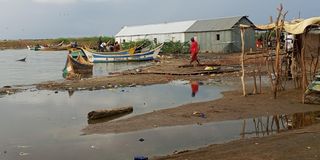
Swelling Lake Turkana on September 10, 2026, is submerging villages and displacing drought-hit local fishermen from their ancestral land and traditional fishing zones.
Photo credit: Sammy Lutta | Nation Media Group
Ms Margaret Loyaman, from Lokitela village, says the solution should be to capture water when it is available and store it for the dry months.
She wants development partners, the county Government and the national Government to invest in large water-harvesting structures, including dams.
“Water collected in the dams will be critical in addressing the water scarcity crisis during dry spell that forces herders to migrate to neighbouring countries and at the same time support farming activities to reduce our over reliance on relief food,” she says.
The argument is simple: the water that threatens to destroy homes, livestock and roads could also help solve Turkana's chronic water shortage if it were captured and stored.
Turkana West MP Daniel Epuyo is calling for resources to construct dams along seasonal rivers to serve the dual purpose of storing water and controlling floods.
“For many years, it has always been a vicious cycle of hunger and starvation because of drought and massive destruction of manyattas and critical roads constructed with taxpayers' money due to floods. Why should both levels of government not prioritise harnessing destructive floods with dams?” he asks.
The call comes as authorities and development partners push longer-term water and drought-resilience measures alongside emergency preparedness. Recent funding for Turkana and Marsabit includes support for water harvesting and irrigation infrastructure, with Turkana also seeking to improve water infrastructure capable of reducing the effects of flooding and supporting agriculture.
The threat is not confined to pastoralists. Along the shores of Lake Turkana, anticipated flooding of the seasonal Napasinyang River in Kalokol could disrupt the fresh fish trade by making markets harder to reach.
Fisherfolk have been advised to fry fish as a more reliable preservation method in anticipation of disruptions.
Mr Josphat Mutei, a resident of Kalokol town, says swelling water levels in Lake Turkana have already disrupted fishing.
Shorelines have been flooded, landing sites submerged and fish pushed into deeper waters and heavily vegetated areas.
Some people who lost livestock during the drought and turned to fishing as an alternative livelihood now face the prospect of being pushed further away from the lake as large volumes of river water enter the lake during the rainy season.
“Most families have been displaced by backflow of Lake Turkana several times, with fishing activities also being hit by crocodile invasion in reliable traditional fishing grounds where, before the current state of the lake, I would easily rely on rafts made from doum palm logs to set nets overnight and collect the nets early morning for assured income and food for my family at Kalokol centre,” he says.
He is appealing for greater support for drought-response programmes by non-governmental organisations targeting communities living around the lake.
Plan International Kenya Programme Implementation Manager Mr Naaman Ochieng says Turkana has been mapped by the Ministry of Interior and National Administration as a county at high risk from the effects of El Niño.
The organisation is deploying an integrated approach that combines immediate protection with longer-term climate resilience.
“Floods are expected to destroy infrastructure, leaving families in the affected areas displaced and their livelihoods destroyed. The situation will subject victims to harmful survival tactics such as sexual exploitation and child labour while exposing them to gender-based violence and nutrition disparities,” he says.
He explains that for communities already weakened by drought, the consequences of another disaster could go far beyond the immediate loss of homes or livestock.
When roads are cut off, relief supplies become difficult to deliver. When livestock are lost, families lose food and income. When pasture disappears, herders cross borders. When fishing grounds are submerged or inaccessible, another source of livelihood is threatened.
And when the rains finally stop, communities can once again be left facing the same water shortage that forced them to migrate in the first place.
The challenge now is whether the coming rains will again become a season of destruction or an opportunity to strengthen the county's water security.
The bigger question facing the county is whether communities will continue moving between drought and floods, losing livestock in one season and fearing their remaining possessions will be swept away in the next.
Or whether the water that arrives with destructive force can finally be captured, stored and turned into the resource that families have spent years crossing borders to find.