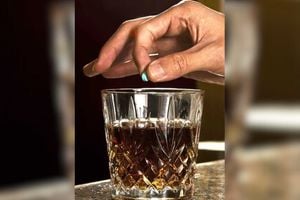
Police in Eldoret have launched a crackdown on a surging wave of drink-spiking (commonly known as ‘mchele’) syndicates led by women.
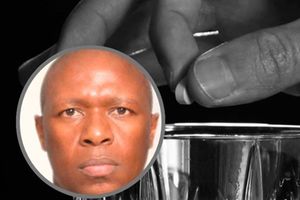
The trend is now attracting more attention from investigators as some cases are taken to court. The latest incident involves a chief inspector of police and former 1,500m world champion Asbel Kiprop, who was a victim of the syndicate’s trap in an Eldoret club.
According to the athlete, he had checked into a local club in town to watch the Brussels Diamond League Final that was taking place in Belgium and, after the event, he relocated to another section of the club to watch an English Premier League match.
It is here that he said he met a smartly dressed woman who was seated at the next table and invited her over to join them.
“She looked decent and no one could have suspected anything, and we started talking and enjoying the match,” Mr Kiprop said, adding that he later felt drowsy and could not recall anything when he woke up in his hotel room at 3pm.
He later discovered that some cash was missing from his wallet and that money had been withdrawn from his Sacco account.
“I know a number of people have gone through this and it is high time we came out and condemned the crime because apart from sleeping and stealing, that drug can even kill someone. I’m lucky to be alive,” he said.
Triple world 1,500m champion Asbel Kiprop
Photo credit: File Picture
Mr Kiprop said that there is a need to educate the public not to leave drinks unattended and to report any suspected spiking incidents to immediately.
Police say that some of the so-called “Mchele ladies” often work alongside rogue nightclub staff and taxi drivers who act as spotters and getaway drivers.
“This is just like any other crime and any person aiding suspects will be arrested and charged according to the law,” said Uasin Gishu County Police Commander Wilberforce Sichirani.
According to a senior police officer who is involved in the crackdown, a network of “Mchele” women operates in the town’s upscale nightlife spots, targeting wealthy men, high-profile businessmen and unsuspecting revellers before drugging and robbing them clean.
Kenya's Asbel Kiprop celebrates after winning the men's 1,500 metres final at the 2013 IAAF World Championships at the Luzhniki stadium in Moscow on August 18, 2013.
Photo credit: File | AFP
“Majority of these women operate in busy upscale night clubs that attract high-profile and wealthy men. They sometimes pose as sophisticated ladies just relaxing in those clubs as bait to men who are desperate for women. Upon calling them on their seats, they implore ways of drugging their targets,” said a senior officer who did not want to be named due to police protocol.
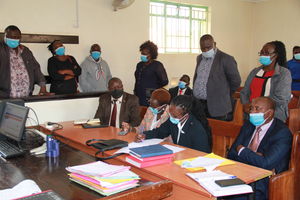
Recent court proceedings in Eldoret highlight the alarming scale of the racket, with magistrates handling a rising number of stupefying cases under Section 230 of the Penal Code.
According to testimony presented in court, suspects slip industrial-grade sedatives into victims’ drinks, clear out their bank accounts via mobile banking, and disappear before dawn.
In several ongoing cases, victims have recounted waking up days later in hotel rooms or emergency wards, stripped of cash, vehicles and memory.
Prosecutors have pushed for stiffer bail terms, warning the court that these well-organised syndicates frequently jump bail to operate in neighbouring towns.
“There is a need to impose stiffer bail terms to respondents involved in stupefying cases. Some of them, upon their release on favourable bond terms, relocate to other towns where they continue with their business of drugging innocent men,” said Patricia Kirui, a state counsel, while presiding over one of such cases.