C-section births rise, rich-poor gap widens

The survey does not establish whether the procedures were medically necessary, planned or performed during emergencies.

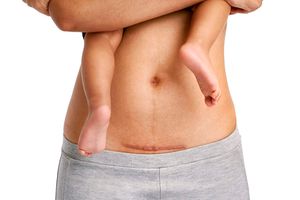
In 2003, only four out of every 100 babies born in Kenya were delivered through Caesarean section (C-section). Today, the figure has risen to 20, according to the latest Kenya Demographic and Health Survey (KDHS).
The survey, released by the Kenya National Bureau of Statistics in October, puts the national rate at 20.3 per cent, up from 17 per cent in 2022.
The increase has put Kenya above the World Health Organisation’s (WHO) recommended range of 10 to 15 per cent. The survey notes that rates of up to about 10 per cent help save mothers and babies, but higher rates bring no additional health benefits. Rates below five per cent, however, may indicate inadequate access to emergency surgery.
But the national average conceals sharp inequalities. Wealth, education and place of residence strongly influence the likelihood of a woman delivering through surgery.
Among women in the wealthiest households, 41 per cent of births were by C-section, compared with eight per cent among the poorest. Urban areas recorded a rate of 29 per cent, against 13 per cent in rural areas.
Education also matters. The rate among women educated beyond secondary school was 35.2 per cent, compared with 12.4 per cent among those whose education ended at primary level.
Private for-profit hospitals recorded the highest rate at 33.1 per cent, followed by faith-based facilities at 29.2 per cent and public hospitals at 18.2 per cent.
Embu had the country’s highest county rate at 43 per cent, followed by Kiambu at 38.6 per cent, Kirinyaga at 37.5 per cent, Nyeri at 36.9 per cent and Murang’a at 35.6 per cent.
Age and birth order also influence the likelihood of a C-section. The rate was 23.9 per cent among first births, compared with 7.2 per cent for women having their sixth child or more. Among mothers aged 35 and above, 24.8 per cent of births were by C-section, against 11.5 per cent among those under 20. Regular antenatal care was also associated with higher rates: 22.2 per cent among women who attended at least four visits, compared with 1.7 per cent among those who attended none.
The survey does not establish whether the procedures were medically necessary, planned or performed during emergencies.
Dr Dennis Miskellah, an obstetrician-gynaecologist and deputy secretary-general of the Kenya Medical Practitioners, Pharmacists and Dentists Union, says the increase partly reflects improved access to hospital deliveries.
More women are delivering in health facilities, where complications can be identified and treat-ed, he says. The survey found that 91.1 per cent of births took place in health facilities, up from 88.1 per cent in 2022.
He also attributes the increase to better access to healthcare, insurance coverage and greater awareness among women of their right to make decisions about their bodies.
“Some women do ask for the operation, and it is not always wrong to agree. Sometimes even a woman just asking for it is an indication, because there is something called patient autonomy,” he says.
However, he warns that doctors’ fear of lawsuits can also influence decisions, with some opting for surgery to avoid complications. He acknowledges that financial incentives may lead some practitioners to recommend C-sections because they cost more than natural deliveries.
Dr Miskellah disputes the use of a fixed national benchmark, arguing that the priority should be preventing maternal and newborn deaths and complications.
Dr Edward Serem, head of the Ministry of Health’s Division of Reproductive, Maternal, New-born, Child and Adolescent Health, says the rise reflects expanded health infrastructure and improved training of medical personnel.
He says better-equipped facilities and trained workers can identify foetal distress and maternal complications earlier, allowing timely surgical intervention.
The ministry is conducting further analysis to establish the medical reasons behind the procedures, including prolonged labour, previous C-section scars and foetal distress.
Serem cautions against applying global benchmarks uniformly, saying patients’ risk profiles and clinical needs differ across countries.
“Clinical decisions are made based on the immediate needs of the mother and newborn at that specific moment,” he says.
Follow ourWhatsApp channel for breaking news updates and more stories like this.