When Mary Njoroge started Leansky Limited in 2018, her dream was clear: to build a successful business supplying branded promotional materials and organising corporate events for government and private institutions.
But the journey, she says, has been anything but smooth, especially when navigating Kenya’s public procurement system under the Access to Government Procurement Opportunities (AGPO) programme.
Her Nairobi-based company has two employees, and although Mary has won tenders worth up to Sh3 million, she avoids turning to banks for financing, saying they would consume all her income.
“I’m using my savings from my gratuity when I was employed,” she says when asked how she finances the tenders she wins.
“The reason I can’t tender for a job worth, say, Sh20 million is that financing is tricky. I’m only able to finance up to Sh5 million,” she adds.
When asked about using the credit guarantee scheme to access higher-value contracts, she admitted she was unaware of it.
But when probed further, she asked, “You take that credit facility, but at what interest rate?”
“You know, when we’re supplying these things, you can’t mark up more than 30 per cent. You can’t mark up too much, otherwise you’ll not be competitive,” she explains.
“You must constantly search for opportunities. MyGov only comes out on Tuesdays, and many of us don’t read newspapers,” she says.
For her, learning about AGPO didn’t come through official government channels.
“I heard about it from companies where I’d go to pitch. They kept asking, ‘Do you have AGPO?’” she says.
The AGPO certificate, required to bid under the programme, has proven to be a significant hurdle. Though available online, it often takes months to process, she says.
“I once waited six months before I got it. The certificate is valid for two years, and without it, small businesses are pushed into the general supplier category, competing with well-capitalised corporations,” she says.
“When that happens, you find yourself bidding against companies that can easily finance tenders worth Sh100 million. I can’t match that,” Mary explains.
Since 2013, when the government launched the programme reserving 30 per cent of all public procurement contracts at national and county levels for women, youth, and persons with disabilities (PWDs), the target has remained largely unfulfilled for more than a decade.
A 2023 study by the Women’s Economic Empowerment Hub at the African Women Studies Centre, University of Nairobi, in collaboration with the National Treasury and the Public Procurement Regulatory Authority, paints a sobering picture.
Professor Tabitha Kiriti-Nganga, an economist at the University of Nairobi and the principal investigator in the study, shared the findings.
Analysing procurement data from the financial years 2015/2016 to 2022/2023, the study found that the combined uptake of tenders by the targeted groups stood at only 16.84 per cent, far below the legally mandated quota.
According to the Public Procurement Information Portal, the average participation of women in public procurement over the past eight years has remained below 10 per cent, youth at 7.5 per cent, and PWDs at a mere 2 per cent.
Even where contracts were awarded to women, they were of low value. An analysis of the January to June 2021 reporting period revealed that procuring entities awarded 19,617 contracts worth Sh15.4 billion. Women received the highest number of contracts at 53 per cent, translating to 10,471 contracts, but the average value of each was just Sh750,357.
In contrast, youth received 39 per cent of the contracts, but with a higher average value of Sh843, 701. PWDs remained the most under-represented, receiving just 7.6 per cent of contracts, with an average value of Sh741, 003.
At a UN Women forum on gender-responsive procurement held in Nairobi on July 2, 2025, one woman entrepreneur confessed: “There are government tenders you want to apply for, but then you ask yourself, how will I deliver the services if I win the tender?”
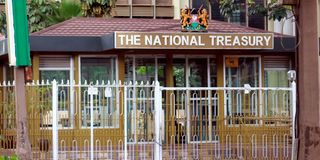
However, Bartholemew Kinoti, Principal Economist at the National Treasury, said the government offers a credit guarantee scheme, which partially guarantees loans issued by participating financial institutions to micro, small, and medium enterprises, sharing the risk of default with lenders.
Participating banks in the scheme include Absa Bank, Credit Bank, Diamond Trust Bank, KCB Bank, NCBA Bank, Stanbic Bank, and Co-operative Bank.
According to the National Treasury website, the maximum loan amount one can apply for under the scheme is Sh5 million.
However, a bank manager from one of the participating institutions, who requested anonymity, explained that they still require risk mitigation for the loans.
“For instance, if you win a Sh100 million tender, you’ll need to insure 75 per cent of that amount,” the bank official explained.
“In case of default, the insurer will cover the amount because this is business, and we can’t afford to lose money. The remaining 25 per cent will be your responsibility in the event of non-performance. The insurance serves as collateral, and once that’s in place, we can provide 100 per cent financing.”