Kenyan lions are under attack. And this time it is not from other lions or gun-wielding trophy hunters; it is from online posts.
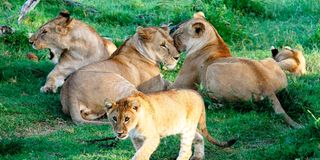
On Facebook and TikTok, posts capturing the “laziness” of the big cats have been doing the rounds, with some tourist expressing a culture shock of finding docile creatures rather than the prey-snapping hunters they mostly see on TV.
Reggae icon Damian Marley poses for a picture with one of the lions he adopted at the Nairobi National on May 30, 2017.
Photo credit: Francis Nderitu | Nation
“Go to Kenya, you’ll see the lions,” the tourist captioned part of his video, to say that the country’s lions had been hyped.
However, in subsequent shots, he shows videos of lions relaxing in various positions in wildlife parks, looking tame and a far cry from the prowling beasts that animal documentaries are made of. They “sleep, eat, and repeat,” he wrote. “I’m getting a cat.”
The video had attracted about 20,000 hilarious comments by Thursday morning as Kenyans came to the defense of the lions. Among the commenters was musician Bien-Aime Baraza, who posed: “Did you want Simba and Nala to perform a dance?”
Lion viewing is the top reason tourists flock to Kenya’s national parks and game reserves, attracting about 3.74 million visitors every year. The lion population has been increasing, with 2,589 recorded a few years ago, and conservancies like Ol Pejeta offering lion tracking experiences.
However, not all tourists get to see lions sprint at high speeds to catch a hunt.
The Kenya Wildlife Service (KWS) expert told Nation Lifestyle that “ sleep, eat and repeat” is a typical lion behaviour,
Dr Isaac Lekolool, the KWS head of veterinary and capture services, said one is more likely to find lions lazing about than hunting during the day.
“They are nocturnal animals,” he said, inferring that they are more active at night.
For tourists hoping to catch lions hunting or feasting on prey, he noted, the best time to visit the park is either early in the morning or around sunset.
“Early morning is the best. Early morning or late evening. In late evenings, we find them still a bit sluggish, but in the early morning, that’s when they’re still a bit more active. Because they’re usually very active at night,” said Dr Lekolool.
On the lazing, some of which has been described in colourful language on Facebook posts, the expert said: “It’s not laziness. It’s not out of the norm for lions [to sleep for hours on end]. They rest almost two-thirds of the time.”
Lions kill a wildebeest at Maasai Mara game reserve.
Photo credit: Photo | File | Nation
The Nairobi National Park, he noted, is one of the best places to view lions as the visitor won’t need to drive too far to find them.
He added that in the more expansive sites like Tsavo and Amboseli, one might need to drive for a long time to find them.
“You’d find them just resting on the road. They’re not that shy,” said Dr Lekolool.
“This is one of the highest resting rates among mammals,” KWS said.
“Hunting is energy-intensive. Lions rely on short, powerful bursts of speed rather than endurance. Resting helps them conserve energy for hunts,” it said.
“What looks like ‘laziness’ is actually an adaptation strategy? Lions balance energy use with survival efficiency. They can afford to rest so much because, unlike prey animals, they don’t need to be constantly alert and foraging,” it added.