Achieng’ Oneko is a name that may not evoke much attention or recognition among many Kenyans today. Who is he? Where does he come from? What has he done? Or, as some Kenyans tend to ask: why should I know him?
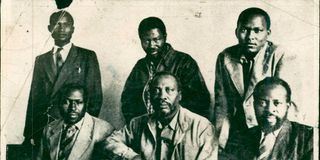
Achieng’ Oneko is among the famous Kapenguria Six detainees. Oneko had been charged with Jomo Kenyatta, Fred Kubai, Bildad Kaggia, Paul Ngei and Kungu Karumba. A tall, slender, suit-wearing man, Achieng’ Oneko can be described as the quintessential Kenyan nationalist, today lost in history.
For, very few Kenyans would direct one to his birthplace on the beaches of Nam Lolwe, in Uyoma, Bondo, Siaya County. Oneko was born in 1920 and died in 2007. But his imprint on the Kenyan nation-state and politics will remain a subject of much interest to politicians and historians for a long time to come. The publication of his biography, The Price of Freedom (Mvule African Global and Longhorn, 2026) is probably the best way to remember this son of the soil.
Oneko counts among the early Maseno School alumni who played key roles in the making of Kenya. He was admitted to Maseno School in 1935 after he had “led a pack of upper class students in the most competitive examination.”
To sit the examination, Oneko walked 65 kilometres from Uyoma. He would pass the exam and be admitted to this Anglican school that sought to save the souls of Africans for Christ and also make them gentlemen of the British Empire.
He describes it this way,: “Maseno was considered a quasi-English public school. It was a rule, under Edward Carey Francis, that for a boy to be admitted to this school, he had to carry with him a fork, knife, spoon and a plate.” However, unlike the English public school, “nobody was required to wear shoes.”
But Oneko, raised in the Anglican Church, and schooled at Maseno would later drop his Christian name, Richard, and become Ramogi Achieng’ Oneko. In some way, Oneko’s rebellious spirit was induced by an unanswered question on who kidnapped his grandmother, and the fact that although the Europeans were strangers in the land and preached the equality of all humans before God, they did not want Africans to enjoy the privileges they had.
This spirit of defiance would put Oneko into trouble with his teacher, mentor and friend, Carey Francis, who had taught his students to dress well all the time - pressed trousers and shirt, a tie, polished shoes etc. But Oneko makes a silly mistake one day when he comments on his teacher’s dressing, “But, one day, I made an uncomplimentary observation about his attire. I pointed at his trousers, which were not well ironed. At this time, he was the principal of the Alliance High School. As we walked together along Lord Delamere Avenue, later renamed Kenyatta Avenue, I pointed at his trousers saying, ‘Don’t copy this man’ pointing at someone who was also ruggedly dressed.”
Oneko notes that he “was beginning to grow horns” at the time. He was then working for the East African Meteorological Department in Nairobi, a job that he got through the influence of Carey Francis.
The Kapenguria Six. Seated: Kung’u Karumba, Jomo Kenyatta and Bildad Kaggia. Standing: Achieng Oneko, Fred Kubai and Paul Ngei.
Photo credit: File | Nation Media Group
This tendency to defy the established order would significantly determine his future life. For instance, Oneko would opt to resign from his job and the chance to rise up the civil service ladder to not only manage a newspaper, Ramogi (which was published in Dholuo), but also serve as Secretary of Luo Union, an association for members of the Luo community in the country.
When he was warned against resigning from the government job, his boss would tell him, “We will let you go but you are an ungrateful boy. You remember that you were interviewed outside the normal regulations, in Kisumu, by the director.”
From working in service of his people with Luo Union and Ramogi newspaper, Oneko increasingly became involved with the Kenya African Union (KAU) by the end of 1945, whose meetings he attended “in order to learn how to run a political party and to meet leaders from other parts of Kenya.”
Indeed, when KAU held its first annual general meeting in Nairobi in 1946, Oneko was in attendance together with “Tom Mbotela, John Koinange, Jimmy Jeremiah, Samuel O Josiah, Ambrose Ofafa, Eliud Mathu, Jesse Kariuki, Stephen Wanyee, James Mbotela, James Beuttah, Edward K Binns, Peter Mbiyu Koinange, Harry Thuku, James Burke, Jomo Kenyatta, Mururi Ng’ang’a, Kati Joseph, John Muchura, Hassen from Juja, Aggrey Minya Peter Gatabaki and Albert Owino.”
Oneko notes that “some prominent people like Bildad Kaggia, Fred Kubai and Eliud Mutonyi were not present when the group photographs were taken,” implying that they attended the meeting. Why are these names important?
That first annual general meeting of KAU brought together the harbingers of political change in Kenya in later years.
These men came from different communities in Kenya and planted the seeds of a nationalistic spirit that would energise the fight against colonial rule in Kenya. This is the spirit that would guide Oneko throughout his political career, from serving on the Nairobi Municipal Council, to being a member of a delegation to the Colonial Office in London, to being detained for nine years by the colonial regime, and later by the government of Jomo Kenyatta, all the way to his retirement. Oneko would reject overtures from the colonial government to denounce the anticolonial resistance movement, Mau Mau — to which he did not belong — so that he could get personal benefits.
It is that nationalist spirit that made Oneko choose to serve KAU and the rest of Kenyans at the expense of the Luo, “placing my country first.”
This choice would lead him into trouble with Jaramogi Oginga Odinga. Why? Because when Oneko sought the chance to be a delegate to England, he did not inform Jaramogi and the board of directors of Luo Thrift where he was not only a shareholder but had also worked in “recruitment of staff and enrolment of shareholders in Nairobi” as well as the organisation’s Secretary. Oneko would be relieved of his duties by Luo Thrift. The letter relieving him of his duties would come from the Managing Director of the firm, Oginga Odinga, the man that Oneko had introduced to Jomo Kenyatta.
At the time, in 1952, Oginga Odinga was more interested in the economic welfare of the Luo than in national politics. According to Oneko, “Odinga concentrated on building a corporation with the aim of uplifting the economic power of the people mainly in Nyanza”, which is why when Oneko traveled to London, Odinga urged him “…to stay there even for 20 years, if necessary” in order “…to pursue education and gain experience in the same way people like Jomo Kenyatta had done.”
When Jomo Kenyatta had travelled to England in 1929, he had been accompanied by one Githendu, who was convinced by the colonial government to remain in England and study. He would later be employed as tax collector in Nairobi when he came back, thus straying “…from the aspirations of the country to pursue selfish ends.”
Staying the course of political struggle for the liberation of Kenya became Oneko’s biggest calling. He probably thought that there was no bigger cause than the independence of the country and freedom for himself and the rest of Kenyans.
Even when he was acquitted of the false charges against him, Oneko would end up staying in detention up to 1961. With independence, Oneko would go serve in the Cabinet, as the Minister for Information, Broadcasting and Tourism. But hostilities and betrayal would cheat Oneko out of his dream of a united and prosperous Kenya. He would be detained again for five years in October 1969. Why? Because he was seen as a radical, questioning the ruling elite why poor Kenyans, who had been robbed of their land by the colonial government and settlers, hadn’t been resettled.
When Oneko and 29 others were thrown out of parliament, the die was cast. Although he would come back to parliament as a member of the Kenya People’s Union, it wasn’t long before he was locked up in Kamiti Prison in 1969. He would be released in 1975, having spent 15 of his 55 years in detention.
Yet, Oneko was willing to reconcile with his old ‘friend’, the man he cooked for in prison, Jomo Kenya, as well as “build bridges with other communities” but his dream would not be fulfilled when Mzee died. In the end, Oneko and many other freedom fighters paid the ultimate price for selflessness: betrayal borne of avarice, selfishness and bigotry.