Mathew has always symbolised the strange, life-changing opportunities far away from home.
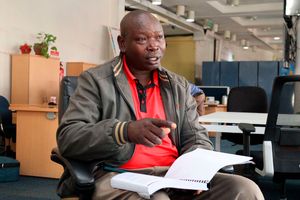
Hailing from a remote, poverty-stricken village in DRC, he moved to Kenya in 2017 to give life another chance. He was fleeing from the uncertainties of life at home, giving up all he had to a fresh start in Nairobi.
Somehow, it worked out. He settled in, founded a phone accessory business that immediately picked, and in no time fell in love with a Kenyan lady. He is now a husband to the lady she loved and a doting father of two “beautiful babies”, he said.
Times have changed, and a lot has happened in the period. His home country is now hit by Ebola and ravaged by the unending war, leaving Nairobi as the only safe haven. This is the place where he has modelled his life around. He now calls Nairobi his other home, away from home.
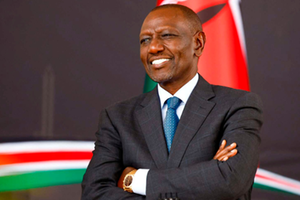
But now, the only safe haven and in whose warmth he has always found refuge, is no longer safe. President William Ruto, on September 2, called for the crackdown on foreign traders and their businesses. He now doesn’t know what to do next, he tearfully narrated.
The next few days will be tough for him. He can no longer open his shop, fearing it could be looted. The business atmosphere has turned hostile. People he once knew as loyal customers, he says, are now baying for the only lifeline he has. That small business, he says, has carried him through life, paying his rent, feeding him and meeting his other needs.
Where home has always lacked, the business has always stood in the breach. Now, even that safety net has been pulled away, leaving his most basic needs exposed.
As time goes on, he knows it could be tougher. But the choice of journeying back to DRC, as imminent as it appears, he said, will drain him emotionally.
“I just imagine leaving my children and wife here,” he said. “But I also have nowhere to start from. All my life was centred around Nairobi.”
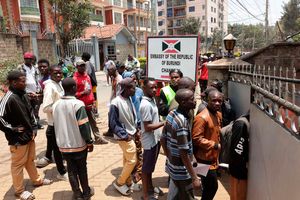
Burundians outside the Embassy of Burundi Chancery in Nairobi.
Photo credit: Evans Habil | Nation Media Group
The thought of going back to Kinshasa has in the recent days clouded his thoughts. Sleep has vanished off his eyes, but also Nairobi has stopped being the home he imagined. But he is not alone.
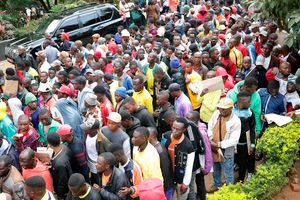
Hundreds of Burundians have for the past two days flocked to their embassy in Nairobi seeking to regularise their stay or, at worst, flee back to Bujumbura.
For decades, Burundi has been scarred by political violence, ethnic conflict and cycles of displacement that have pushed generations of its people across borders in search of safety and opportunity. For many Burundians, Kenya has always been more than a neighbouring country. It has been their second home, a place where they could work, rebuild their lives and find the welcome that war and instability had denied them at home.
That is no longer the case, as Charles, who has eked out life in the city as a motorist, said.
“I took a motorbike on loan and have been servicing it every day,” he explained. But he says he has now learnt that some of the people he has always considered as colleagues are plotting to take his bike in the disguise of implementing President Ruto’s directive.
“I don’t know what the next few days will look like. I have hidden my motorbike,” he said, adding, “I’m now indoors and can’t work freely anymore.”
Burundians queue at Nairobi Embassy to register following Ruto order on foreigners
Reeling in the same uncertainty is a Rwandan who has asked us to conceal his identity. He came to Nairobi from Kigali in 2022 to attend his brother’s wedding. The brother, who relocated to Nairobi in 2009, married a Kenyan lady. But he never returned to Kigali. He is now a barber in one of Nairobi’s suburbs, with a client base of almost 20 daily clients.
Moments after President Ruto made the proclamation, he started receiving threatening messages of Kenyans asking him to “go back” to Rwanda. Still, there are “some good Kenyans like my boss who have allowed me to work when I can and take cover when it is not safe,” he narrated.
But when the worst comes to worst, he said, “I will just have to go back to Kigali.”
“Tuwe na upendo. Sisi sote ni mandugu,” he pleaded.
The absence of Burundians has become palpable to many Kenyans following the Kenyan government's orders to address what it termed visa violations.
“I don’t think there’s anything peculiar. He’s just the barber next to my place, and I guess he’s just a cool guy. I don’t think there’s anything extraordinary about it,” said Brian Khavalaji, of the prospects of missing the services of his barber, whom he has patronised for ages. “What makes me go back often is simply how well he offers his services and his cool nature. He’s an easy-going person,” he added.
What started as speculation and misunderstanding of President William Ruto's remarks has turned out to be a costly affair not only to the Burundians and Ugandans but to Kenyans as well.
For the lovers of peanuts (njugu karanga), coffee and doughnuts who were used to buying them from Burundian hawkers at specific locations, the crackdown has left them with no option but to wait and see if the government will allow them back at their spots.
Burundians queue at the Embassy of Burundi Chancery in Nairobi on September 7, 2026 to regularise their documents.
Photo credit: Evans Habil | Nation Media Group
At some stages in the Central Business District (CBD), such as the GPO, where people usually queue in the morning to buy peanuts from Burundians, you could see the pain on their faces as they stared at the two stones that had supported the bucket containing njugu karanga.
They are already missing their courtesy. Obedience. Honesty. Trust. Punctuality. Quality. Quantity and fair prices on their commodities.
“I work in this construction site here (NSSF), and I have not been disappointed like today. We as mjengo people were used to their peanuts and mandazi; where are we going to get them now? The government should give them time,” James Wafula said.
According to him, the Burundians were sure to provide well-cooked peanuts and coffee, or 'kahawa' as it is mostly referred to.
Burundians queue at the Embassy of Burundi Chancery in Nairobi on September 7, 2026 to regularise their documents.
Photo credit: Evans Habil | Nation Media Group
He shared his grievances with a watchman in a nearby building, saying that he would buy peanuts and coffee from them as a way of beating the cold nights and staying awake. However, due to their absence, he would be forced to look for a flask and make tea at home.
While walking or driving through the streets of Kawangware, Riruta Satellite, Ng’ando area, Kariobangi North, as well as other estates in Nairobi, you could see them fixing screen protectors for customers, jobs which are rarely taken by Kenyans.
According to Matilda Kerubo, she only trusted them to fix her nails whenever she needed such services.
“I don’t know how we will start to look for artists with good services like them. They are very calm, soft, and honest. They don’t charge you a lot of money like our people who are very expensive.” she said.
At some of the boda boda stages, which were the source of employment to most of the people from Rwanda, DRC, and Burundi, you could feel the gap.
“We have been working with them peacefully, and you could not tell that they were from other countries. They are good people. We pray that the government could allow them to continue being here because they always tell us that the economy in their home country is worse,” Kennedy Kamau, who is a boda boda operator, said.
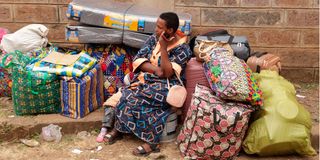
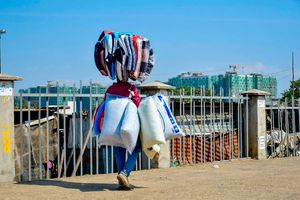
Burundians guard their personal effecta outside the Embassy of Burundi Chancery in Nairobi on September 7, 2026 where they flocked to regularise their documents.
Photo credit: Evans Habil | Nation Media Group
In Mombasa, a group of Burundian nationals sought refuge at a church in Likoni, after locals allegedly threatened to evict them following President William Ruto’s directive targeting small-scale traders and hawkers operating without the required documentation.
The affected foreigners include traders and other small-scale business operators who depend on informal businesses like hawking coffee, tea, peanuts and boiled eggs for their livelihoods.
According to Mr Celestin Nshimirimana, 41, the group fled to the church after receiving threats that they would be forced to leave the area. The church reportedly offered them temporary shelter as concerns over their safety grew.
"I wonder why a neighbour I have lived with for so many years is now turning against me, asking me to leave. We have always cohabited peacefully," he said.
Mr Nshimirimana claims that the number of people seeking refuge at the church could not immediately be established but could be slightly above 100. It was also unclear whether anyone had been injured, arrested or had property damaged during the reported eviction confrontation.
Burundians queue at Nairobi Embassy to register after Ruto order
Another Burundian national, Mr Niyogusengwa Omery, claimed he lost his items, including a flask full of tea and mandazi, to locals who consumed it and left without paying.
"I feel that the church is the only place I’m safe. They took my stuff, and now I don't even have fare to go back home," he said.
Ms Mjambere Consolata said the situation has raised concerns about the possibility of xenophobic hostility as authorities step up enforcement to curb any unlawful action against the foreigners.
"A man asked my kids where their father was, and I felt unsafe. I had to lock my children inside the house until my husband came back. The man came back later and repeatedly knocked on our door asking us to leave," said Ms Mjambere.
Community leaders and human rights advocates cautioned against discrimination against foreign nationals.
Vocal Africa Executive Director Hussein Khalid said not only is the issue a serious breach of security but also a threat to social cohesion in an already volatile environment and period.
Those sheltering at the church are now seeking emergency travel documents to leave the country, as it remains unclear whether authorities have intervened in the situation or what arrangements will be made for them.
In Murang’a’s Nginda village, Mr Daniel Njuguna, 36, has, over the past two years, brokered vegetables for Claudine Mukamana, a 38-year-old Rwandan who operated a small food outlet in Murang'a town.
"Every day, she would buy French beans, bananas, tomatoes, sukumawiki, managu, kunde and dhania. I have been getting a gross of between Sh3,000 and Sh5,000 from her," he said.
Mr Njuguna said his profit on a daily basis from her has been between Sh1,000 and Sh1,500 per day from this Rwadese food hawker.
For shopkeeper Stephen Kagwima in Maragua town, he has lost daily sales of about Sh6,000.
"I was lucky to have landed business to supply about 10 tea, chapati and mandazi hawkers from Burundi. I would sell them wheat flour, sugar, baking powder, cooking oils, coffee sachets as well as salts...every day I would make about Sh2,000 profit from them," he said.
Separately, a section of Kenya Kwanza leaders have demanded the arrest and prosecution of suspects behind the harassment of foreigners following President William Ruto's directive on a crackdown on immigrants operating small-scale businesses.
The leaders said hostilities against the foreigners working as hawkers and small shop operators were tainting the country's international image and the African Union (AU) spirit of unity.
"It is against the AU spirit and an abuse of human rights for an African to harass or attack another African or any other human being. The law must act tough against individuals who have misunderstood the directive to abuse others," said Aaron Cheruiyot, Senate Majority Leader.
Daniel Ogetta, Kevin Cheruiyot, Jackson Ngari, Kevin Mutai, Barnabas Bii and Mwangi Muiruri