Victims of police brutality are entitled to sue the State for damages without waiting for security agencies to complete investigations, the Court of Appeal in Nairobi has ruled.
A three-judge bench comprising Justices Daniel Musinga, Mumbi Ngugi and George Odunga held that pending investigations or open police files do not strip the High Court of jurisdiction to determine claims on rights violations and compensation.
“The law permits victims or their families to pursue multiple avenues at the same time, including tort claims for wrongful death and criminal prosecution of those responsible,” the judges stated in their decision.
“Each serves a different purpose and addresses a different aspect of the harm suffered,” they added.
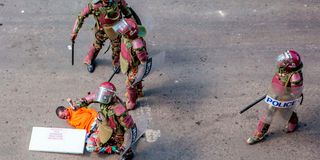
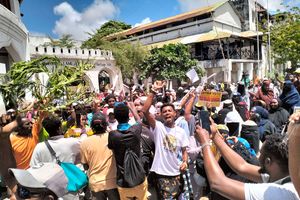
A man holds a placard during a protest against police killings and brutality in Mathare in June 2020.
Photo credit: File | Nation Media Group
The decision arose from a petition by Anjlee Parveen Kumar Sharma, widow of businessman Bunty Bharat Kumar Shah, who was shot dead by police at his Westlands home on October 28, 2017.
Ms Sharma sued the Attorney-General, the Inspector-General of Police, the Interior Cabinet Secretary, and the Director of Public Prosecutions seeking Sh730 million in damages for her family.
She alleged that police stormed their compound in armoured vehicles at 2:49 am, broke the gate, and took positions inside.
Alarmed, Mr Shah opened a bedroom window and was fatally shot in the heart by a police marksman.
She claimed officers blocked an ambulance from entering, disabled CCTV cameras, and later admitted through media statements that the operation was based on faulty intelligence.
Despite reporting the incident to the police and the Independent Policing Oversight Authority, she said no meaningful action followed.
Her petition was struck out by the High Court in 2022, with Justice Hedwig Ong’undi ruling it was premature since investigations were incomplete and the DPP had not received an inquiry file.
On appeal, however, the Court of Appeal overturned the decision, stressing that rights claims are not dependent on criminal trials.
The bench criticised prolonged delays, noting that officers suspected of involvement had refused to record statements.
“Failure to act on such deaths may amount to a continuing denial of justice and a breach of the State’s obligations under Articles 26 and 48 of the Constitution,” they ruled.