For many students in Las Anod, in Northeast State, Somalia, the classroom is more than just a place to learn; it’s where hope begins.
Kenyan teachers have travelled hundreds of kilometres to share their knowledge and provide mentorship and care, forging bonds that uplift communities and inspire ambition in young learners.
When Samuel Obonyo first arrived in Lasanod, the capital city of Northeast State—then called SSC-Khatumo—he felt both excited and apprehensive. The dusty streets, the unfamiliar Somali language, and the curious students waiting in the small classroom all made his heart race.
Yet within weeks, his presence—where he doubles as the Principal of Khadijah Abdi Laangadhade School, located in Adhi Adeye town in the Sool region, about 35 km from the Northeast State capital, Lasanod, and Ahmed Saeed Nalayeh School, located in Gal-Barwaaqo in the Sanaag region—began to have an impact on the community.
Samuel Obonyo, the Principal of Khadijah Abdi Laangadhade School, which is located in Adhi Adeye town, Sool region, about 35km from the Northeast State capital, Lasanad.
Photo credit: Pool
Students who had previously struggled with reading and writing suddenly became eager to learn, inspired by his patience and determination.
For Obonyo, originally from Njro in Nakuru, having taught in several schools back home, teaching in a foreign country was more than just a job—it was an opportunity to build bridges, one lesson at a time.
Obonyo’s story is not unique. Across Northeast State in Somalia, Kenyan teachers are quietly transforming classrooms and communities, bringing new energy, methods, and hope to schools that have long faced challenges.
They are helping lay the foundation for a generation of students eager to dream bigger—whether by introducing interactive learning techniques or mentoring local educators.
Their journeys are often filled with personal sacrifices, such as long hours, adapting to different cultures, and being far from family, but the impact is tangible. In classrooms where resources are limited, these teachers are sowing the seeds of knowledge that could transform the region's future, one student at a time.
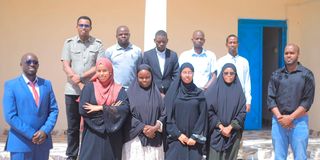
At Khadijah Abdi Laangadhade School, I met at least four Kenyan teachers. They told me that there are at least six in total, while at Ahmed Saeed Nalayeh School, there are seven.
The Foundation was established with the vision of honouring Hodan Nalayeh's legacy by creating educational and empowering opportunities in underserved communities, based on the belief that access to quality education is a pathway for individuals and communities to flourish.
The Somali-Canadian journalist died on July 13, 2019, in a terrorist attack in the Somali port city of Kismayo. She had just returned to Kismayu after spending a few days in Nairobi working on a story about Somali women entrepreneurs in Kenya.
She had been among 27 people who were killed when gunmen stormed the Asasey Hotel, where regional politicians and clan elders were discussing an election.
The foundation was established to continue her work and to be inspired by her—a passionate advocate for education and empowerment.
The core belief is that education has the power to transform lives and lift entire communities, creating opportunities for a brighter future for underprivileged children.
Through her advocacy and tireless work, she paved the way for the Give To Learn To Grow Foundation to continue her mission of providing educational opportunities to those who need it most.
The majority of children at both schools come from disadvantaged backgrounds and different communities in the local area.
“One of the main reasons that drove me to come here is to see the kids grow. You look at this community and you see an under-resourced community—a community that does not have facilities and does not have enough teachers to assist them.
“The only tool they need is education, which can help them grow and move from one level to another,” Obonyo said.
Samuel Obonyo, the Principal of Khadijah Abdi Laangadhade School, which is located in Adhi Adeye town, Sool region, about 35km from the Northeast State capital, Lasanad.
It hasn’t always been peaceful. A major conflict in Lasanod, which began in December 2022, lasted for some seven months, pitying Somaliland forces and a local defence militia. In August 2023, the then SSC-Khatumo forces defeated Somaliland and took control of the city. It began with anti-government protests following the assassination of a local politician, escalating into an armed conflict between Somaliland's national army and the Dhulbahante clan defence forces.
Maxcy Cheruto, another Kenyan who also taught in Kenya before moving to Northeast State, said it was a great opportunity not only to teach but also to interact with the children and prepare them for a brighter future.
Maxcy Cheruto a Kenyan teacher who is based in Northeast State of Somalia, where she teaches at Khadijah Abdi Laangadhade School, which is located in Adhi Adeye town, Sool region.
Photo credit: Pool
Fadumo Farhan Abdi, a local teacher who has worked at the school for two years, enjoys interacting with the Kenyans, who have introduced the children to a different culture. “I just want to thank my sisters from Kenya for coming here and showing us kindness—and to say thank you for teaching me how to cook ugali and omena. It is so delicious,” she said while giggling.
Monica Anyango is also among the teachers who teach there. She says that she mostly deals with the lower classes and her work involves teaching all the subjects in English.
Obonyo says that despite everything, there is a lot to motivate them to continue teaching the children. Among these motivations are the community's humble beginnings, which is why they are determined to ensure that they take a step forward in the right direction—and that step is education.
“It gives us fuel to wake up and get to those classes and do something constructive so that they can grow and have a better future ahead. Remember that even if we have had insecurity before, these children also experienced the same.
"They might be young and don’t know the weight of what happened, but we are here to motivate, encourage, and give them that other shoulder they can lean on as they move up.”