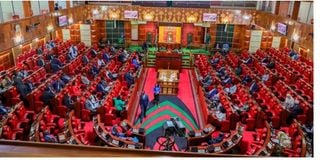
Six Bills proposing various reforms in the education sector are among priority business lined up for consideration as the National Assembly resumes sittings on Tuesday after a month-long recess.
The National Assembly will resume for the third and final part of the fifth session, closing the year with a packed in-tray before the 2027 polls.
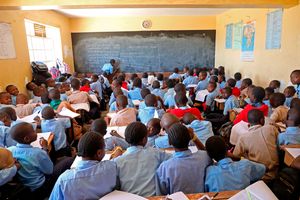
Apart from Bills related to electoral reforms, the Liaison Committee, in its retreat held in Mombasa last week, also resolved to prioritise consideration of six key Bills in the education sector in order to provide clarity on student funding model and other pending issues in the sector.
The six Bills that MPs will prioritise include the Tertiary Education, Placement and Funding Bill, 2026, the Basic Education Bill, 2026 and the Kenya Institute of Curriculum Development (Amendment) Bill, 2026.
Others include the Kenya National Education Assessment Council Bill, 2026, the Pre-Service Education and In-Service Training Bill, 2026, and the Kenya National Qualifications Framework (Amendment) Bill, 2026.
The Basic Education Bill, 2026, among others, seeks to replace the existing legal framework governing basic education, covering school governance, financing, learner welfare, teacher management, quality assurance and education data.
The Education Committee is currently undertaking public participation on the Bills, an exercise that is expected to be concluded by Friday next week, paving the way for consideration of the Bills by the House.
Tabling of the public participation report by the committee will pave the way for the Second Reading of the Bills and Committee Stage, where MPs shall propose and consider any amendments arising from the public participation exercise for incorporation before passage of the Bills.
The Tertiary Education, Placement and Funding Bill, 2026, is important as it seeks to establish a new framework for financing and placing students in universities and Technical and Vocational Education and Training (TVET) institutions.
Photo credit: Nation Media Group
Under the proposed system, students would access loans to finance their education and repay them after completing their studies, reducing the direct tuition burden on parents.
The Kenya National Educational Assessments Council Bill, on the other hand, proposes a new legal framework for national assessments and repeal of the existing Kenya National Examination Council Act, while the Pre-Service Education and In-Service Training Bill seeks to strengthen teacher preparation and continuous professional development.
The Kenya National Qualifications Framework (Amendment) Bill proposes measures to strengthen credential tracking and establish a national qualifications database, while the KICD Amendment Bill seeks to streamline the institute’s mandate and eliminate overlaps with the tertiary education sector.
The Pre-Service Education and In-Service Training Bill, 2026, seeks to establish a legal framework for training prospective teachers as well as continuous professional development for serving teachers and education managers.
Due to the tight schedule ahead of the 2027 polls, MPs are also expected to start consideration of the 2027/2028 Budget and attendant legislation before they break next year in June.
In order to accomplish consideration of the two key Bills, MPs will resume their sittings in the last week of January next year, which is a month earlier than their usual previous calendar.
This will allow the House to consider and pass the Budget Estimates, and the Appropriation and Finance Bills before the end of March 2027.
In line with Article 132 of the Constitution, President William Ruto is expected to make his annual State of the Nation Address in November to highlight measures taken and progress achieved in the realisation of national values, progress made in fulfilment of the international obligations of the republic, and the state of security of the country.
And as the term of the 13th Parliament comes to an end, the House has also started the process of reviewing the Standing Orders that will be used in the 14th Parliament.
Various MPs have already started submitting their proposals to the office of the Clerk, with the deadline being April next year.
Upon expiry of the deadline, the National Assembly’s Taskforce on the Review of the Standing Orders is expected to comprehensively consider proposals submitted by Members and table a report to the Procedure and House Rules Committee, which will thereafter table a report for adoption by the House before it breaks for recess in June 2027.
The amendments are aimed at strengthening the efficiency and effectiveness of the next Parliament and its committees.
“From the foregoing, all systems go for the National Assembly as it resumes its sittings next week. As the country gears up for the general election next year, the National Assembly has a packed legislative agenda that is likely to characterise its proceedings as it moves to effect electoral law reforms necessary for the conduct of the general election,” reads a dispatch from Parliament.
According to data by the House, the 13th Parliament, since its start in September 2022, has already achieved and concluded over 90 per cent of the scheduled business, with over 100 landmark pieces of legislation touching on various sectors passed and enacted.