An international report on education that was published this week has highlighted some challenges that affect the performance of learners in the Kenyan education system.
Kenya took part in the Programme for International Student Assessment (PISA) for the first time in 2025, and the results identified serious gaps in learning among Kenyan students that need fixing for the education system to compare favourably with the best in the world. The test examines the context within which children learn, and it determines their performance.
Among the issues the report raises is a perceived shortage of human and material resources. 53 per cent of the learners who undertook the test said they were in schools whose school heads reported that instruction was hindered (at least to some extent) by a perceived lack of teaching staff.
Public schools have for years grappled with staffing gaps, and recent mass recruitment of teachers has not alleviated the problem. Junior schools are worst hit by the shortage.
“Invest in continuous professional development, particularly in mathematics pedagogy, to equip teachers with strategies for problem-solving instruction,” the report recommends.
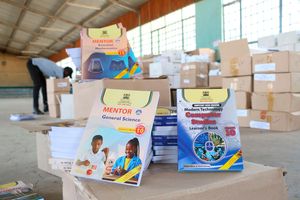
The PISA 2025 data also revealed that shortages of material resources remain a concern. Some 54 percent of the learners in Kenya tested attended schools whose school heads reported that a lack of educational material like textbooks, IT equipment, library or laboratory materials negatively affected teaching and learning.
Junior Secondary School (JSS) intern teachers march along Nairobi streets on May 5, 2026 to demand the implementation of a court order regarding their pay and employment terms.
Photo credit: Lucy Wanjiru | Nation
The schools also lack physical infrastructure like adequate buildings, grounds, heating or cooling systems, lighting and acoustic systems.
Bullying and cyberbullying were reported by 55 per cent of the learners who said they had been victims of at least one form of bullying a few times per month or more in 2025. This is more than double the OECD average of 20 per cent. The CEO of the Kenya National Examinations Council (Knec), Dr David Njengere, observed that such issues consequently affect a learner’s performance in class.
“Our participation wasn’t about performance but learning the system and picking lessons for context. What are the contextual issues that could contribute to performance? We usually don’t look at contexts like bullying and how they affect learning. Until we address those issues, the children will not perform. Those issues are the things education needs to focus on,” Dr Njengere said.
Kenya National Examinations Council Chief Executive Officer, Dr David Njengere.
Photo credit: Jared Nyataya | Nation Media Group
The report noted that although cyberbullying is relatively uncommon in Kenya compared with other forms of bullying, its victims tend to experience significant achievement deficits.
Cyberbullying.
Photo credit: File | Nation Media Group
“In Kenya, 13 per cent of students reported that upsetting information about them was published online, without their consent, at least a few times a month during the 12 months prior to the PISA test (OECD average: 3 per cent). These students scored, on average, 58 points lower in science than their peers,” the report reads.
Truancy and lateness to school were also identified as a factor that affects performance of learners. In 2025, about 35 percent of Kenya learners reported having missed at least one day of school in the two weeks prior to the test. 40 of the tested learners reported skipping at least one class within the same period.
The scores were worse than the OECD average of 22 percent for absenteeism and 24 percent for skipping a class. Additionally, 36 percent of learners reported arriving late for school. Lateness could be attributed to various reasons.
On digital literacy, the learners tested said that as much as the digital devices in school are used for learning, when not properly put to use, they become factors of distraction and consequently affect learning. The learners said they spend more time using digital devices on non-educational activities than those that enhance learning.
“In Kenya, students reported spending on average 1.6 hours per day using digital devices at school for learning activities. At the same time, a non-negligible share of students’ device use on school days is dedicated to non-learning activities. Students reported spending 1.9 hours per day using digital devices at school for leisure. 18 percent of them reported that their peers are often distracted by the use of digital devices during most or all science lessons,” the report reads.
The report calls for more parental engagement and support in the learning process of their children. 65 percent of Kenyan learners who undertook the test reported that their parents or guardians asked them, at least once per week, what they did at school. This leaves out a significant 35 percent who never questioned what their children do at school.
The figure worsens when asked about weekly discussions between parents and children about problems they might have at school. Only 54 per cent of the learners said they hold such discussions with their parents or guardians.
It should concern stakeholders in education that 19 per cent of the tested learners agreed or strongly agreed that “school has been a waste of time”.
‘Curiosity, perseverance and valuing school are most often associated with higher science.
Performance,” the report notes. Students who perceive greater value in school and disagree that it is a waste of time tend to achieve higher scores in science (by 54 score points) than their peers who feel they are wasting their time at school,” the report reads.