Should Parliament approve President William Ruto’s proposed universal model, the new funding model for higher education will mainly be student loans.
Sources familiar with the proposal have revealed that under the new plan, the government scholarship component will diminish, and student loans increased.
This is expected to replace the current arrangement where government support is provided through scholarships and loans based on students’ level of financial need.
If the proposal sails through Parliament, graduates will have significantly larger loans to repay after completing their studies. This raises concerns about the repayment period, given that many graduates struggle to find employment afterwards.
Last week on Tuesday, President William Ruto said the “final version” of the proposal was already before Parliament. He asked Members of Parliament to fast-track approval of the funding model ahead of fresh admission of university students in September.
“Now we have the final version of how we are going to make higher education universal in Parliament. In future, the background of a child will not matter, but how good they are. We have been grappling with how to fund our higher education,” Dr Ruto said at State House.
President William Ruto presents a cheque to the winners in the Cloud category at the 10th editon of the 2026 Huawei Global ICT Competition when he hosted them at State House, Nairobi. Looking on are Huawei Kenya CEO Garvin Gao (left), Chinese Ambassador to Kenya Guo Haiyan (second left), ICT CS William Kabogo and the PS John Tanui (right).
Photo credit: PCS
However, the chairperson of the president’s Council of Economic Advisers, David Ndii, on July 22, posted on his X timeline that: “The president did not say government funding. He said students will be “fully funded,” raising doubts about the nature of the financial support.
“The proposal is designed around universal access, but the major change is in the financing structure. Instead of government absorbing a significant portion of the cost through scholarships, students will increasingly rely on loans to meet their education expenses. This means graduates may leave university with higher loan balances than under the current model,” a source familiar with the discussions said.
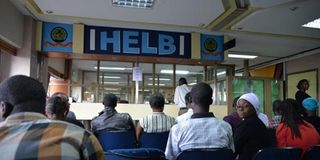
The sources, who requested not to be named because they were not authorised to speak publicly on the matter, also revealed that there are ongoing conversations around securitising the Higher Education Loans Board (Helb) loans as part of efforts to expand funding for higher education.
Under the proposed arrangement, the government would explore ways of using the existing Helb loan portfolio to unlock additional resources for student financing, creating a mechanism where future loan repayments could support funding for subsequent cohorts of learners.
“Securitising Helb loans could unlock more resources and create a revolving fund to support more students. However, the success of such a model will depend on the ability of graduates to repay their loans. If employment opportunities do not grow alongside the expansion of student financing, we risk creating a bigger debt challenge for young people,” a source said.
However, the concern for many students and their families would be the implication of the financing structure, in which they will be left with huge loans to pay.
For instance, if the tuition fees for a degree programme costs Sh300,000 annually, the current arrangement could see the government cover Sh200,000 through a scholarship while the remaining Sh100,000 is financed through a student loan. Over the four years of the programme, the student would accumulate a tuition loan of Sh400,000. This is the money allocated through the Universities Fund (UF). The student could also have another loan for upkeep offered through Helb.
Under a loan-heavy universal funding model where the full cost is financed through borrowing, that student could graduate while owing a Sh1.2 million debt in addition to other debts. The actual figures will depend on the final financing formula approved by Parliament.
Education Cabinet Secretary Julius Ogamba during a past event.
Photo credit: Wilfred Nyangaresi | Nation Media Group
Education Cabinet Secretary Julius Ogamba gave an overview of the proposed Tertiary Placement and Funding Bill, 2026, which he said is before the National Assembly, which resumed yesterday from recess.
The Bill seeks to merge the Helb, UF and the Technical and Vocational Education and Training Fund Board into a single Tertiary Education Funding Authority.
The proposed authority would coordinate funding for university, college and TVET students and provide financing covering tuition, accommodation and living expenses.
The Bill would also create a mechanism for funding minors admitted to tertiary institutions and establish a framework for financing all eligible students and trainees.
To make the system sustainable, the proposed authority would be empowered to mobilise resources beyond the Exchequer, including private capital and other non-traditional sources of education financing, while consolidating public bursary and scholarship schemes.