The Universities Fund (UF) has warned that persistent underfunding of the institution poses a major risk to the operations of public universities and the award of scholarships to students.
The fund, in documents tabled before the National Assembly Committee on Education, warned that quality, accessibility and continuity of university education are at risk.
While giving an update to the committee on the utilisation of its budget in the 2025/26 Financial Year, the fund warned that public universities risk defaulting in core operational obligations and may not even be able to pay salaries if budget deficits continue to take root each financial year.
During the year under review, the fund told Parliament that under the student-centred funding model, it required Sh29 billion but only Sh18 billion was approved, leaving it with a Sh11 billion deficit.
Under the Differentiated Unit Cost (DUC) capitation model, the fund told the committee that it required Sh40 billion but only Sh23 billion was approved, leaving it with a deficit of Sh17 billion, leading to a cumulative Sh28 billion budget hole.
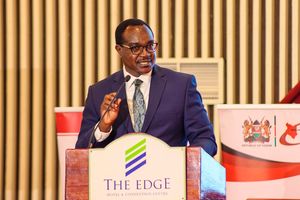
“The funding gap has implications for the financial sustainability of public universities. Since scholarship funds are remitted directly to universities to support tuition costs, any shortfall in scholarship financing may constrain university cash flows and contribute to the accumulation of institutional pending obligations related to their recurrent operational expenditures,” the acting CEO of the fund, Dr Edwin Wanyonyi, told the committee.
Universities Fund acting Chief Executive Officer Dr Edwin Wanyonyi during a past event.
Photo credit: Wilfred Nyangaresi | Nation Media Group
“The unfunded budgetary requirement limited the level of financial support available to eligible students and universities,” he added.
The Universities Fund provides scholarships to students under the new higher education funding model.
The fund told the committee that the financial deficit reduced its ability to finance universities as per the resource requirements and the assessed scholarship and capitation levels.
According to the fund, the budget hole provides public universities with cash-flow constraints since scholarship and capitation funds support teaching, learning and institutional operations.
The fund also warned that the deficit creates cash flow constraints in public universities because scholarship and capitation funds support teaching, learning and institutional operations.
It also warned the lawmakers that the budget deficit reduces predictability of financing in public universities, a move which makes them have difficulty in preparing reliable institutional budgets and annual work plans.
“Budget allocations are consistently aligned with student funding requirements resulting in recurrent funding deficits. In addition, there is no comprehensive policy framework to guide the management of cumulative funding shortfalls,” the fund said.
The agency further warned that the funding shortfalls may affect the liquidity of universities, leading to delays in payment of salaries, statutory obligations, suppliers and utilities, thereby disrupting teaching, learning and student support services.
The Higher Education Loans Board (HELB) had also raised an alarm before the same committee over the Sh58 billion budget deficit it is facing in executing its mandate.
The board told the committee that in this new financial year, a total of 1,199,423 students require support, but the board only has Sh56.71 billion against a requirement of Sh114.36 billion, leaving a financial gap of Sh57.65 billion
The National Treasury office building.
Photo credit: File | Nation Media Group
The board said it needs urgent financial assistance from the National Treasury in order to cater for the increased number of students in each financial year.
According to the board, between 2023/2024 and 2025/26 financial years, the board had a cumulative financial gap of Sh19.27 billion due to the persistent budgetary shortfalls.
In the 2024/25 financial year, for instance, the board had a financial hole of Sh10.694 billion, while in the 2025/26 financial year, the board had a funding gap of Sh18.58 billion.
Last week, Education Cabinet Secretary Julius Ogamba told the National Assembly PIC committee on Education and governance that timely exchequer remains the greatest challenge in the financing of universities.
He told MPs that continuing students under the previous Differentiated Unit Cost (DUC) model required Sh40.4 billion in the last financial year, yet only Sh23 billion was allocated, resulting in another Sh17.4 billion shortfall.
Overall, universities required Sh70.3 billion for scholarships and grants against an approved budget of Sh41.2 billion, leaving a cumulative deficit of Sh28.9 billion.
"The figures represent budgetary gaps arising from inadequate allocations, not undistributed Exchequer funds. Every shilling released to the Universities Fund was disbursed to eligible public universities," he said.
He pointed out that the persistent mismatch between institutional obligations and available resources has fuelled the accumulation of pending bills and weakened universities' ability to meet payroll, pay suppliers and maintain teaching, research and student services.