Rising number of students leaving secondary schools to join tertiary education and shrinking budgetary allocations have forced the government to re-look the funding model introduced only three years ago and hailed as the panacea for the woes bedevilling the higher education sector.
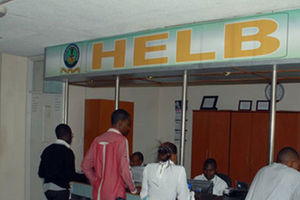
This year alone, the Higher Education Loans Board (HELB) has been allocated Sh56.71 billion against a requirement of Sh114.36 billion to finance the education of 1,199,423 students who require funding.
Over the years, the fund has been unable to fully fund all students who apply for financial assistance, leaving thousands of students distressed while others swap preferred courses for more affordable ones.
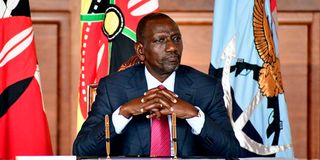
However, the announcement by President William Ruto that a Bill establishing a universal higher education funding model is before Parliament has triggered questions over the proposal as well as the source of funds and its sustainability.
The President on Tuesday said the "final version" of the proposal was before Parliament and urged MPs to fast-track its approval so that students joining university for the first time in September can benefit from full funding, irrespective of their background. It was the first time the President was referring to such a Bill and it caught many by surprise.
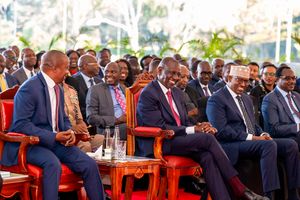
“Now we have in Parliament the final version of how we are going to make higher education universal. It will not matter the background of any child in Kenya, it will matter how good they are. Going into the future, we've been trying to grapple with how do we fund our higher education,” Dr Ruto said at State House.
However, inquiries by Nation to various senior government officials for a copy of the said Bill were not successful, and we also could not establish the stage at which it is.
The Cabinet Secretary for Education Julius Ogamba as well as State House spokesperson Hussein Mohamed only shared what they referred to as an “Overview of the Tertiary Placement and Funding Bill, 2026”.
Education Cabinet Secretary Julius Ogamba during a past event.
Photo credit: Wilfred Nyangaresi | Nation Media Group
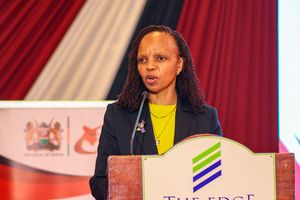
The Principal Secretary for Higher Education Dr Beatrice Inyangala told Nation that the said Bill had “left the Ministry” but was not sure how far the process to make it law had gone.
The chair of the President’s Council of Economic Advisors, David Ndii, on Wednesday, July 22, posted on his X timeline that: “The president did not say government funding. He said students will be “fully funded”.”
The chair of the Committee on Education of the National Assembly, Julius Melly, simply replied to our query, saying, “don’t be in a rush”.
In his brief, Mr Ogamba said the proposed Tertiary Placement and Funding Bill, 2026 was already before Parliament.
"The Bill is now in Parliament for debate and approval. This new funding model will become effective upon passage of the Bill by Parliament," the CS said.
Separately, Dr Inyangala, said the ministry had submitted amendments in July and suggested the document had already moved beyond its offices.
"We do have the Bill, but you see, it has already left this office. It is a Ministry of Education document. Remember, this does not touch on me alone or the State Department. It also touches on TVET. So it is a ministerial document that has already left," Dr Inyangala said.
"Once they leave, I cannot say anything more because it is now out of our hands. I would say we be patient for the process to unfold so that the information we are sharing with the public covers the final details," she said.
Dr Beatrice Inyangala, the Principal Secretary, State Department for Higher Education and Research.
Photo credit: File | Nation
Before a government Bill is enacted, the Cabinet recommends the respective CS to come up with a draft document incorporating specific proposals as approved by the Cabinet.
The draft is then presented to the Cabinet for approval before it is transmitted to Parliament for processing.
Depending on the political goodwill, the Bill can be passed by Parliament even within a week of its publication and introduction in the House.
The clerk of the National Assembly, Samuel Njoroge, did not respond to our inquiries directed at his known phone number.
However, a background check by Nation and checks with senior parliamentary staff reveal that the National Assembly has not received such a Bill.
The Bill also does not feature on the Bill Tracker on the National Assembly website. A Bill tracker is an online portal or tool used to monitor the progress of Bills introduced in parliament, which includes real-time updates from the moment a Bill is introduced until it is signed into law or rejected.
Our investigations also indicated that the Cabinet was yet to approve such a Bill before it is transmitted to Parliament for action.
“Before government Bills come to Parliament for processing, they are usually accompanied by a Cabinet memo officially communicating the Cabinet position on the Bill and the need for its passage. We haven’t seen this yet,” added another parliamentary official, who spoke on condition of anonymity.
The National Assembly record shows that there have been two attempts to amend the HELB Act in the last three years.
The 2023 amendment Bill by Machakos County Woman MP Joyce Kamene sought to ease the financial burden on recent graduates and expand loan eligibility to minors.
However, the National Assembly’s Bill tracker shows that the Bill lapsed at the end of the Third Session of 2024, “pursuant to the Standing Order 141(2) and the Speaker’s Communication No.1 of 2025.”
The National Assembly Education Committee chaired by Tinderet MP Julius Melly at Bunge Tower in Nairobi on May 13, 2025.
Photo credit: Dennis Onsongo | Nation
The other attempt was the 2023 Executive-sponsored Bill, which sought to align the legal HELB framework with then prevailing national budget shortages.
Some legislators who spoke to Nation believe that the country has enough resources without the need for legislation.
“Suffering students need relief now, not a promissory note,” said Kitutu Chache South MP Anthony Kibagendi, adding; “this government owes universities billions of shillings that should be released to enable them to run independently and profitably. The government should also stop running down colleges and universities through political interference and corruption,” he added.
The immediate former chair of the Law Society of Kenya, Faith Odhiambo, questioned the sincerity of the announcement, considering the financial crisis public universities have been steeped in for years.
“If the State could not sustainably fund the existing model, how does it suddenly find resources to fully fund every KUCCPS‑placed student without a clear legal framework, costed plan and honest conversation about trade‑offs in health, housing and other services? A constitutional government must not dangle free rights as campaign bait while hiding the fiscal maths from the very citizens expected to pay the bill,” she said.
According to CS Ogamba, the proposed Tertiary Placement and Funding Bill, 2026 seeks to overhaul the country's tertiary financing system by merging the Higher Education Loans Board, Universities Fund and Technical and Vocational Education and Training Fund Board into a single Tertiary Education Funding Authority.
The proposed authority would then coordinate funding for university, college and TVET students and provide financing covering tuition, accommodation and living expenses.
The Bill would also create a mechanism for funding minors admitted to tertiary institutions and establish a framework for financing all eligible students and trainees.
To make the system sustainable, the proposed authority would be empowered to mobilise resources beyond the Exchequer, including private capital and other non-traditional sources of education financing, while consolidating public bursary and scholarship schemes.
The uncertainty comes as the government seeks to replace the student-centred funding model introduced in 2023, which categorised students into funding bands based on their financial need and has attracted mixed reactions from stakeholders.