Public universities have questioned where the money to implement the proposed 2025–2029 lecturers’ Collective Bargaining Agreement (CBA) will come from, warning that they cannot take on the additional cost from their existing allocations under the Student-Centred Funding Model.
The universities want the National Treasury to provide fresh funding for the agreement, arguing that they are already struggling with a funding shortfall of more than Sh100 billion.
The position was presented to the Salaries and Remuneration Commission (SRC) by the Vice-Chancellors’ Committee following a request by the commission for universities to confirm the funds available to implement the proposed CBA.
SRC had asked vice-chancellors and principals to provide the information as it assesses the affordability and fiscal sustainability of the 2025–2029 agreements.
“The Vice-Chancellors’ Committee noted that since the introduction of the Student-Centred University Funding Model (SCFM), the Government has not fully remitted the funding due to Public Universities, with the outstanding amount presently standing at over Sh100 billion. As a result, Public Universities continue to experience severe financial constraints in meeting their existing academic, personnel and operational obligations,” said Prof Daniel Mugendi, the chairperson of the Vice-Chancellors’ Committee of Public Universities.
In a September 23 letter to SRC, the Vice-Chancellors’ Committee said the Government had not fully remitted funding due to public universities since the introduction of the Student-Centred Funding Model, with the outstanding amount now standing at more than Sh100 billion.
The funding gap, the universities said, has left institutions struggling to meet their existing academic, personnel and operational obligations. They warned that requiring them to meet the additional cost of the new CBA from their existing allocations would further strain already financially stretched institutions.
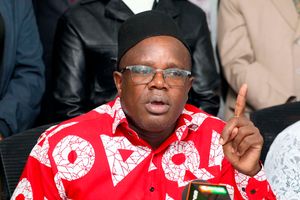
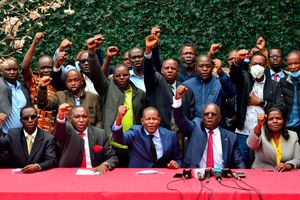
Universities Academic Staff Union (UASU) Secretary-General Dr Constantine Wasonga speaks during a press briefing at the union headquarters in Nairobi on September 24, 2026.
Photo credit: Bonface Bogita | Nation
The vice chancellors have asked that the financial requirement arising from the 2025–2029 CBAs be fully funded by the National Treasury, with the money specifically provided for implementation of the agreements.
“In light of the existing funding shortfall, requiring Public Universities to absorb the additional financial burden arising from the 2025–2029 CBAs from their current SCFM allocations would further strain institutions already grappling with serious financial challenges. Thus, the Vice-Chancellors and Principals request that the additional financial requirement arising from the 2025–2029 CBAs be fully funded by the National Treasury & Economic Planning, with the requisite resources specifically provided for implementation,” said Prof Mugendi.
The funding question comes as universities and lecturers remain locked in a dispute over the implementation of the new agreement.
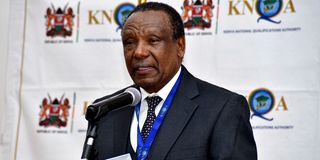
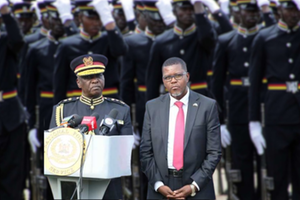
University of Embu Vice-Chancellor Prof Daniel Mugendi.
Photo credit: Francis Nderitu | Nation Media Group
The Universities Academic Staff Union (UASU) has issued a strike notice, with lecturers set to withdraw their labour from October 2, citing, among other issues, failure by the Education Ministry and Treasury to commit funding for the 2025–2029 CBA.
“They are always saying that universities do not have the financial capacity to negotiate internal CBAs. They have been declining to approve requests from universities to negotiate internal CBAs, claiming that universities would not have the financial capacity to implement them. Now they are asking universities to confirm whether they can fund the national CBAs. What do they expect from the universities when they know they have not been approving their internal CBAs?” UASU Secretary-General Dr Constantine Wasonga told Nation .
He said universities cannot be expected to fund collective bargaining agreements (CBAs) through student fees, arguing that the institutions are already struggling with huge debts.
“We cannot have CBAs funded from students. You have seen the vice-chancellors also confirm that universities have debts of over Sh100 billion,” said Dr Wasonga. “Internal CBAs are in a backlog going as far back as 2010. We have the 2013–2017 CBA and the 2017–2021 CBA. We have not been able to negotiate because the SRC says universities do not have the financial capacity to negotiate internal CBAs.”
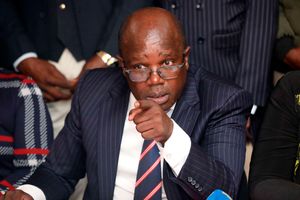
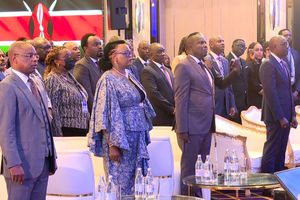
Salaries and Remuneration Commission chairperson Sammy Chepkwony.
Photo credit: File | Nation
The latest exchange between SRC and the universities now puts the financing of the agreement at the centre of the dispute.
SRC is seeking to establish whether universities have the resources to implement the CBA, while the vice-chancellors say their existing allocations cannot carry the additional burden.
The universities want the funding question settled before they are expected to take on the new financial obligation.
“The Commission noted that funds for implementation of the proposed CBAs for Public Universities for 2025–2029 cycle will be provided by the National Treasury through the student-centred University funding model (SCFM) for Public Universities during the CBA period. Consequently, individual public universities are expected to receive funding based on the students admitted and the programmes offered under the SCFM,” said SRC in a letter.
“To enable the Commission to determine affordability and fiscal sustainability of the proposals by the Inter Public Universities Council Consultative Forum, the Commission requests all Vice Chancellors of Public Universities to confirm funds available for implementation of the CBAs for 2025–2029,” the commission added.