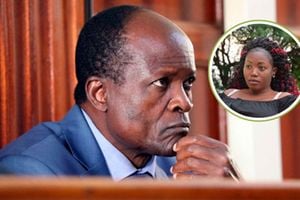
He left home in his Lexus, greeted supporters outside the Milimani Law Courts and calmly walked into the courtroom expecting to hear his fate.
By the end of the day, he was no longer a man on bond. Court orderlies escorted former Migori Governor Okoth Obado to a prison van for his second stint behind bars.
Nearly eight years after regaining his freedom pending trial, a murder conviction transformed his legal status in a matter of minutes. That is how heavy a criminal verdict can be.
Sharon Otieno murder case: Ex-governor Okoth Obado is received by supporters in court
For nearly eight years, Obado had lived under some of the strictest bail terms while standing trial over the murder of Rongo University student Sharon Otieno. He attended every court session, surrendered both his diplomatic and ordinary passports, and remained free as one of the country's longest-running and most closely watched murder trials unfolded.
That chapter closed immediately after Justice Cecilia Githua found him, his former personal assistant Michael Oyamo and former Migori County Clerk Caspal Obiero guilty of Sharon's murder.
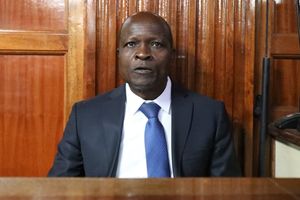
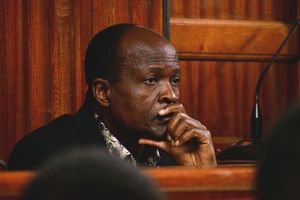
For more than five hours, Obado sat quietly in the dock, dressed in a black suit, white shirt and navy-blue tie, occasionally glancing ahead as the judge delivered the judgment that sealed his fate.
The conviction marked a dramatic reversal for a man who, in September 2018, spent about a month in remand before securing release on stringent bond terms. Justice Jessie Lesiit, now a Court of Appeals judge, had admitted him to a Sh5 million cash bail and ordered him to provide two sureties of Sh5 million each.
He was barred from travelling within 20 kilometres of the neighbouring Homa Bay County boundary, prohibited from contacting prosecution witnesses directly or indirectly, and required to surrender all travel documents.
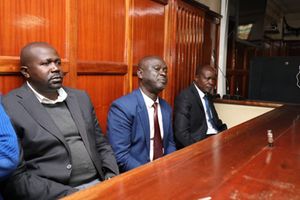
Sharon Otieno murder convicts Michael Oyamo, Caspal Obiero and ex-Migori Governor Okoth Obado in the dock on July 23, 2026.
Photo credit: Bonface Bogita | Nation Media Group
The court later eased the movement restriction after he complained it interfered with his official duties but maintained strict orders barring him from discussing Sharon or the case in political meetings.
Unlike Obado, Oyamo and Obiero remained in remand after the High Court denied them bail. They only regained their liberty months later after the Court of Appeal admitted them to bond, finding there was no evidence their release would threaten public order once Obado himself had already been freed.
On Thursday, defence lawyers urged the court to preserve that status quo. Senior Counsel Kioko Kilukumi told the court Obado had faithfully honoured every condition imposed since 2018.
He said the former governor had never absconded, had deposited both passports in court and had attended every hearing without fail. Those eight years of compliance, he argued, demonstrated he could still be trusted to remain on bond while awaiting sentencing.
Obiero's and Oyamo's lawyers advanced similar arguments, insisting their clients had equally respected all bond conditions and would continue doing so if released pending sentencing.
The prosecution opposed the request, arguing that the legal landscape had fundamentally changed the moment the guilty verdict was entered.
Assistant Director of Public Prosecutions Gikui Gichuhi told the court that bond pending trial exists to protect the constitutional presumption of innocence, a protection that no longer applied after conviction.
"The accused persons' status has changed and the presumption of innocence has been resolved after the finding that they were guilty as charged," she submitted, adding that it is standard practice for convicted persons to be remanded while pre-sentence proceedings are undertaken.
Justice Githua agreed. Moments after delivering a judgment that painstakingly reconstructed Sharon Otieno's final days, she cancelled the bond terms that had kept Obado out of prison for nearly eight years and ordered him, Oyamo and Obiero remanded pending preparation of pre-sentence and victim impact reports.
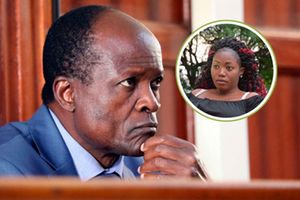
The late Sharon Otieno.
Photo credit: Pool
The decision completed a remarkable legal journey that began with Obado's arrest in September 2018 amid intense public pressure and national outrage.
At the time, he insisted he had cooperated fully with investigators and maintained there was no compelling reason to deny him bail.
"I pleaded not guilty to this charge and maintain my innocence," he told the court then. "The hearing has not commenced and in any case, it is not true that there is a strong case against me."
For years, he returned home to his family after each hearing. He continued to attend court, defended himself from the witness stand and watched the marathon trial stretch through judicial transfers, numerous interlocutory applications and lengthy delays.
That freedom ended when Justice Githua concluded that the prosecution had proved beyond reasonable doubt that the three accused acted together to murder Sharon.
"I am satisfied that the circumstances form a chain so complete that there is no escape that the accused persons jointly with others not before court committed the offence," she ruled.
"The evidence irresistibly points to the fact that the accused persons with malice aforethought unlawfully caused the death of Sharon."
Lady Justice Cecilia Githua presides over the hearing at the Criminal Division of the High Court at the Milimani Law Courts in Nairobi on July 23, 2026, during the delivery of judgment in the Sharon Otieno murder case.
Photo credit: Bonface Bogita | Nation Media Group
The court further found that Obado supplied the motive, instigation and financial resources, Oyamo facilitated execution of the plan, while Obiero provided logistical support and concealment after the killing.
With that finding, the former governor ceased to be an accused person awaiting trial and became a convicted murderer awaiting sentence.
His return to prison marks not only the end of eight years on bond, but the beginning of the final phase of one of the country’s most consequential criminal prosecutions.
He will remain in custody until the court receives pre-sentence and victim impact reports before determining the sentence he will serve in prison.
In a statement, theDPP expressed satisfaction with the Court's decision, describing the conviction as a significant milestone in the pursuit ofjustice and accountability for victims of serious crimes.
"The Office looks forward to an appropriate and deterrent sentence that reflects the gravity ofthe offence and serves the interests of justice. The DPP reiterates its unwavering commitment to the diligent prosecution of homicide and and other serious offences," the DPP said.