Former Deputy President Rigathi Gachagua and his political strategists were last night weighing their next move after the High Court dealt a major blow to his efforts to overturn his impeachment.
In a landmark judgment delivered at the Ceremonial Hall of the Milimani Law Courts, court upheld his impeachment but awarded him Sh50m damages payable by the Senate after finding senators violated his right to a fair trial by refusing to adjourn proceedings when he was ill.
The three-judge bench rejected most of the arguments advanced by Mr Gachagua and his co-petitioners, significantly weakening his bid to reclaim political ground and pursue future ambitions, including a possible presidential run in the 2027 General Elections.
Gachagua lawyer Ndegwa Njiru calls out 'judicial nonsense'
While the judgment leaves him with the option of appealing all the way to the Supreme Court, the decision raises fresh questions about his eligibility to seek elective office and the political consequences of a prolonged legal battle.
Mr Gachagua and his Democracy for the Citizens Party (DCP) had hoped for a favourable verdict that would not only quash his impeachment and eventually bolster his standing as a leading opposition figure and defender of the Mt Kenya region.
Having failed to overturn his impeachment, Mr Gachagua is likely to transform the court’s verdict into political capital by reinforcing his longstanding narrative of political victimisation.
Rather than viewing the judgment as the end of his political relevance, he is likely to present it as further evidence of a coordinated effort by powerful political forces to silence him.
This strategy could resonate with his supporters, particularly in regions where he has cultivated an image of a leader being unfairly targeted for speaking his mind.
By framing the impeachment and subsequent legal setbacks as persecution rather than accountability, Mr Gachagua may seek to galvanise public sympathy, consolidate his support base and position himself as a key opposition figure.
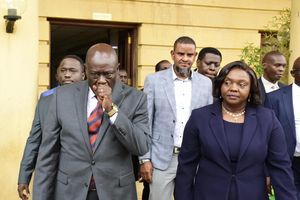
Former Deputy President Rigathi Gachagua and his wife Dorcus Rigathi leaving Milimani Law Courts on May 13, 2026, after the hearing of his legal challenge against his 2024 impeachment.
Photo credit: Billy Ogada | Nation
In its judgment, the court upheld Parliament’s decision to remove him from office and cleared the way for his successor Prof Kithure Kindiki to continue serving as the deputy president.
The judges narrowed the dispute to seven key issues: whether the petitions were justiciable; whether the impeachment process was tainted by predetermination and bias; and whether there was adequate public participation.
Other issues were whether the impugned parliamentary standing orders were constitutional; whether the composition of the National Assembly and the absence of a fully constituted IEBC affected the process; whether the constitutional procedures governing impeachment and succession were followed; and whether Mr Gachagua was accorded fair administrative action and a fair hearing.
The court ruled that impeachment proceedings are not beyond judicial scrutiny simply because they involve political questions.
Rejecting arguments by the National Assembly and the Attorney-General, the judges held that Parliament exercises delegated sovereign authority under the Constitution and remains subject to constitutional oversight.
“No State organ, including Parliament, enjoys immunity from constitutional scrutiny,” the court ruled.
However, the judges drew a clear distinction between reviewing the constitutionality of the process and re-evaluating the merits of charges considered by legislators.
One of Mr Gachagua’s central arguments was that MPs and senators had predetermined the outcome of the impeachment process. The court found no objective evidence to support those claims. According to the judges, political predisposition alone does not amount to unconstitutional bias.
The court further held that the Speakers of the National Assembly and Senate merely facilitated proceedings and were not ultimate decision-makers since they did not vote on the impeachment motion.
The judges then turned to public participation, another major plank of the petitions. They dismissed claims that the public had been denied a meaningful opportunity to participate in the impeachment process.
Mr Gachagua’s camp argued that the process had been rushed, with citizens given less than 48 hours to consider the allegations and only about 200,000 people participating. But the court disagreed and found that the National Assembly had provided reasonable notice through newspaper advertisements, multiple participation channels and a genuine opportunity for the public to submit their views.
The judges stressed that the Constitution requires meaningful participation, not perfection. They also ruled that the Senate was not required to conduct a separate public participation exercise because its role during impeachment proceedings was adjudicative rather than legislative.
Similarly, the court rejected arguments that public participation was necessary in the nomination and approval of Prof Kindiki.
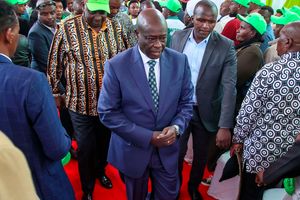
photo 1
Photo credit: Photo | Sila Kiplagat | Nation
“The approval of a deputy president nominee for appointment as the substantive deputy president does not require public participation. In undertaking such approval, Parliament exercises delegated sovereign authority on behalf of the people, as provided for under the Constitution,” the judges held.
According to the court, Article 149 provides a complete constitutional framework requiring only presidential nomination and approval by the National Assembly.
The judges also declined invitations to invalidate parliamentary standing orders governing impeachment proceedings. They said that the seven-day timelines were not inherently unconstitutional, noting that any breach would arise from how Parliament implemented the rules rather than from the standing orders themselves.
Even so, the bench identified gaps in the legal framework governing the impeachment of a DP. The judges noted that Parliament had yet to enact legislation specifically operationalising Article 150 of the Constitution and urged lawmakers to address the shortcomings to avoid uncertainty in future.
Challenges to Prof Kindiki’s nomination and appointment were similarly dismissed. The court found that the Constitution provides a distinct process for filling a vacancy in the office of DP and held that the absence of a fully constituted electoral commission did not invalidate the process.
The court reaffirmed Parliament’s authority to hold senior State officers accountable while underscoring that such powers remain subject to constitutional limits and judicial oversight.
For Mr Gachagua, the stakes are both legal and political.
Article 75(3) of the Constitution states that a person removed from office through impeachment is disqualified from holding any other State office.
Had the court quashed the impeachment, he would have gained not only legal relief but also powerful political ammunition in his campaign against President William Ruto .
Such a victory would have strengthened his narrative that he was a victim of political persecution for challenging government policies, including the Affordable Housing programme and other unpopular initiatives.
Political analysts say a victory for Mr Gachagua could have dramatically reshaped opposition politics by elevating him from kingmaker to potential presidential contender.
His clearance to run would likely have triggered significant realignments within opposition ranks, where several leaders currently view him as a crucial mobiliser of the Mt Kenya vote.
Although he had previously appeared reluctant to openly declare a presidential bid, partly because of uncertainty surrounding his eligibility following impeachment, there were indications he favoured Wiper leader Kalonzo Musyoka as the opposition’s preferred candidate.
Wiper Patriotic Front party leader Kalonzo Musyoka.
Photo credit: File | Nation Media Group
With the High Court now upholding his impeachment, attention shifts to the appellate courts, where Mr Gachagua’s political future may ultimately be decided.
In the recent popularity ratings by pollsters, Mr Gachagua has been trailing some of his co-principals, partly because of the impeachment tag. In the absence of a verdict clearing him to run, his supporters are likely to lose hope of him being on the ballot, therefore settling for alternatives within the United Opposition.
Mr Gachagua had made it clear that he would challenge any unfavourable judgment. Speaking on Sunday after attending a prayer service at the Presbyterian Church of East Africa in Karen, Mr Gachagua expressed optimism and appeared to praise the Kenyan judiciary system even before the decision is made.
“I have confidence that our judiciary is independent, is impartial and will give justice to Rigathi Gachagua and millions of his supporters across the county. If the ruling goes the other way, it is still okay. We will still have an opportunity to go to the Court of Appeal and follow the legal remedies that have been provided by the Constitution,” he said.