The High Court has declined to lift orders freezing more than Sh6.7 million held in six bank accounts linked to three people suspected of operating a mobile phone theft and resale syndicate.
The funds were frozen in May after the Assets Recovery Agency (ARA) obtained preservation orders on grounds that the money was suspected to be proceeds of crime derived directly or indirectly from the theft and sale of stolen mobile phones.
The three account holders, Syllus Musila Kivyatu, Isaac Shamora Aligula and Mourine Odhiambo Abonyo, had asked the court to set aside or vary the orders, arguing that ARA obtained them without fully disclosing all the evidence and that the restrictions had caused them severe financial hardship.
They told the court that they were unable to meet daily living expenses, pay school fees, rent, mortgages, medical bills and other financial obligations.
However, the court dismissed the applications, finding that the applicants had failed to demonstrate that the hardship they faced outweighed the risk that the funds could be dissipated before the conclusion of intended forfeiture proceedings.
“The court is cognizant that the funds in the account constitute the substratum of these proceedings and if they are extinguished, any subsequent proceedings will be rendered nugatory,” the judge said.
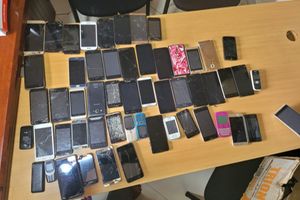
A photo of stolen phones recovered in a past operation.
Photo credit: Pool
The judge added: “I find that the applicants have not satisfied the court that the hardship outweighs the risk of dissipation or concealment of the funds, which is the substratum of the intended forfeiture proceedings.”
The court also noted that none of the applicants had sought the release of a specific amount tied to a particular expense.
According to ARA, the accounts are registered in the names of Mr Musila, Mr Aligula and Ms Abonyo.
Investigators said they received intelligence in November last year linking the three to a wider network involved in the acquisition and sale of stolen mobile phones.
ARA claims the syndicate collects stolen phones from unsuspecting members of the public before taking them to a repair shop along Jogoo Road in Nairobi, where the devices are reset or undergo minor repairs before being resold locally and across the border, including in Uganda and Tanzania.
“Preliminary investigations have established that the respondents executed a scheme of money laundering aimed at concealing and disguising the nature, scope and movement of the illicit funds,” ARA said in court documents.
The agency argues that the bank accounts were used as conduits for laundering money generated from the alleged criminal enterprise and that the funds should ultimately be forfeited to the State.
“These funds are suspected to be proceeds from criminal activities related to the theft of mobile phones,” ARA said.
Court documents show that Mr Musila holds about Sh6 million spread across three accounts at Equity Bank and Co-operative Bank, while the balance is held in accounts belonging to Mr Aligula and Ms Abonyo.
In his application, Mr Musila said the freeze orders had caused severe financial hardship and irreparable harm because he could no longer access funds needed for daily expenses, school fees, rent, mortgage repayments, medical costs and business obligations. He said the restrictions had also exposed him to penalties, accumulated interest and reputational damage.
Mr Aligula argued that the preservation orders were obtained without his knowledge and that he only became aware of them when he attempted to transact through his bank accounts.
He maintained that he was the lawful owner of the affected accounts and denied any association with the other applicants. He further denied that his accounts had been used to launder money, saying the funds were derived from legitimate activities, including the sale of second-hand motor vehicle accessories and motor vehicle brokerage.
Mr Aligula also challenged the legal basis of the preservation orders, arguing that ARA had failed to establish a nexus between his accounts and any criminal activity. He said the restrictions had disrupted his business operations, welfare group contributions and payouts, and his ability to meet daily financial obligations.
Ms Abonyo similarly denied any involvement in the alleged phone repair and resale business along Jogoo Road.
She told the court that she operates legitimate businesses selling vegetables, groceries, cereals and fish in Homa Bay town and that the money deposited in her accounts came from those ventures.
Ms Abonyo said the freezing orders had left her unable to restock goods and had pushed her businesses to the brink of collapse. She also told the court she is a single mother of four school-going children who depend on her for support.
She further complained that a restriction had been placed on her Toyota Noah motor vehicle, despite there being no court order authorising such action, preventing her from using the vehicle as security for a loan.
The agency told the court that it was still within the statutory 90-day period provided under Sections 90 and 92 of POCAMLA for filing forfeiture proceedings and that investigations were ongoing.
ARA maintained that the funds are presumed to be proceeds of crime and should remain preserved pending the filing, hearing and determination of forfeiture proceedings. It argued that lifting the restrictions would risk dissipation of the funds and render any future forfeiture case nugatory.