Doubts over Dr Duncan Ojwang’s legal qualification have sparked controversy regarding his nomination by President William Ruto for appointment as chairperson of Independent Policing Oversight Authority (IPOA).
Despite legal experts - Law Society of Kenya President Senior Counsel (SC) Charles Kanjama and former Attorney-General Prof Githu Muigai - raising concerns over the missing mandatory credentials, a parliamentary committee rushed to approve the nominee for the job.
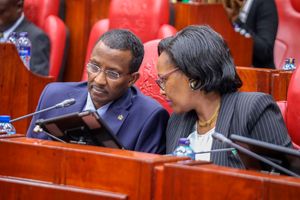
The action by the National Assembly Committee on Administration and Internal Security, chaired by Narok West MP Gabriel Tongoyo and which vetted him on August 12, 2026, threatens public trust in IPOA, a police watchdog.
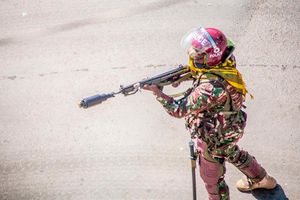
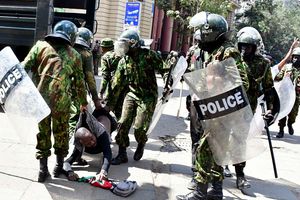
This is coming at a time the National Police Service (NPS) has been blamed for excess brutal force on unarmed civilians, abductions, enforced disappearances, kidnappings and numerous deaths in police custody.
Documents submitted to the committee show that he is not a member of the Law Society of Kenya (LSK) and has not sat Bar exams, the Advocates Training Programme (ATP) and passed, a mandatory requirement before one is admitted as an advocate of the High Court of Kenya.
Yesterday LSK boss SC Kanjama said that Dr Ojwang’ is “not qualified for admission to the Kenyan Bar,” and therefore falls short of the IPOA chairperson qualification requirements.
“I am not aware if he is an LSK member,” said the LSK President adding; “my quick search on LSK online search engine did not get a match.”
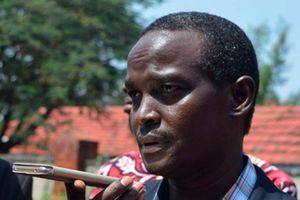
Law Society of Kenya (LSK) President Charles Kanjama.
Photo credit: Bonface Bogita | Nation Media Group
Section 13 of the Advocates Act provides that to be admitted as an advocate, a person must have passed the Bar examinations, prescribed by Council of Legal Education (CLE) and undertaken at the Kenya School of Law (KSL).
KSL, established under the KSL Act, serves as the official public legal education provider responsible for ATP, a professional legal training that bridges university education and professional legal practice.
Section 9 of the IPOA Act, states that the IPOA board consists of a chairperson who shall be qualified for appointment as a Judge of the High Court of Kenya.
Article 162 (2) of the constitution provides that each judge of a superior court shall be appointed from among persons who hold a law degree from a recognized university or are advocates of the High Court of Kenya or possess an equivalent qualification in a common-law jurisdiction.
Article 162 (1) of the constitution defines a superior court in Kenya to include the High Court, Court of Appeal and Supreme Court.
One is also qualified for the job of a judge of a superior court in Kenya if the person possesses the experience required irrespective of whether that experience was gained in Kenya or in another commonwealth common-law jurisdiction.
Article 166 (5) further goes on to state that each judge of the High Court shall be appointed from among persons who have at least 10 years’ experience as a superior court judge or professionally qualified magistrate.
One is also qualified if they possess at least 10 years’ experience as a distinguished academic or legal practitioner or such experiences in other relevant legal fields or hold the qualifications for a good period amounting, in aggregate to 10 years.
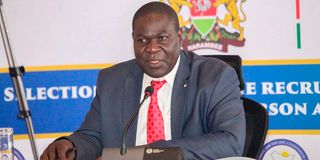
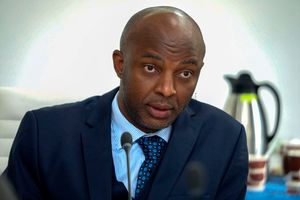
Dr Duncan Oburu Ojwang, incoming Ipoa chairman.
Dr Ojwang’ describes himself as a law scholar with three law degrees from US Universities and more than 10 years teaching experience in local universities.
However, former Attorney-General Prof Githu Muigai notes that “a degree from America does not automatically allow entry into KSL.”
Despite glaring suitability issues, the Tongoyo-led committee recommended Dr Ojwang for approval by the National Assembly in a report seen by Nation , which is expected to be tabled in the House on Tuesday in the afternoon for debate.
“The committee has approved his nomination and seeks the approval of the House for his appointment,” a member of the committee revealed to Nation in confidence.
The IPOA chairperson selection panel established by President Ruto and chaired by Dr Reuben Chirchir ranked Dr Ojwang’ top in the list of three candidates that was sent to the president to pick one and transmit the name to the National Assembly for vetting.
The selection panel had Mr Mwanamaka Mabruki, Mr Stephen Jumbale, Dr Monica Muiru and Mr Michael Mbithuka as members.
The panel ranked Dr Ojwang’, from Homabay, top with an average score of 75.2 percent followed by Mr Cyril Simiyu, from Bungoma, with 74.8 percent.
Former Independent Electoral and Boundaries Commission (IEBC) vice chairperson Ms Lilian Mahiri-Zaja, from Migori, came third with 74.6 percent.
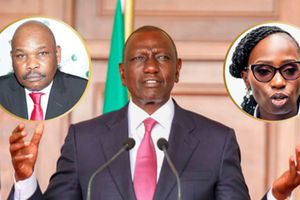
Former Independent Electoral and Boundaries Commission Vice-Chairperson Lilian Mahiri-Zaja.
Photo credit: File
Other sources within the committee told Nation that Dr Ojwang’ was approved for the job despite the selection panel confiding to the committee that “it was an oversight on our part to include his name in the list that we sent to the president.”
Details before parliament show that between 2002 and 2006, Dr Ojwang’ was at the University of Indiana, United States (US), where he obtained a Bachelor of Arts degree in Psychology.
Between 2006 and 2008 he was at the University of Southern Illinois, US, where he graduated with a Juries Doctorate (JD) Law degree, an entry into the law profession in the US, equivalent to Kenya’s Bachelor of Laws degree (LLB).
The documents further indicate that from 2009 to 2011, he got his Masters of Laws degree (LLM) in Human Rights and International Law from the University of Indiana and that between 2011 and 2013, he got PhD in Law (Law and Policy) from University of Arizona, US.
The LSK boss notes that while it is possible to acquire such qualifications based on admission requirements of a specific university, the qualifications for the IPOA chairperson cannot be swept under the carpet.
During his vetting, Dr Ojwang’ revealed that he had engaged the CLE to exempt him from the requirements of Bar exams for admission to the Bar.
“They (CLE) have exceptions for distinguished scholars who have taught law for many years to get a license. I have a letter that I've actually attached,” said Dr Ojwang.
“Before you leave, you mentioned a letter. I heard you talking about…..that it is attached in your testimonials. So I don't know. Maybe, are you sure there?” posed Mr Tongoyo.
“There is a CLE letter, of course, Chair. Dealing with your clerk,” he responded. He claimed that “they (CLE) were asking me to pay the fee so that they can gazette me to be an advocate and so there is a path to being an advocate.”
CLE, chaired by Dr Collins Odote, whom Dr Ojwang’ has listed in his CV as one of his professional referees, is a state corporation established under section 8 of the Legal Education Act.
CLE has a mandate to regulate, supervise and licence legal education training in the country, “while maintaining the highest academic and professional standards in the country.”
Dr Odote did not respond to inquiries sent to his known mobile number whether Dr Ojwang’ is suitable for the job and whether the nominee has petitioned CLE to be exempted from the requirements of Bar exams.