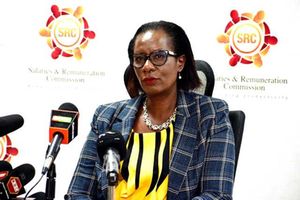
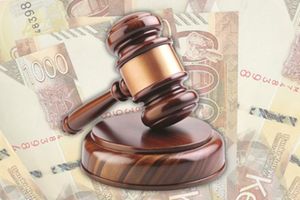
Judges have defended their Sh10 million taxable car allowance, telling the Supreme Court that the benefit is a protected condition of service that cannot be withdrawn unilaterally by the Salaries and Remuneration Commission (SRC).
The Judicial Service Commission (JSC) and the Kenya Judges Welfare Association argued that the allowance replaced a duty-free car grant enjoyed by judges under the former Constitution and was carried into the current constitutional order as a protected benefit.
Appearing before the Supreme Court on Wednesday, the two organisations said the SRC must consult the Judiciary and involve the JSC before making decisions that affect judges’ terms and conditions of service.
Issa Mansour, representing the JSC, argued that although the SRC has the constitutional mandate to determine and regularly review the remuneration and benefits of State officers, it must exercise that power within the limits set by the Constitution.
“The act of unilaterally removing the benefit linked to the constitutional office of judges therefore interferes with the constitutional independence of the Judiciary,” Mr Mansour submitted.
The dispute centres on a July 12, 2021, decision by the SRC to withdraw the taxable car allowance, which petitioner Peter Mwangi Gachuiri challenged in court, arguing that it violated Article 160(4) of the Constitution and threatened judicial independence.
The High Court ruled in favour of the petitioner, declaring the SRC’s decision unconstitutional and ordering the restoration of the benefit. The commission appealed, but the Court of Appeal upheld the decision, prompting the matter to proceed to the Supreme Court.
The SRC is now challenging both the substance of the ruling and the courts’ handling of the dispute, arguing that judges should not determine a case in which they stand to benefit financially.
The commission, through lawyer Peter Wanyama, maintained that the allowance creates a conflict of interest because the judges hearing the case are among its potential beneficiaries.
The lawyer argued that the courts failed to apply the objective test for apparent bias, which requires consideration of whether a reasonable person would perceive a risk that a judge might not be impartial.
According to Mr Wanyama, the dispute should have been referred to alternative dispute resolution mechanisms, including mediation by three retired judges from Commonwealth apex courts appointed by the President or mediators appointed by the Chartered Institute of Arbitrators, Kenya Branch.
However, the JSC defended the High Court’s decision to hear the petition, arguing that the central question was the interpretation of the Constitution and the legality of the SRC’s decision.
The High Court had rejected the commission’s request for the three-judge bench to recuse itself and refer the matter to mediation.
The judges held that the case raised a constitutional question that required judicial determination and that the fact that judges stood to benefit from the outcome did not automatically disqualify them from hearing it.
The JSC warned that accepting the SRC’s argument would effectively shield decisions by the commission from judicial scrutiny, contrary to the principle that all State organs and commissions are subject to the Constitution.
The Supreme Court also heard arguments on the history of the allowance and whether it was protected under the constitutional transition from the former Constitution to the 2010 charter.
The JSC argued that judges had previously enjoyed a duty-free car grant under the repealed Constitution, whose provisions protected the salaries and terms of service of specified constitutional office holders from being altered to their disadvantage.
The benefit was converted into a taxable car allowance following the introduction of the new constitutional framework.
A circular issued by the Head of Public Service in July 2011 replaced the duty-free grant with a taxable allowance. The maximum amount was increased to Sh5 million in June 2015 and later to Sh10 million in June 2018.
The JSC submitted that the transitional provisions of the 2010 Constitution preserved existing rights and obligations unless the new Constitution expressly provided otherwise.
It argued that the car allowance was not expressly withdrawn during the transition and therefore continued as a benefit attached to judicial office.
Elisha Ongoya, representing the Kenya Judges Welfare Association, told the Supreme Court that the dispute raised two main questions: whether the courts had demonstrated impartiality and whether the SRC’s mandate over public remuneration was exclusive.
He opposed an argument seeking to distinguish between judges appointed before and after 2021, describing it as an attempt to introduce a distinction not provided for in law.
The SRC on its part maintained that its constitutional mandate under Article 230 was intended to establish a coordinated and accountable system of remuneration across the public service.
It argued that allowing individual State institutions to determine or retain benefits outside its framework would undermine uniformity, fiscal discipline and accountability in the use of public funds.
Mr Wanyama said the courts’ interpretation of its mandate risks weakening its independence and authority to regulate public-sector pay.