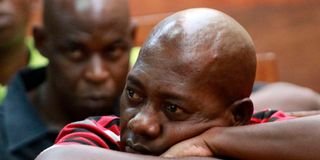
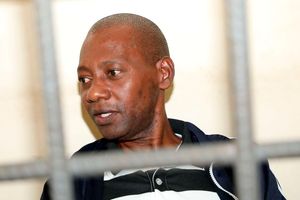
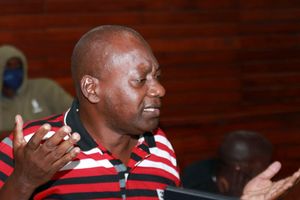
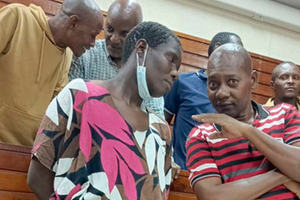
Prosecutors want the High Court to convict Mr Paul Nthenge Mackenzie and 30 others of murder over 191 deaths, including 190 children, in the Shakahola case.
In submissions ahead of judgment on Monday, the prosecution said the evidence presented established that Mr Mackenzie, also known as Mtumishi, Nabii and Papaa, issued instructions for followers to fast to death in the belief that they would meet Jesus Christ in heaven.
The prosecution said the deaths resulted from a coordinated religiously motivated fasting in which the accused played different roles.
“Based on evidence, the victims likely died from starvation, accounting for 99 percent of cases. The other two were caused by direct human action,” the Director of Public Prosecutions (DPP) said.
Prosecutors said verbal instructions from parents of surviving children to get into maombi (prayers), which meant fasting to death, when considered alongside other evidence, demonstrated a system in which the accused encouraged the practice.
The court was informed of evidence of a suicide pact presented by witnesses. The state said it had established a link between the bodies found and starvation, even where the victims could not be identified or the precise causes of death could not be determined during examination.
The prosecution said some members of Good News International Ministries, a church associated with Mr Mackenzie, failed to explain the circumstances in which their children died, while some accused persons admitted that their children had fasted to death.
The prosecution said the deaths could not be explained as natural causes, dismissing suggestions that conditions like fatty liver could have resulted from prolonged alcohol abuse.
Prosecutors urged the court to draw inferences from the circumstantial evidence, saying limited medical findings did not prevent the determination of the likely causes of death.
A view in one of the Pastor Paul Mackenzie's living rooms when High Court Judge Justice Wendy Kagendo visited his homestead in Shakahola Forest in Malindi Sub-County on June 24, 2026.
Photo credit: Kevin Odit | Nation Media Group
Investigations by state agencies involved the finding or exhumation of more than 429 bodies, forensic examination of exhibits, analyses of crime-scene records and statements from kin of people believed to have died.
The prosecution said about 400 statements were recorded and 120 witnesses testified in the case. The wider investigation led to the arraignment of 95 people for homicide, organised crime, radicalisation and offences against children.
“The State... cannot remain passive while its most vulnerable citizens are slaughtered,” the prosecution submitted.
The defence, however, urged the court to acquit the 31, saying the prosecution failed to prove the murder charges beyond reasonable doubt.
The lawyers said the court must determine if the identities of the victims had been sufficiently established and whether the religious beliefs and practices cited by the prosecution could legally be said to have caused or contributed to the deaths.
They cited “gaps, inconsistencies and reasonable alternative explanations” in the evidence submitted.
“No one disputes the deaths of 190 children and one adult. The issue for determination is whether the accused persons can be said... to have had a hand in those deaths,” the defence said.
The lawyers maintained that the cause of death must be established through evidence and not suspicion, adding that where the cause remains unknown, a critical element of the murder charge has not been proved.
It also challenged the pathologists’ findings in cases where starvation was suspected, saying some conclusions were based on assumptions rather than definitive medical evidence. It argued that natural causes and pre-existing medical conditions had not been sufficiently excluded.
The defence further questioned the prosecution’s reliance on circumstantial evidence, insisting that the court could not infer criminal responsibility merely because the accused held particular religious beliefs or were associated with the deceased.
The court is expected to determine whether the prosecution established the deaths and their causes, whether the accused committed unlawful acts that caused the deaths, and whether they acted with malice aforethought, as required for a murder conviction.