When Salina Ngeso Mbaga heard President William Ruto speaking in Kisumu earlier this month, announcing that victims of political violence whose loved ones were killed or whose property was looted should report for compensation, her memories drifted back to 2007 and 2008.
These are the years when her life was turned upside down, when she was living in Muhoroni and watching helplessly as political violence swept through her neighbourhood.
Her sugarcane fields were burned, livelihoods destroyed, and her husband Mbaga Athembo died months later, leaving behind little more than a police abstract, unanswered promises, and a grief that never found closure.
For years after the violence, Ms Salina lived with the quiet weight of unfinished justice, moving through life with little more than memory and police abstract to mark what she had lost, her husband dead, her family’s livelihood gone, and the promise of redress receding with every election cycle that passed.
When the President’s words reached her again this February while in Kisumu, they reopened a chapter she had long learned to endure rather than resolve, she acted with urgency, drafting a formal letter and sending it to the compensation panel hoping to be included in a process she believed might finally acknowledge her loss and offer a measure of closure after years of waiting.
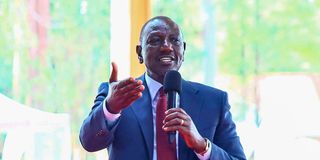
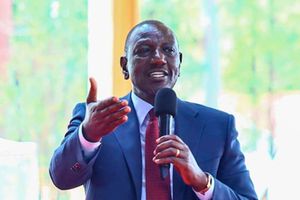
President William Ruto addresses youths during the disbursement of NYOTA business start - up capital at Jomo Kenyatta International Stadium, Kisumu County, on February 2, 2026.
Photo credit: Alex Odhiambo | Nation Media Group
In her letter, she asked not for sympathy but for assistance, asking that someone call her, asking to be helped, explaining that she has no other documents, only the abstract and the waiting that has stretched across seventeen years.
“I am not able to travel to Nairobi so, I write to you through phone to assist me,” she said in a letter addressed to the Head of State.
That waiting is shared by Shem Athembo Onyuro, now seventy-four years old, whose life before the violence was marked by business and ambition, butcheries and schools and cane farms spread across Kisumu and Muhoroni, until the elections of 2007 turned his political candidacy into a liability in a region where his party was viewed with hostility.
When violence erupted, he says he and his family were attacked and chased away, their properties looted and destroyed, their livelihoods wiped out in a matter of days.
He never sued the government because legal fees were beyond his reach, and no compensation ever came. His daughters left the country, his health deteriorated, and the man who once ran several enterprises now describes himself as living with disability and chronic illness that followed the collapse of his life during the post-election violence.
For Susan Adhiambo Ouma, the waiting has taken on a quieter form, marked by survival rather than expectation.
Her husband David once ran a timber hardware and mitumba business near Kondele and Migosi, places that became epicentres of violence and looting in Kisumu in 2007 and 2008, leaving behind police reports that documented losses exceeding seventeen million shillings.
David is dead now, and Susan sells goods at the bus stage to survive, attaching his death certificate to her letter as proof that the man who could have spoken for himself is gone. Her words are sparse but heavy with resignation, written not to narrate history but to insist that what was lost was real and that the damage never stopped accumulating.
The letters, written by hand or typed with care, were addressed to the Presidential Panel of Experts on Compensation of Victims of Demonstrations and Public Protests, chaired by Prof Makau Mutua, following renewed assurances by the government that victims of political violence across different election cycles and protest movements would finally be compensated.
Prof Makau Mutua.
Photo credit: File | Nation Media Group
For many families, the announcement did not erase the past but reopened it, offering a narrow window through which long deferred justice might finally pass.
That window, however, has been blocked by a legal process that has turned compensation into a question of institutional mandate rather than human urgency.
In December 2025, the High Court in Kerugoya ruled that while the President has constitutional authority to protect human rights and facilitate reparations, the design of a national compensation framework falls within the statutory mandate of the Kenya National Commission on Human Rights, directing that the panel’s terms of reference be revised to avoid duplication.
In response, the panel chaired by Prof Mutua amended its mandate through Gazette Notice No. 259, published on January 2, 2026, deleting its earlier role in designing the compensation framework and limiting its function to advising the President on the lawful and constitutional implementation of reparations based on a report prepared by KNCHR, while also affirming that the panel would operate strictly within the Constitution and applicable laws and extending its term by a further one hundred and eighty days.
The court has yet to determine whether the government has fully complied with its judgment, reserving its ruling until February 24, 2026, while a separate appeal challenging the Kerugoya decision remains pending at the Court of Appeal.
But for thousands of victims, the distinction between compliance proceedings and appellate litigation has little meaning, because the effect is the same, compensation cannot proceed, and waiting once again becomes the dominant condition of their lives.
“He (the Head of State) said that we should be compensated and he said it in Kisumu from Ramogi Radio. I heard it myself and that is why I need to be compensated as one of the victims,” Mr Onyuro, one of the victims said.
The issue has also been drawn into the centre of current political negotiations, with compensation for victims of political violence emerging as one of the matters under discussion in the ongoing talks between President Ruto and the Orange Democratic Movement (ODM) party, talks that form part of the broader political settlement following months of protests and unrest.
Within those negotiations, compensation has become both a moral demand and a political bargaining chip, symbolising unresolved grievances that cut across party lines and generations, from the post-election violence of 2007 and 2008 to opposition protests in 2017 and 2023 and the Gen Z demonstrations of 2024.
Interior Principal Secretary Raymond Omollo has defended the compensation process. He said the government is committed to the process and will ensure victims are served with justice.
“We have had instances where we have lost people fighting for human rights, and one of the recommendations was that these people need to be compensated, those who lost their limbs, those who lost loved ones, “there are some Kenyans who don’t think this is supposed to happen, they’ve gone to court and now compensation cannot happen, and we still have some leaders, people who call themselves leaders, clapping for those characters.” PS Omollo said.