The pattern has become eerily familiar.
A building collapses, authorities announce that it was constructed illegally or in violation of approved plans, questions emerge about inspections, and promises are made to act against developers and public officials found culpable.
Some efforts go the extra mile: the names of those involved are released, investigations are announced, and enforcement agencies visit construction sites. But before the country can establish whether the failures have been addressed, another building comes down.
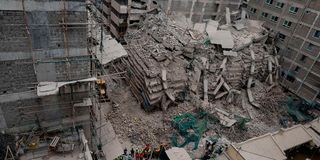
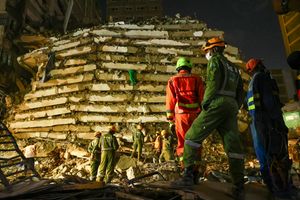
The collapse of a multi-storey building in Eastleigh, Nairobi, on Friday has once again brought the construction sector under scrutiny, with professionals questioning the effectiveness of building inspections, the approval process and the accountability of those mandated to enforce construction regulations.
Eastleigh building collapse: Witness recounts moments before 13 storey structure crumbled
The incident has raised questions about how the building was allowed to rise, despite Nairobi Governor Johnson Sakaja saying that the county had not approved the architectural plans submitted for further development after an initial nod.
Interior Cabinet Secretary Kipchumba Murkomen said the government had begun a “multi-agency investigation” to establish what went wrong.
“We know many Kenyans are concerned, but we want to assure them that we will carry out an investigation bringing together the DCI, the county inspectorate and the National Construction Authority,” Mr Murkomen said at the site.
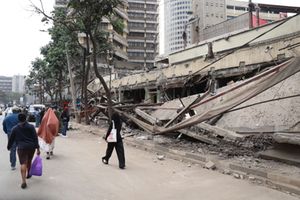
The latest building collapse comes nine months after the January 2 collapse of the 16-storey Manzil Towers in Nairobi’s South C, which killed two people. Investigations found that the building had exceeded its approved 12 floors despite county enforcement notices issued in 2025.
Lands CS Wahome: Collapsed South C building was illegally extended by four floors
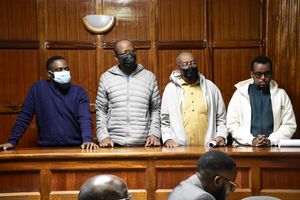
In July, four people linked to the development were charged with manslaughter, forgery, uttering false documents and unauthorised construction. They denied the charges and were released on Sh5 million bond each. Prosecutors alleged that planning approvals, geotechnical reports and environmental licences had been forged or improperly presented.
Separately, the State sought to prosecute 18 Nairobi County planning officials over alleged abuse of office for approving or failing to stop the construction. The officials challenged the prosecution, arguing that they were being unfairly singled out for systemic failures. The High Court temporarily halted their arrest and prosecution as the case proceeded.
In the last five years alone, 30 people have been killed and 58 injured, even as government authorities dilly-dally on firm action.
On Saturday, professional bodies in the built environment sector added their voices to the debate.
Rescue operations continue into the night at site of Eastleigh building collapse
Architectural Association of Kenya President George Arabbu Ndege told Nation that the problem was not simply about identifying the people associated with a collapsed building but also about examining the systems responsible for regulating construction.
“There is so much sensationalisation surrounding the collapse of the building. A building collapses, we make so much noise then after a few days we go back like nothing ever happened. It is a technical thing that needs deep analysis,” he said, calling for a comprehensive examination of the circumstances surrounding the incident.
Mr Ndege said the systems responsible for regulating the built environment, including the National Construction Authority, county governments and the national government, had failed to function effectively.
He argued that some developers engage architects and engineers primarily to satisfy the documentation requirements for obtaining approvals, without ensuring that the professionals remain involved throughout construction.
“A developer who is a businessman comes to you just because they want to get approvals. They just use the name of an engineer and his signature. But are they really on that site? If you go around Nairobi and see what is happening, we are sitting on a ticking time bomb. Just because it is a requirement that the names of a professional must be on the application to just tick the box, developers do not care,” he said.
He said project consultants should regularly visit construction sites, hold meetings with developers and inspect the progress of works to identify defects before construction advances to subsequent floors.
The site of the of collapsed building in South C, Nairobi on January 3, 2026.
Photo credit: Billy Ogada | Nation Media Group
Mr Mairura Omwenga, chairman of the Town and County Planners Association of Kenya and a senior civil engineering lecturer at the University of Nairobi, said county planners, architects, engineers and building inspectors should conduct regular inspections of buildings under construction.
“Under Article 66 of the Constitution, enabling legislation and practice, the city county planner, city architect and city engineer, including building inspectors are supposed to undertake take at least monthly inspection of all building undertake construction or at every stage of construction works, approve before work proceeds to next level,” he said.
The Association of Consulting Engineers of Kenya, led by its president, Gabriel Jabong’o, has also called for an overhaul of the construction oversight system, warning that collapses can result from structural design deficiencies, poor workmanship, substandard materials, deviations from approved plans, inadequate supervision, weak foundations and failures in regulatory enforcement.
Mr Jabong’o said it would be premature to attribute the Eastleigh collapse to any particular cause before investigations were completed.
He called for stricter enforcement of building codes, increased site inspections, mandatory engagement of qualified professionals throughout construction and stronger accountability for developers, contractors, consultants and regulatory authorities where failures are established.
“We urge developers to prioritise quality, compliance, and professional oversight by engaging qualified consulting engineers and adhering strictly to approved construction standards. Public safety must never be compromised in the pursuit of expediency or cost savings,” he said.
The association also recommended digital construction monitoring systems and closer collaboration between regulatory agencies and professional bodies, arguing that proper engineering design and supervision were essential safeguards against structural failures.
But even as professionals call for systemic reforms, Mr Sakaja has placed responsibility on those associated with the Eastleigh development, urging professional bodies representing architects, engineers, quantity surveyors and builders to investigate their members.
Search and rescue operations continue in South C, where a 16-story building under construction collapsed on January 2, 2025.
Photo credit: Billy Ogada| Nation Media Group
The governor said the county approved an application to change the property’s use from residential to commercial-cum-residential on October 17, 2024, but did not approve the architectural plans subsequently submitted for the proposed development.
The plans submitted on November 20, 2024, were associated with architect Emmanuel Mwangi Maina. The project records also identify engineering firm Precise Civil Engineering Ltd, contractor Stromax Holdings E.A. Limited and structural engineer Joseph Muturi Mugu.
Mr Sakaja said the professionals whose details appeared in the development records had a responsibility to ensure that construction complied with building regulations and safety standards.
He said the county had forwarded its report to the Directorate of Criminal Investigations for further investigations and maintained that enforcement action had been taken after unauthorised construction was detected.
The governor described the incident as a case of “total impunity” and called on professional bodies to determine whether their members had fulfilled their obligations and take disciplinary action against those found culpable.
He also renewed his call for county governments to regain prosecutorial powers, arguing that stronger penalties and faster prosecution of construction-related offences would deter developers from violating regulations.
However, the Nairobi County Assembly’s Planning Committee has questioned the management of the county’s planning department, arguing that City Hall must also account for the failures that allowed the development to proceed.
“There are characters who are seated in the office of governor who are approving plans, not the professionals who are seated there. It is a sad state of affairs,” Committee chairman Geoffrey Majiwa said, calling for a complete overhaul of the department.
South B MCA Waithera Chege also challenged the county governor’s account of the approvals and urged investigators to examine the documentation held by the National Construction Authority.
“We need thorough investigations to establish what exactly happened here. The county planning department is the only one where junior staff are approving buildings. All the shops had fire certificates, and the question that we are asking is how they received all these certificates if they did not have the occupational certificate,” she said.