For politicians eyeing the 2027 General Election, registering a new political party from scratch is such a bureaucratic nightmare. The smart short-cut? Buying a ready-made vehicle off the shelf.
And as a new wave of high-stakes political takeovers sparks bitter feuds across the country, Kenya’s top strategists are learning a brutal historical lesson: acquiring a political party is easy on paper, but surviving the legal minefield of its ownership is a completely different ballgame.
It’s like renting an established house, which is often faster than building one from scratch. However, one has to content with the fact that the house is likely to come with unruly landlords.
An established party comes with a certificate, registered officials, a constitution, an organisational identity, offices and, depending on its electoral standing, access to public political resources.
That has created a scramble for political vehicles, with politicians setting their sights on existing outfits rather than engaging in the usually laborious process of registering new ones.
But Kenya’s history has shown that taking over an existing party can be far more complicated. From the ongoing impasse over the “Ukombozi” name to the complex legal battles surrounding the United Democratic Party (UDP), Kenya’s political landscape is reminding leaders that while a political deal can buy an outfit, it does not automatically buy the law.
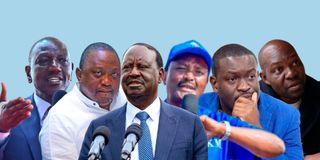
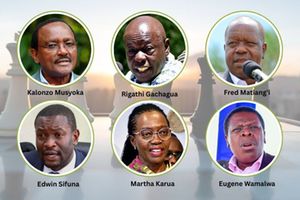
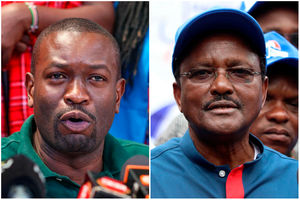
The stalemate over the “Ukombozi” name, which has pitted Wiper Patriotic Front leader Kalonzo Musyoka against Nairobi Senator Edwin Sifuna’s camp, has lifted the lid on the scramble for political parties as ready-made vehicles ahead of the elections.
Embakasi East MP Babu Owino has taken over Muungano Party, associated with former Makueni Governor Kivutha Kibwana, while Trans Nzoia Governor George Natembeya is racing against time to acquire the UDP, formerly led by the late Cyrus Jirongo. Mr Natembeya hopes Mr Sifuna can use as his 2027 vehicle.
But the experiences of President William Ruto , former President Uhuru Kenyatta and the late ODM leader Raila Odinga show why such takeovers can become political minefields.
Mr Kenyatta had to abandon Kanu, on whose ticket he contested the 2002 presidential election, to form The National Alliance (TNA), which he used in the 2013 General Election.
But it was Dr Ruto’s 2012 experience that underscored the risks of taking over an existing political party, when his attempt to turn the United Democratic Movement (UDM) into his vehicle for the 2013 presidential election ended in a leadership struggle with the party’s existing officials. This forced him to abandon UDM and establish the United Republican Party (URP).
Nairobi Senator Edwin Sifuna.
Photo credit: Alex Odhiambo | Nation
Fourteen years later, Mr Sifuna’s camp is facing a related problem as it seeks to use UDP. The dispute, pundits say, is not simply about who supports whom, but about who has the constitutional authority to control the party.
The historical parallel is striking since a politician may secure a political deal around a party without necessarily securing legal control of its machinery.
When Dr Ruto attempted to take over UDM, he encountered a leadership that was not prepared to surrender control. The party was led by chairman Lt Gen (Rtd) John Koech and Secretary-General Martin ole Kamwaro.
Dr Ruto had sought greater influence over UDM’s structures, an effort that triggered a leadership contest, with the Koech-Kamwaro faction challenging his authority. The dispute ended in court.
Dr Ruto eventually quit UDM amid the wrangles. He subsequently led 17 MPs into the newly established URP in January 2012. At its launch, then Turkana Central MP Ekwe Ethuro linked the move to the leadership dispute in UDM, which had been Dr Ruto’s intended presidential vehicle.
“The episode provides an important historical lesson for the current UDP contest. While Ruto had political weight and a sizeable parliamentary following, that did not automatically translate into control of UDM's formal structures,” advocate Chris Omore argues.
When the existing leadership resisted, he says, the attempted takeover became a contest over authority rather than a straightforward transfer of ownership.
“Sifuna’s situation is different in important respects. The underlying question is similar – about who controls the party under its constitution and who has the authority to change that control.”
Mr Natembeya has backed UDP as the vehicle for Mr Sifuna’s presidential ambitions. But existing UDP officials insist that a party's leadership cannot simply be replaced through a political agreement.
Political analyst Dismas Mokua says weak internal democracy has encouraged politicians to seek control of their own parties.
“Party primaries cannot be described as free nor fair,” Mr Mokua says. “Owning a political party immunises politicians from the vagaries of party dictatorship during party primaries.”
“Politicians use political parties in the political game for strategic ambiguity, gambits, bargaining and hoodwinking rivals while rewarding allies,” he says.
Pundits say what is casually described as “buying” a party is far more complicated because a political party is not private property that can simply be transferred through a sale agreement.
“The Political Parties Act provides that where a fully registered party intends to change its constitution, rules, party officials, name, symbol, slogan, colours, or office addresses, it must consider representations from the public, and such changes must align with its own constitution and rules.
An agreement between politicians may settle the political question. It does not, by itself, settle the legal question.
People’s Renaissance Movement (PRM) party leader and Saboti Member of Parliament Caleb Amisi at the ASK Showgrounds, Jamhuri Park, on Tuesday, August 11, 2026, during the launch of the People’s Renaissance Movement.
Photo credit: Dennis Onsongo| Nation Media Group
Mr Nelson Omondi, drawing from his experience in PNU, gives a similar description of the process.
“UDP for instance, must receive a formal request through its SG’s office, and the SG must call a NEC meeting to discuss and approve the new officials, who must not exceed 50 per cent of the total officials. NEC has to call for the NDC that will finally approve the new officials,” Mr Omondi says, adding that the process involves formal notices, agendas, attendance lists, resolutions and signatures.
Mr Mohammed Abikar, who identifies himself as UDP vice-chairman and acting deputy party leader, insists that UDP's leadership must be determined through its own structures.
“Only a National Delegates Conference of bona fide party delegates convened through the National Executive Council has the authority to fill the party leader position left vacant by the passing of our substantive leader, Hon. Cyrus Jirongo,” he said in a social media post. “UDP needs new leadership — but it must come through the party’s rules and constitution, not shortcuts.”
Mr Abikar did not respond to further inquiries from the Nation , with his position capturing the legal trap facing those who negotiate control of existing parties.
“The people making the deal may regard the transaction as complete. The Registrar, however, still needs evidence that the party's constitutional and statutory procedures have been followed,” says Mr Omore.
Sometimes political actors have alleged that money or other consideration changes hands when politicians acquire dormant parties. But there is no reliable public price list for Kenyan political parties.
One historical account provides a rare specific figure. A biographical account of Mr Odinga's political career says he acquired Stephen Oludhe's National Development Party (NDP) for Sh500, 000, although other accounts describe the transition in less commercial terms, saying Mr Oludhe stepped down as chairman in May 1997 in favour of Mr Odinga.
The Political Parties Act requires parties to disclose their sources of funds and other resources, while political parties must maintain records of their financial transactions and assets.
It does not, however, create an official market valuation for a political party. The experience was repeated, in a more dramatic form, a decade later.
At the ODM Founders' Dinner in Mombasa last year, founding national chairman Henry Kosgei recalled how the Orange movement struggled to establish a legal party vehicle after the 2005 referendum. “We went to the ECK and Kivuitu had an Orange and a Banana. We grabbed the Orange,” Mr Kosgei recalled.
The Orange campaign brought together Mr Odinga, Kalonzo Musyoka, William Ruto, Musalia Mudavadi and Najib Balala, among other leaders.
After the referendum victory, Mr Kosgei said the Kibaki government dismissed the pro-Orange ministers. The group then moved to create a political party.
But when they returned to Nairobi, Mr Kosgei recalled: “We found that a mischievous character, Mugambi Imanyara, had registered our party.”
The movement settled for ODM-Kenya, but Mr Kosgei said the government initially refused to register it. Temporary officials were subsequently installed, led by lawyer Daniel Maanzo, now Makueni Senator.
“Maanzo later ran away with the party,” Mr Kosgei recalled.
The provisional officials, according to his account, were the legally recognised signatories and eventually handed the party to Mr Musyoka's camp.
“We remained party-less,” Mr Kosgei said of Mr Odinga's camp. “We were stranded.”
The group then returned to Mr Imanyara, who still held the original ODM certificate.
“We went looking for Imanyara and asked him what he wanted,” Mr Kosgei recalled. That certificate ultimately became the legal foundation of the ODM that contested the 2007 election.
Prof Anyang' Nyong'o, ODM's founding Secretary-General, placed the episode in a wider historical context, saying: “ODM is not just a story of a party but of a people who refused to surrender their destiny.”
He described ODM as having emerged from opposition to what he called “a legal camouflage designed to sustain the old reactionary order”.
“ODM was birthed in a nation suppressed by presidential authoritarianism,” Nyong'o said.
The Orange movement's eventual fragmentation also shaped the 2007 presidential contest. Mr Odinga's camp, including Dr Ruto, Mr Mudavadi, Mr Balala, remained within ODM, while Mr Musyoka led the ODM-Kenya side. The split produced separate presidential candidacies, with Mwai Kibaki, Mr Odinga and Mr Musyoka all contesting the election.
Thus, even before the current party marketplace, the battle over political vehicles was already influencing who could carry a presidential ambition into an election.
If Mr Sifuna's camp succeeds in securing UDP's constitutional machinery, the party could become his political vehicle. If existing officials retain control and resist the transition, the political calculation could shift towards another party or a new organisation, with eyes on the IEBC deadline to submit names of officials by October 15.
“A political faction can negotiate an alliance. Politicians can agree on a new leader. Supporters can announce a takeover. A party can even seek a new identity, but the party's constitution determines who can call the relevant meetings, elect officials and approve changes. The certificate may be available and the political vehicle attractive, the keys to the vehicle still have to be obtained through the party's constitution and the law,” said Mr Omore.