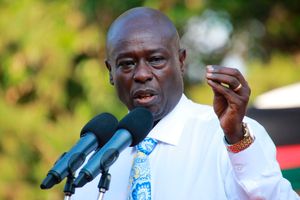
The race to unseat President William Ruto in 2027 is increasingly turning into a contest within the opposition itself, as leaders who agree on the need for a change of government remain divided over who should lead the charge.
Rival centres of power are taking shape, raising the stakes in a contest where every alliance, rally and political meeting could strengthen one contender while weakening another.
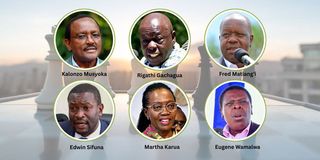
At the centre of the contest are former Deputy President Rigathi Gachagua, Wiper Patriotic Front leader Kalonzo Musyoka, People's Liberation Party leader Martha Karua, Jubilee presidential candidate Fred Matiang'i, DAP-Kenya leader Eugene Wamalwa, Democratic Party leader Justin Muturi, PNU leader Peter Munya and Nairobi Senator Edwin Sifuna.
The race to unseat President William Ruto is increasingly turning into a contest within the opposition itself.
Photo credit: John Nyagah | Nation Media Group
While Mr Musyoka is building the newly rebranded Ukombozi Alliance, Mr Sifuna's Linda Mwananchi camp is preparing a political vehicle of its own.
Mr Gachagua's Democracy for the Citizens Party (DCP) is keeping its options open, with his deputy Cleophas Malala openly resisting an immediate coalition with the Ukombozi Alliance.
Mr Malala was categorical that DCP would not join the Ukombozi Alliance at this stage, instead proposing that DCP and Mr Sifuna first work together before engaging other opposition parties.
“We as DCP will not join the Ukombozi Alliance. We cannot get there. Let all of them join and then DCP and Sifuna will form a coalition and talk. We will continue planning,” Mr Malala said.
At the same time, Ms Karua and Dr Matiang'i have pushed the argument that the eventual presidential candidate should emerge through an agreed and credible process rather than a private bargain among party chiefs.
The result is an opposition landscape in which every alliance is also a negotiation and every public show of unity contains a calculation about the eventual ticket.
Mr Musyoka has perhaps moved most visibly to occupy the centre of the emerging opposition structure.
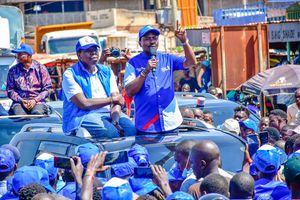
The Wiper leader has overseen the transformation of Azimio into the Ukombozi Alliance and is now taking the new formation to regions that were traditionally associated with the late former Prime Minister Raila Odinga. Mr Musyoka, Mr Muturi and Mr Wamalwa were in Busia yesterday (Saturday) and are scheduled to tour Siaya for rallies today (Sunday).
The move has acquired additional significance because Mr Sifuna's camp has simultaneously been attempting to establish its own political vehicle.
The dispute over the word “Ukombozi” has therefore become more than a disagreement over a slogan. Two competing formations sought political space around the same brand, exposing the mistrust that underlines the opposition's unity campaign.
Mr Musyoka’s control of an established coalition gives him an organisational platform from which to negotiate.
Mr Sifuna, however, appears focused on building an independent political identity before entering a final coalition arrangement.
But the urge for each opposition principal to have their own party has itself underscored the level of mistrust.
Embakasi East MP Babu Owino, an ally of Mr Sifuna, has acquired The Mwananchi Party, but the Nairobi Senator is reluctant to join the outfit.
Mr Owino has argued that the opposition should settle on a joint presidential candidate by December to allow sufficient time to organise a national campaign.
“By December, we must have settled on one presidential candidate who can mount a serious challenge against President Ruto.”
But Mr Sifuna’s allies now say the United Democratic Party, formerly associated with the late politician Cyrus Jirongo, could become his political vehicle after the attempt to rebrand it as Ukombozi People's Party ran into the naming dispute. Trans Nzoia Governor George Natembeya has confirmed that UDP remains an option for Mr Sifuna.
Mr Gachagua has repeatedly refused to close the door on Mr Sifuna, even going as far as saying that he could deputise the Nairobi senator if political arithmetic showed that Mr Sifuna was best positioned to challenge Dr Ruto.
“Even Sifuna can deputise me. Sifuna can also deputise Kalonzo Musyoka. Kalonzo can also deputise Sifuna,” Mr Gachagua said recently, adding that the opposition should blend youthful energy with experience.
DCP Party leader Rigathi Gachagua addressing journalists in Nairobi on July 10, 2026.
Photo credit: Bonface Bogita | Nation Media Group
Rather than insisting that he must personally lead the opposition, Mr Gachagua introduced a new possibility that the eventual candidate could be determined by evidence of national support.
“If you persuade us that you are the best person to take Ruto home, we will rally behind you,” he said.
Yet the flexibility has not removed the rivalry. Instead, it has opened another front.
The proposed arrangement would bring together two political forces with potentially complementary constituencies: Mr Gachagua's influence in Mt Kenya and Mr Sifuna's growing appeal among younger and urban voters.
Mr Malala has openly promoted the idea of a Mount Kenya-Mulembe alliance, arguing that the two regions possess sufficient numbers to shape the presidential contest, further throwing a spanner in the works in the quest to have a substantive opposition chief to face Dr Ruto.
“Noboby can win the presidency if he doesn't work with Mount Kenya since election is a game of numbers,” said Mr Malala, proposing what he calls an “MM” coalition of Mulembe and Mount Kenya.
Bumula MP Jack Wamboka and his Kabuchai counterpart Majimbo Kalasinga have publicly indicated that their side is exploring an arrangement with Mr Gachagua.
Mr Wamboka has said Mr Sifuna should lead such a ticket, with his running mate coming from Mt Kenya.
The Wiper leader’s camp wants him established as the joint opposition presidential candidate, with Mr Sifuna as his running mate. The proposal has intensified the contest over who should occupy the top position.
But Mr Sifuna’s allies have accused their Wiper counterparts of frustrating Mr Sifuna’s bid for a new party and presidential ambition over the Ukombozi party dispute.
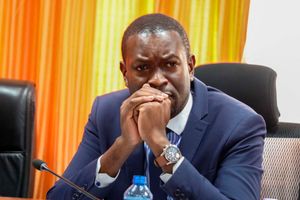
Nairobi Senator Edwin Sifuna.
Photo credit: File | Nation Media Group
“As it stands today Sifuna’s ranking is above William Ruto. Kalonzo doesn’t merit to be Sifuna’s deputy. The only person we are going to discuss with is Gachagua and his team. We are going to get Sifuna’s running mate from Mount Kenya,” Mr Kalasinga charged.
Mr Gachagua has held consultations with Safina Party leader Jimi Wanjigi, who is outside the United Opposition but has been discussing the 2027 election with the former Deputy President.
Mr Wanjigi presents yet another complication because he has his own presidential ambitions and political vehicle.
If the opposition eventually settles on a candidate from outside Mt Kenya, analysts say, Mr Gachagua will have to decide whether to support that candidate, negotiate for regional representation or pursue a separate arrangement.
Ms Karua has argued for a transparent process to determine the opposition's flag bearer rather than an elite bargain.
Dr Matiang'i has made a similar case, stressing the need for an agreed process capable of producing an outcome accepted by all the competing principals.
Former President Uhuru Kenyatta, who has faced criticism from President Ruto for allegedly sponsoring the opposition, on Tuesday urged the need to strengthen the Jubilee Party to negotiate with other like-minded outfits ahead of the next election.
Speaking after handing the party reins to Dr Matiang’i, Mr Kenyatta, in an apparent reference to Mr Sifuna, urged Jubilee to begin early preparations for the 2027 General Election and work with other young politicians to build a stronger political alliance.
“We are entering an election cycle, and we need to start our preparations early. I know you know them; I don’t want to mention their names. Go out and identify other young leaders and work together to forge a stronger alliance for 2027.”
But it is Dr Matiang’i and Ms Karua’s assertion for a credible process to arrive at a flag bearer that analysts say is potentially attractive to politicians who fear that a negotiated ticket could simply favour the leader with the strongest bargaining position rather than the candidate with the widest national support.
But it also raises a difficult question about what happens when the eventual process produces a winner whom another principal believes has not adequately protected his political interests.
“Opposition alliances have repeatedly been assembled around the promise of unity only for disagreements over presidential succession, running mates and power-sharing to expose the underlying differences,” political analyst Geoffrey Mboya says.
The current opposition, he says, is attempting to avoid that history by talking about scientific polling, public acceptability and agreed nomination mechanisms.
Mr Musyoka, Mr Muturi and Mr Wamalwa are conducting joint campaigns in Western Kenya, while Dr Matiang'i will also travel to Narok on Sunday with Mr Nyoro, where they will be hosted by Jubilee Secretary-General Moitalel Ole Kenta.
Dr Matiang'i said he would worship at Dominion Church in Olerai before embarking on a meet-the-people tour of Narok Town.
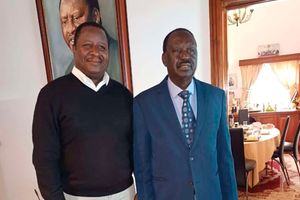
The appearance of Mr Nyoro alongside Dr Matiang'i and Mr Orengo is significant because Mr Nyoro is not part of the core United Opposition arrangement and has not been on good terms with Mr Gachagua.
His PPK has become another centre of political organisation, particularly in Mt Kenya.
“The danger for Gachagua is therefore not simply that another politician may challenge him for the presidential nomination. It is that multiple political vehicles could emerge within the same region before the opposition settles on a national ticket,” adds Mr Mboya.
Democracy for the Citizens Party (DCP) Party Leader Rigathi Gachagua (second right) addressing a press briefing at the SKM Centre on April 15, 2026. With him are (from left) Wiper Party Leader Kalonzo Musyoka, Jubilee Deputy Party Leader Fred Matiangi and Democratic Action Party-Kenya (DAP-K) Party Leader Eugene Wamalwa.
Photo credit: Francis Nderitu | Nation Media Group
That resistance, Mr Mboya notes, matters because it demonstrates that the United Alternative Government is not a single political machine.
“It is a collection of parties whose principals have agreed on the need to challenge Ruto but have not surrendered their independent political identities.”
For Mr Wanjigi and Mr Nyoro, remaining outside the core alliance gives them freedom to negotiate from their own political positions.
“The central problem is that all these calculations eventually converge on one question: who will be king?” posed advocate Chris Omore.
“Once the two top positions of king and running mate are allocated, several principals will inevitably have to accept roles below the level they currently occupy in their own political calculations and that is where suspicion and counter-plotting are likely to intensify.”
The opposition's challenge, therefore, he argues, “is no longer merely to bring its leaders together, but to create a process in which leaders who lose the ticket contest still have sufficient confidence in the coalition to remain inside it.”
“The outcome will depend not only on who commands the loudest rallies but on who can negotiate the transition from individual ambition to collective candidature,” argues Mr Dismas Mokua.
He says that as things stand, “the opposition remains united around the objective of challenging Ruto, but divided over the route to the ballot which could be counterproductive as the clock ticks towards 2027 election.”