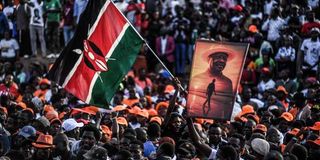
One year after his death, Raila Odinga , popularly known as Baba, is still alive in Kenyan politics. His name rings out at rallies, his words are summoned to defend alliances, and his legacy is claimed on both sides of the political divide.
Though everyone seems to know what Baba would have wanted, he is no longer here to settle the argument. However, his ghost hovers over a contest that has divided the political machine he left behind.
Those backing President William Ruto’s broad-based arrangement say they are honouring Raila’s last political project. Those challenging it, including former Orange Democratic Movement (ODM) secretary-general Edwin Sifuna, invoke his long history of resistance to power.
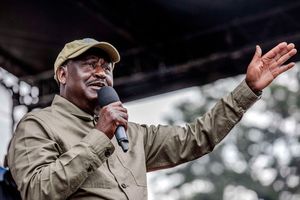
Kenya's former Prime Minister Raila Odinga.
Photo credit: File | Nation
After decades in which an Odinga was central to electoral calculations, Kenya is approaching a general election without Raila as a presidential contender or a formidable kingmaker. When he lived, allies weighed their ambitions against his and rivals built campaigns around defeating him.
Former vice president Kijana Wamalwa called it "Railamania" and "Railaphobia": the devotion and hostility he inspired. In 2022, Ruto’s camp mocked him as "mganga" and vowed to send him home to Bondo. The broad-based partnership later brought former adversaries onto the same platform and has now complicated the political scene with a split within Raila’s party.
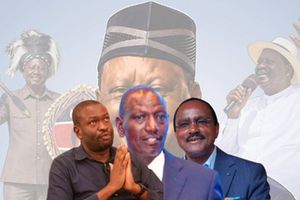
The rise of Linda Mwananchi, led by Mr Sifuna, is the most visible political outcome of the divisions exposed by Baba’s death. The chaos during the movement’s August 16 visit to Homa Bay laid bare the struggle for authority in a territory where Raila’s word once carried decisive weight. While his family has embraced cooperation with Ruto, former allies, including Siaya Governor James Orengo, have rallied around the movement to resist it.
Nairobi Senator and The Equitable Party (TEP) leader Edwin Sifuna during a joint media engagement at Four Points By Sheraton Nairobi Hurlingham on October 9, 2026.
Photo credit: Evans Habil | Nation Media Group
The split exposes the challenge of sustaining Raila’s political bargains without his authority. Raila repeatedly survived electoral defeat, using handshakes, coalitions and partnerships to secure a place at the negotiating table when the presidency eluded him. Those bargains helped shape the final years of Daniel arap Moi’s rule and the presidencies of former presidents Mwai Kibaki and Uhuru Kenyatta . His last agreement now shapes Ruto’s bid for a second term. Its ultimate test is whether the partnership can hold together without the man who brokered it.
Crafted in a moment of crisis, the broad-based arrangement left ODM supporters with a political headache and no clear roadmap. As Dr Ruto reeled from the Gen Z uprising, Raila struck a deal that brought senior party figures into key Cabinet positions. Yet many supporters still expected ODM to challenge the government, while questions lingered over his intentions for 2027. The agreement eased the president’s immediate crisis without resolving ODM’s political direction.
According to his legal adviser, Mr Paul Mwangi, Raila had created two teams: one supporting the arrangement and another contesting it. His authority contained those conflicting positions. His death exposed the divide between leaders benefiting from cooperation and voters questioning its purpose.
ODM party leader Dr Oburu Oginga.
Photo credit: Pool
Managing that contradiction now falls to Raila’s elder brother, Dr Oburu Oginga. Confirmed as ODM leader at the March 2026 special delegates conference, Dr Oburu inherited a party, a famous surname and access to the president. He has yet to establish the authority that enabled Raila to take supporters through abrupt political turns without exhausting their patience.
In his lifetime, Raila could sell a compromise as a tactical retreat and ask followers to wait while he negotiated. Dr Oburu, who has in recent months been battling health challenges , faces a generation less willing to accept such assurances. The Siaya senator’s failure to accommodate dissent and contain hardliners has deepened the split. He must convince those who remain that cooperation serves a purpose beyond securing positions for individual politicians.
The leadership around him faces the same test. Forged through confrontation and mass mobilisation, ODM drew much of its identity from Raila. Under Chairperson Gladys Wanga and secretary-general Catherine Omanyo, defending cooperation now dominates its political message. Senior figures; Mr Hassan Joho, Mr John Mbadi, Mr Wycliffe Oparanya and Mr Opiyo Wandayi divide their attention between Cabinet duties and party affairs.
The confrontation with Mr Sifuna exposed the stakes. The leadership moved against its outspoken secretary-general in February and ratified his removal in June. Presented as a disciplinary matter, the dispute also revealed the struggle over whether ODM should help re-elect Dr Ruto. Removing Mr Sifuna from office gave this question a larger audience.
Mr Sifuna now speaks to supporters who believe cooperation has left them without an opposition. The party that organised their resistance now wants them to support the president they expected it to challenge. While Dr Oburu’s camp invokes Raila’s final bargain, Mr Sifuna’s allies cite the "Who told you?" Response attributed to him when asked whether he had abandoned his presidential ambitions.
Linda Mwananchi is the most visible outcome of that fallout. Mr Sifuna’s growing national profile has unsettled established leaders, but visibility alone will not produce an election victory. He must build an organisation capable of choosing candidates, managing ambitions and surviving coalition bargaining. Mr Orengo, Embakasi East MP Babu Owino and Trans Nzoia Governor George Natembeya bring constituencies of their own, along with expectations he must accommodate.
The faction has indicated it will align with the United Opposition led by impeached Deputy President Rigathi Gachagua and his Democracy for the Citizens Party (DCP), Kalonzo Musyoka (Wiper Patriotic Front), Fred Matiang’i (Jubilee Party), Martha Karua (People’s Liberation Party) and Eugene Wamalwa (Democratic Action Party-Kenya), among others. Their biggest challenge is to pick one candidate to face the incumbent next year.
The Gen Z protests that were triggered in June 2024, but continue in different forms, add another layer to that challenge. Many young protesters regarded Raila’s dialogue with Ruto as a betrayal and rejected the assumption that established politicians could negotiate on their behalf. They were questioning his authority before his death.
Mr Sifuna cannot assume that invoking Raila’s legacy will secure their support. Cooperation also weakened a major source of pressure on government. Allegations of abductions, extrajudicial killings and other abuses demanded scrutiny while prominent ODM figures defended the arrangement. Raila’s death sharpened the question of who would confront the State when leading former critics sat around its Cabinet table.
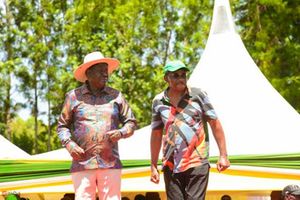
Dr Ruto, meanwhile, wants a share of Raila’s political empire. During his September lakeside tour, the president’s United Democratic Alliance’s (UDA) yellow competed prominently with ODM’s orange. Leaders who once mobilised against him were welcoming him into territory where his party had struggled for a foothold. But access must become votes if the partnership is to secure his second term.
ODM’s leaders face an uncomfortable question: are they expanding their influence in government or helping UDA expand at their expense? The parties can support the same presidential candidate while competing for members, local leaders and elective seats. ODM risks doing the mobilisation while UDA claims the dividend.
Deputy President Kithure Kindiki speaks during a UDA polling centre officials’ event in Manyatta Constituency, Embu County on September 12, 2026.
Photo credit: DPCS
ODM’s demand for the running-mate slot makes the negotiations more delicate. Dr Oburu and Mr Oparanya have expressed interest, placing the party’s ambitions on a collision course with Deputy President Kithure Kindiki’s future . Dr Ruto must weigh the support an ODM nominee might attract against the cost of dropping his current deputy.
Replacing Prof Kindiki would not automatically mean abandoning Mount Kenya. It could, however, reinforce the sense of exclusion Mr Rigathi Gachagua is exploiting. Having fallen out with one deputy from the region, Dr Ruto would need to explain why he was removing another. Mr Gachagua would gain a fresh argument that the president regards their leaders as expendable.
Keeping Prof Kindiki poses a different problem. ODM leaders would have to sell Dr Ruto’s candidature without securing the second position on the ticket. Mr Sifuna could argue that they had surrendered their independence for appointments while leaving the two highest offices to UDA. Neither choice guarantees the votes promised at the negotiating table.
Senator Oburu, meanwhile, must retain enough supporters to make ODM a credible negotiating partner. Keeping offices occupied and meetings running is one thing; convincing voters to follow the party’s electoral choices is another. The president needs a partner capable of delivering support. A merger of allied parties, along the lines of Mr Kenyatta’s creation of Jubilee, would present a different organisational choice, but it would still require voters’ consent.
The deeper uncertainty is what sustained loyalty to Raila: the party, his leadership or the grievances he articulated. Some supporters may follow ODM into government, others may find a new opposition home, and others may withdraw. His constituency cannot be treated as an electoral asset transferred by agreement among its leaders.
Western Kenya adds another complication. ODM’s fallout has created competition for Prime Cabinet Secretary Musalia Mudavadi within government and outside it. Mr Oparanya gives Dr Ruto another route to the region’s voters, complicating Mr Mudavadi’s claim to be his indispensable regional ally. If Mr Sifuna runs, he will complicate the Western Kenya vote and re-arrange the local politics.
Mr Mudavadi must defend Dr Ruto against Mr Sifuna while competing with Mr Oparanya for influence inside the arrangement. If Mr Oparanya secured the running-mate slot, Mr Mudavadi could find his standing diminished by a politician whose entry into government followed his own. Opposing that demand could complicate the coalition he needs to help re-elect Ruto.
Raila’s family has given the arrangement an important endorsement by its silence. Mama Ida Odinga became Kenya’s permanent representative to the United Nations Office at Nairobi and Unep. Though her son, Raila Junior, appeared at Dr Ruto’s Kisumu rally and publicly associated himself with the broad-based partnership, he has little clout. Again, Ms Winnie Odinga, who seemed to be the heir of Baba’s legacy has in the meantime retreated.
Winnie Odinga during a ceremony in Bondo, Siaya County, on October 3, 2026.
Photo credit: Alex Odhiambo | Nation Media Group
Raila’s death has also brought Mr Uhuru Kenyatta’s role into sharper focus . As a former president and one of the most senior political figures, Mr Kenyatta is being accused of bankrolling the opposition leaders searching for a common candidate. His networks and experience give him a potential convening role, though he has yet to demonstrate Raila’s authority over opposition supporters.
That possibility helps explain why Dr Ruto and his allies repeatedly portray him as the opposition’s sponsor. Dr Fred Matiang’i, who inherited Jubilee Party , has rejected the allegation, while Mr Sifuna has denied receiving financial support from him. Minus Raila, Mr Kenyatta’s backing could lend weight to a coalition, but he will face Mr Rigathi Gachagua, who is in charge of Mt Kenya region.
Former Interior Cabinet Secretary Fred Matiang’i speaks during the handover of leadership of the Jubilee Party at the party headquarters in Nairobi on September 22, 2026.
Photo credit: Wilfred Nyangaresi | Nation Media Group
Minus Raila, the opposition must still decide who will face Dr Ruto, because each camp brings different constituencies and competing expectations. Raila once supplied a candidate, a negotiator or an endorsement capable of giving such bargains weight. His absence leaves the field more open and negotiations more uncertain. His supporters are being courted separately.
Raila’s ghost hovers over every calculation. The opposition invokes the fighter; the broad-based camp invokes the negotiator. His family carries the name, Dr Oburu leads the party and Mr Sifuna competes for its supporters. One year after his death, everyone wants a share of his inheritance. Nobody has yet shown they can hold it together.
— John Kamau is a PhD candidate in History, University of Toronto. Email: [email protected]